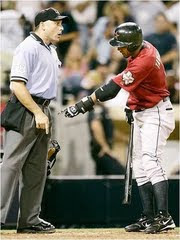
Milton Bradley has a history of problems. 2009 was no exception, as he hated on Cubs fans, fought with everyone from teammates to umpires, and even left games early when he got mad. But it was not just games that Milton Bradley skipped out on. According to the Chicago Sun-Times, Milton Bradley is being sued for walking out on a Condo-lease at the Magnificent Mile in Chicago. In the words of the author, "add his landlord to the list of people who don’t like former Cubs rightfielder Milton Bradley..."
The landlord is suing Bradley for $44,100 in back rent, late fees and interest through this month in addition to emotional damages for single-handedly ruining the Cubs 2009 season for fans everywhere.
Showing posts with label Law and Sports. Show all posts
Showing posts with label Law and Sports. Show all posts
Is Ozzie Guillen A Tortfeasor?
NOTE 1: For a definition of what a tort is, click here. Essentially they are bad things that people do that you sue those people over instead of throwing them in jail. You see those commercials of lawyers in a monotone voice saying like "have you been wronged" and shit like that? Yeah those guys are tort lawyers. And a tortfeasor is someone who commits a tort.
NOTE 2: I am not a lawyer. Do not take this post as the law. I am not giving you advice. This post is simple just an explanation of a case I have read in law school.
Now that I have gotten the legal disclaimers out of the way, I'd like to introduce you to a case that I have recently read. Let me tell you the facts and see if this sounds familiar.
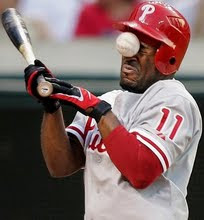
In Avila v Citrus Community College District (2006) [see post above if you'd like to read the entire case] , the Rio Hondo Community College Roadrunner were playing the Citrus Community College Owls pre-season baseball game. A Roadrunner hit a player with a pitch. When Avila, came to bat, as retaliation for the last batter hit, the Owls pitcher hit Avila in the head with the pitch. Avila felt dizzy and in pain but he went to first. He then went to second when the defender realized Avila was in pain. Avila ended up suing a lot of people over this incident (both schools, his manager, the helmet manufacturer, and the school districts). This particular case involves a suit between Avila and the rival school's school district.
Now I'd like to pause for a moment. This situation happens often in baseball, both professional and amateur. Ozzie has openly said if his players keep getting hit, he'll retaliate. Bobby Jenks got fined this year when he admitted he intentionally threw at Ian Kinsler earlier this year as retaliation. A few years ago (I'm sorry I don't remember the particulars but), Ozzie told a newly called up minor leaguer to hit the batter. After this pitcher threw it far behind the batter (but not hitting the batter), Ozzie threw a shit fit at this pitcher and we have never heard of this guy again.
So this decision could potentially have an impact on guys like Ozzie Guillen, or anyone in baseball who makes decisions like this. If we say a batter can collect money damages for things like this, then not only could we see this get eliminated from baseball, but if we do, dudes will have to go through extensive litigation and could lose a lot of money.
However, the court did not rule in favor of the batter. Avila sued the school district claiming they were negligent (I spent more than half a semester in law school going over what constitutes negligence so I'm not going to explain what it is, but feel free to briefly learn it.) The court said getting hit was an implicit part of the game of baseball and "an inherent risk of the sport." As a baseball player, you essentially agree to certain things that happen to you. In football, you agree to get tackled. And if you suffer two concussions or force a guy to become paralyzed, that's tough shit because you've already given your consent for people to do things to you that could potentially cause you serious or life-threatening harm. The same is true for baseball.
Even though getting intentionally hit is illegal and against MLB and probably all amateur baseball rules, it's still an inherent part of the game and you, as a player, have consented that if you get hit, you essentially can not sue for your damages.
The court goes on to say further
This is a pretty interesting statement. If you throw a ball at someone's head normally, you could potentially get sued for millions of dollars. But if you do it with uniforms, it's OK.
Another point DME and I have discussed is: "Is getting intentionally hit really a part of the game?" He says no. He says it's against the rules of baseball and thus no pitcher should ever do it. But this court talks about that. They say it still is a part of the game, even though it is against the rules. However, I bet if you polled every MLB player, they would say that getting hit and getting intentionally hit IS a part of the game. I think everyone in baseball is aware of it and they realize the risks. They know that they could get hit and I bet that they would WANT retaliation of they got hit. Even if baseball players are more pacifistic now, I still bet they realize it is a risk they are taking by playing. I'm sure it's small, but still a risk.
Plus, I think this could create a slippery slope. Take for instance, Carlos Quentin. The guys purposefully crouches inside the plate. Are pitchers not allowed to throw inside to him for fear that if they do hit, he'll sue them the next day? I think implementing tort law would cause pitchers to pitch less inside for fear of a law suit as well. Now you can argue if that really IS such a bad thing for there will be less injuries and harm to human life at only a small expense- a pitcher had to change the way he pitches.
I think you can also argue that if Avila won, that could translate to how other sports are played. The other week, Brady Quinn got picked off (shocking)and went to go try and tackle the player that picked him off. But because he's Brady Quinn and because he's a QB, he is a poor tackler. He ended up tackling a defender in an illegal way and I believe hurt the defender's legs for a bit. What he did was clearly against the rules of the NFL and the NFL punished him. But should we go so far to say that Brady Quinn should get sued (Well I personally hate Brady Quinn so...)? I think all athletes realize these inherent risks that being in the sport.
The biggest effect I think this decision would have had is in hockey. One of the most entertaining reasons people watch hockey is for the fights. Obviously, if you fight someone on the street, you've committed a tort (and probably a crime). But when you do it in hockey, it's not only commonly done, but fans expect it.
My Torts professor joked about this, but we as a society really do put a high societal value on recreation and professional sports. It's becomes ingrained as a fabric of out lives). DME does nothing BUT talk about sports (rather baseball). All four blog authors spend a lot of time (too much) watching and writing about sports. Sports are the reason we download podcasts, buy things, watch TV, go out. We really do value sports heavily and as a result, the law treats sports differently.
Going back to the original case the court talks about the necessity for not siding with Avila; for saying that pitcher's need to pitch inside. Think about if the law really did punish athletes for things that are normally torts everywhere else? This really would change the way pitcher's pitch and batter's hit. These qualitative aspects would screw up the quantitative analysis we love so much. We, society along with the four blog authors, really would be upset if the law intervened too much in sports (Hell. we get made when they hold hearing on steroids). We really do put a high societal value.
If you've learned anything from this post, I hope at least you've learned that judges also believe that a pitcher should be allowed to pitch inside
NOTE 2: I am not a lawyer. Do not take this post as the law. I am not giving you advice. This post is simple just an explanation of a case I have read in law school.
Now that I have gotten the legal disclaimers out of the way, I'd like to introduce you to a case that I have recently read. Let me tell you the facts and see if this sounds familiar.
In Avila v Citrus Community College District (2006) [see post above if you'd like to read the entire case] , the Rio Hondo Community College Roadrunner were playing the Citrus Community College Owls pre-season baseball game. A Roadrunner hit a player with a pitch. When Avila, came to bat, as retaliation for the last batter hit, the Owls pitcher hit Avila in the head with the pitch. Avila felt dizzy and in pain but he went to first. He then went to second when the defender realized Avila was in pain. Avila ended up suing a lot of people over this incident (both schools, his manager, the helmet manufacturer, and the school districts). This particular case involves a suit between Avila and the rival school's school district.
Now I'd like to pause for a moment. This situation happens often in baseball, both professional and amateur. Ozzie has openly said if his players keep getting hit, he'll retaliate. Bobby Jenks got fined this year when he admitted he intentionally threw at Ian Kinsler earlier this year as retaliation. A few years ago (I'm sorry I don't remember the particulars but), Ozzie told a newly called up minor leaguer to hit the batter. After this pitcher threw it far behind the batter (but not hitting the batter), Ozzie threw a shit fit at this pitcher and we have never heard of this guy again.
So this decision could potentially have an impact on guys like Ozzie Guillen, or anyone in baseball who makes decisions like this. If we say a batter can collect money damages for things like this, then not only could we see this get eliminated from baseball, but if we do, dudes will have to go through extensive litigation and could lose a lot of money.
However, the court did not rule in favor of the batter. Avila sued the school district claiming they were negligent (I spent more than half a semester in law school going over what constitutes negligence so I'm not going to explain what it is, but feel free to briefly learn it.) The court said getting hit was an implicit part of the game of baseball and "an inherent risk of the sport." As a baseball player, you essentially agree to certain things that happen to you. In football, you agree to get tackled. And if you suffer two concussions or force a guy to become paralyzed, that's tough shit because you've already given your consent for people to do things to you that could potentially cause you serious or life-threatening harm. The same is true for baseball.
Even though getting intentionally hit is illegal and against MLB and probably all amateur baseball rules, it's still an inherent part of the game and you, as a player, have consented that if you get hit, you essentially can not sue for your damages.
The court goes on to say further
Pitcher intentionally throw at batters to disrupt a batter's timing or back him away from home plate, to retaliate after a teammate has been hit, or to punish a batter for having hit a home run. Some of the most respected baseball managers and pitchers have openly discussed the fundamental place throwing at batters has in their sport...
It is one thing to punish a pitcher who hits a batter by ejecting him from the game, or for a league to suspend the pitcher, it is quite another for tort law to chill any pitcher from throwing inside, i.e. close to the batter's body- a permissible and essential part of the sport- for fear over an errant pitch. For better or for worse, being intentionally thrown at is a fundamental part and inherent risk of the sport of baseball. It is not the function of tort law to police such conduct.
This is a pretty interesting statement. If you throw a ball at someone's head normally, you could potentially get sued for millions of dollars. But if you do it with uniforms, it's OK.
Another point DME and I have discussed is: "Is getting intentionally hit really a part of the game?" He says no. He says it's against the rules of baseball and thus no pitcher should ever do it. But this court talks about that. They say it still is a part of the game, even though it is against the rules. However, I bet if you polled every MLB player, they would say that getting hit and getting intentionally hit IS a part of the game. I think everyone in baseball is aware of it and they realize the risks. They know that they could get hit and I bet that they would WANT retaliation of they got hit. Even if baseball players are more pacifistic now, I still bet they realize it is a risk they are taking by playing. I'm sure it's small, but still a risk.
Plus, I think this could create a slippery slope. Take for instance, Carlos Quentin. The guys purposefully crouches inside the plate. Are pitchers not allowed to throw inside to him for fear that if they do hit, he'll sue them the next day? I think implementing tort law would cause pitchers to pitch less inside for fear of a law suit as well. Now you can argue if that really IS such a bad thing for there will be less injuries and harm to human life at only a small expense- a pitcher had to change the way he pitches.
I think you can also argue that if Avila won, that could translate to how other sports are played. The other week, Brady Quinn got picked off (shocking)and went to go try and tackle the player that picked him off. But because he's Brady Quinn and because he's a QB, he is a poor tackler. He ended up tackling a defender in an illegal way and I believe hurt the defender's legs for a bit. What he did was clearly against the rules of the NFL and the NFL punished him. But should we go so far to say that Brady Quinn should get sued (Well I personally hate Brady Quinn so...)? I think all athletes realize these inherent risks that being in the sport.
The biggest effect I think this decision would have had is in hockey. One of the most entertaining reasons people watch hockey is for the fights. Obviously, if you fight someone on the street, you've committed a tort (and probably a crime). But when you do it in hockey, it's not only commonly done, but fans expect it.
My Torts professor joked about this, but we as a society really do put a high societal value on recreation and professional sports. It's becomes ingrained as a fabric of out lives). DME does nothing BUT talk about sports (rather baseball). All four blog authors spend a lot of time (too much) watching and writing about sports. Sports are the reason we download podcasts, buy things, watch TV, go out. We really do value sports heavily and as a result, the law treats sports differently.
Going back to the original case the court talks about the necessity for not siding with Avila; for saying that pitcher's need to pitch inside. Think about if the law really did punish athletes for things that are normally torts everywhere else? This really would change the way pitcher's pitch and batter's hit. These qualitative aspects would screw up the quantitative analysis we love so much. We, society along with the four blog authors, really would be upset if the law intervened too much in sports (Hell. we get made when they hold hearing on steroids). We really do put a high societal value.
If you've learned anything from this post, I hope at least you've learned that judges also believe that a pitcher should be allowed to pitch inside


Sports and Basic Contract Law
Any above average sports fan knows how the contract situation in that sport goes. How the salary cap (of lack of one) affects how many year and how much money teams give to players. The ability to rework a players contract in football because those don't seem to be less set in stone versus a contract given to a hockey or basketball because of the salary cap is rigid because of the salary cap restrictions. These are extremely basic things that a sports fan like us would know just from watching the sports and ESPN in general. But after about a semester studying contracts in general (and believe me, I absolutely am not claiming to be an expert by any stretch of the imagination), it is interesting reading cases about how the laws of contracts that govern the actions of you and I affect the sports and instances we know and love.
The first case that I read recently involved the former #1 Boston Celtics pick Len Bias. Now basketball guys TBO and Cubsfan might know this case because the dude died of a cocaine overdose soon after getting drafted. What you may not know is that his his dad/ Estate sued the agent and agency representing Bias, because Bias' dad asked the agent to take out a $1,000,000.00 life insurance policy out on his life. The agent never did so and his dad did not do so because he thought the agent would. Bias's dad/ Estate sued the agency for essentially a breach of contract because the actions of the agent prevented the dad for taking out a life insurance policy which he soon after would have benefitted from.
The court in that case ruled that because the agent/agency proved that Bias was addicted to cocaine and because no insurance company would insure a cocaine user for $1,000,000.00, that the agent/agency did not do anything wrong.
Now the big case that came from Bias' death was a criminal charge regarding the people who supplied Bias was drugs and in fact caused Congress to pass a law colloquially known as "The Len Bias Law", but I did not read (and was not forced to read) that case so I am unfamiliar with it.
Another case that is probably more interesting because it involves minors playing basketball. This probably isn't in effect anymore because of NBA's new policy that you have to be one year removed from high school to play in the NBA, but the law opf contracts frowns upon minors enetering into contracts in general. Minors are viewed as not being competent to enter into contracts in general, so when young guys like Kobe, LeBron, and Darco Milic entered into the league, they were forced to sign contracts- yet were probably underage. Now, if you sign a contract with your parents (think student loans), then the contract becomes enforcable. Although I didn't see Kobe Doing Work, a line in the commercial was "I wasn't old enough to sign the contract from the Lakers; I had to have my parents sign it with me"
The reason I mentioned the shitty Darco Millic is being a case in my Contracts book discusses a case about him. When he was 16, he signed an exclusive endorsement with a sports management company. When he became 18 and a top draft pick (sidenote: he was drafted #2 over Dwayane Wade and Carmelo Anthony, oops) he offered to buy out this contract. When the company refused, Millic then opted out of the contract by himself saying he was too young too ever enter it to begin with- and the court allowed him to do that (However, Millic did end up having to return all the benefits he got from the management company).
Think about that. If Kobe had signed the contract with the Lakers alone, he probably could have opted out of that contract after a year or two. If he had played a year or two, shown how amazing he was, he possibly could have voided his own contract due to the age he was when he signed it and gotten a better one on the open market.
I'm not trying to make a point about anything here, I just personally find it interesting how the law has affected sports instances and I find it interesting when I read cases that involve sports or media instances.