- The indians would have been better off if carl povano just stayed home and stole money like usual. 1 IP 9 ER...thanks for showing up.
- Grady Sizemore broke out of his mini slump with 2 homers, however, mark derosa is still looking for his first hit with the tribe
- The rangers can REALLY hit. Looks like Teagarden will split time equally with Salty. And Andrew Jones is alive hitting .600
- Dusty Baker said Votto could win the NL MVP. OPSing 1.538 will do that. As eckstein texted me today, "Votto makes me Blotto"
- Oliver Perez sucks. This is only news to Omar Minaya and his love affection with latin players
- Looking at the tigers lineup, they are either really old or really bad. Outside Miguel Cabrera and Granderson I dont see much to like.
- 2002 Jarod Washburn lives for a night. Mike Sweeney is hitting 3rd for the M's?
- AJ Burnett records the first strike out this year for a Yankee starter, while Teixeira's homer is outshined by "Dirty 30's" 5 rbi night
- Matt Garza and Evan Longoria are absolute studs!
- Chris carpenter: 7IP 1 hit. Dennys Reyes with the save? Jason Motte, no soup for you!
- White Sox managed 1 run, 7 hits in 2 games against Greinke and Davies. Did i mention the sox are really really slow?
- Matt Kemp is hitting 7th? I'm sure Joe Torre's genius has a good reason. Kershaw is gonna be Lincecum next year
- Brewers opening day starter? Ahh, sorry. We were looking for Jeff Suppan. Play again next year.
- Matt Cain got 7 runs of support. Double last year's total
- A's Angels postponed.
Box Score Tonight: April 9
I decided to start a nightly recap of the baseball box scores. I'll just share anything that i find interesting, odd, or unexpected. This may compromise the domination of my fantasy teams, but who are we kidding, i'm gonna dominate one way or another!


Nick Adenhart revisited
It's pretty chilling to check the bio page of a 22 year old baseball player and find the word deceased next to his current status.
http://mlb.mlb.com/team/player.jsp?player_id=444440
This tragedy quickly reminded me of several other athletes who's careers ended far too soon. The first one was the tragic death of USC kicker Mario Danelo. Within days of winning the rose bowl, he went out to party, got drunk, fell off a cliff and died. He appeared to have a bright kicking future ahead of him halted by a tragedy.
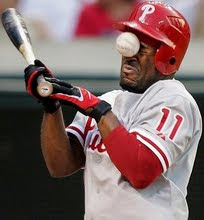
The other situation that comes to mind is former cub Adam Greenberg. He had exactly one plate appearance in the big leagues, not even an official one, as he was hit in the head and suffered a major concussion. He was able to return to baseball, but has never made it back to the majors. The real world "field of dreams"
http://mlb.mlb.com/team/player.jsp?player_id=444440
This tragedy quickly reminded me of several other athletes who's careers ended far too soon. The first one was the tragic death of USC kicker Mario Danelo. Within days of winning the rose bowl, he went out to party, got drunk, fell off a cliff and died. He appeared to have a bright kicking future ahead of him halted by a tragedy.
The other situation that comes to mind is former cub Adam Greenberg. He had exactly one plate appearance in the big leagues, not even an official one, as he was hit in the head and suffered a major concussion. He was able to return to baseball, but has never made it back to the majors. The real world "field of dreams"
Tyrus Thomas wants to be like Lebron
So i'm watching the Bulls game on TNT, when they show a short clip of a pregame interview with tyrus thomas where he says that he wants to get to the point where he is considered on the same level at Kobe, Lebron, and Chris Paul.
I do like his ambition to work and maximize his potential, but he may want to take baby steps in his effort to win the MVP. He is still extremely streaky from game to game, yet has shown the most growth this season. He has developed a jump shot that actually has a chance of going in, and has improved his inside game. Right now i recommend he strive to become a Shawn Marion/David West type player before he challenges LeBron to any one on one.
I do like his ambition to work and maximize his potential, but he may want to take baby steps in his effort to win the MVP. He is still extremely streaky from game to game, yet has shown the most growth this season. He has developed a jump shot that actually has a chance of going in, and has improved his inside game. Right now i recommend he strive to become a Shawn Marion/David West type player before he challenges LeBron to any one on one.
How slow are the white sox?
After watching just 2 white sox game this year, i have come to the observation that the sox may have the slowest team in the history of baseball. I may be exaggerating with an extremely small sample size, but speed is one of those things that you cant teach, and a team isnt suddenly going to deviate from their root mean square steal rate.
Lets take a quick look at the career steals and steals rate for the starting position players.
AJ Pierzynski: 9 Steals, 4172 PA, .216steals/PA percentage
Paul Konerko: 7 Steals, 6275 PA, .112steals/PA percentage
Chris Getz: 56 Steals, 1629 PA, 3.438 steals/PA percentage(minors)
Alexei Ramirez: 13 Steals, 512 PA, 2.539 steals/PA percentage
Josh Fields: 1 Steals, 481 PA, .208 steals/PA percentage
Carlos Quentin: 10 Steals, 1027 PA, .974 steals/PA percentage
Dewayne Wise: 21 Steals, 508 PA, 4.133 steals/PA percentage
Jermaine Dye: 46 Steals, 6644 PA, .692 steals/PA percentage
Jim Thome: 19 Steals, 9033 PA, .210 steals/PA percentage
Total: 182 Steals, 30281 PA, .601 steals/PA percentage
Not taking into account the age of most of these players, such that their 'fast' days are behind then, and taking into account Chris Getz' minor league steals rate, which should decline in the majors, the numbers work out to about 1 stolen base every 166 plate appearances for this group. Assuming an average number of 6200 plate appearances the sox are likely to accumulate this year, it works out to about 37 stolen bases for the starters. That is pitiful to say the least. I know that steals are becoming less relevant in the new age of baseball, but it also shows up in simply running the bases. Like scoring more than one run on 4 consecutive singles. The Padres only managed 36 steals last year, so this may not be the slowest team of all time, but it will be close.
Good luck playing small ball Ozzie
Lets take a quick look at the career steals and steals rate for the starting position players.
AJ Pierzynski: 9 Steals, 4172 PA, .216steals/PA percentage
Paul Konerko: 7 Steals, 6275 PA, .112steals/PA percentage
Chris Getz: 56 Steals, 1629 PA, 3.438 steals/PA percentage(minors)
Alexei Ramirez: 13 Steals, 512 PA, 2.539 steals/PA percentage
Josh Fields: 1 Steals, 481 PA, .208 steals/PA percentage
Carlos Quentin: 10 Steals, 1027 PA, .974 steals/PA percentage
Dewayne Wise: 21 Steals, 508 PA, 4.133 steals/PA percentage
Jermaine Dye: 46 Steals, 6644 PA, .692 steals/PA percentage
Jim Thome: 19 Steals, 9033 PA, .210 steals/PA percentage
Total: 182 Steals, 30281 PA, .601 steals/PA percentage
Not taking into account the age of most of these players, such that their 'fast' days are behind then, and taking into account Chris Getz' minor league steals rate, which should decline in the majors, the numbers work out to about 1 stolen base every 166 plate appearances for this group. Assuming an average number of 6200 plate appearances the sox are likely to accumulate this year, it works out to about 37 stolen bases for the starters. That is pitiful to say the least. I know that steals are becoming less relevant in the new age of baseball, but it also shows up in simply running the bases. Like scoring more than one run on 4 consecutive singles. The Padres only managed 36 steals last year, so this may not be the slowest team of all time, but it will be close.
Good luck playing small ball Ozzie
Cubs vs. Sox
On an impulse arising from an argument I recently engaged into with a statistically challenged friend who refuses to admit the 2008 Cubs were better than the 2008 White Sox (and also that the 2009 Cubs are better than the 2009 Sox), I've decided to analyze FIP (Fielding Independent ERA, a metric that projects probably future ERA trends by analyzing a pitcher's impact stats (K, BB, HR)), Value Wins (similar to WARP), fielding/batting runs and wOBA (weighted on-base average -- similar to EQA, but adjusted to reflect on-base percentage, rather than bating average) of each player, position by position, to uncontentiously prove that -- statistically speaking, not just in terms of Win-Loss records -- the 2008 Cubs were undeniably superior to the 2008 White Sox and that the 2009 Cubs pitching staff, based on future movements in ERA based on FIP, will be better than the 2009 White Sox. The DH position will be ignored and only starters will be compared. In the case of a platoon (ie, the Cubs CF position), an accumulation of both platoon member's stats will be utilized. All stats are courtesy of Fangraphs.com.
Just so we are clear, let me delineate who plays each position (courtesy of Baseball-Reference)
2008 CUBS
C-Geovany Soto
1B-Derrek Lee
2B-Mark DeRosa
SS-Ryan Theriot
3B-Aramis Ramirez
LF-Alfonso Soriano
CF-Reed Johnson/Jim Edmonds (platoon)*
RF-Kosuke Fukudome
SP1-Carlos Zambrano
SP2-Ryan Dempster
SP3-12 starts by Rich Harden/10 starts by Sean Gallagher (platoon)
SP4-Ted Lilly
SP5-Jason Marquis
RP1-Carlos Marmol
RP2-Bob Howry
RP3-Michael Wuertz
RP4-Neil Cotts
RP5-Sean Marshall
CL-Kerry Wood
*-stats will be undervalued because values for offense are not split by team and Jim Edmonds had negative production on the Padres which will lower his cumulative value for the season.
2008 WHITE SOX
C-AJ Pierzynski
1B-Paul Konerko
2B-Alexei Ramirez
SS-Orlando Cabrera
3B-Joe Crede/Juan Uribe (platoon)
LF-Carlos Quentin
CF-Nick Swisher
RF-Jermaine Dye
SP1-Mark Buehrle
SP2-Javier Vazquez
SP3-John Danks
SP4-Gavin Floyd
SP5-Jose Contreras
RP1-Matt Thorton
RP2-Octavio Dotel
RP3-Scott Linebrink
RP4-Boone Logan
RP5-Clayton Richard
CL-Bobby Jenks
Before I present the data, it is important to note that I calculated differences in performance between the two teams based on the Cubs. This means that positive differences between BATTING DATA (as well as win values for batting and pitching) shows an advantage for the Cubs, while a negative difference shows an advantage for the White Sox. Likewise, for PITCHING DATA (FIP), a negative difference favors the Cubs and a positive difference favors the White Sox.
Here is the comparison data for hitters (click image to enlarge)

Here is the data for pitching (again, click the image to enlarge):

Finally, there is the cumulative Win data:

Superficially speaking, it might appear that the difference between the two teams last season was only .7 wins in favor of the Cubs. However, a deeper delve into the numbers will reveal the true nature of why Cubs starters will perform better than Sox starters in 2009 (and why the Cubs won 8 more games than the Sox last season):

What you can observe here is the following:
1) The Cubs have a CLEAR advantage in hitting over the White Sox. A look at wOBA data shows that the Cubs outperform the Sox Runs-Created relevant areas. Although the Sox may out home run the Cubs, the Cubs outwalk, out double and under-grind (less use of sac bunts, station-to-station smallball, etc) the White Sox.
2) Now that the The Cubs have subtracted Jim Edmonds and Mark DeRosa and added Milton Bradley and Mike Fontenot, the Cubs have GREATLY improved their defensive prowess. Last season, the Cubs were the 9th most efficient team at converting balls in play into outs. On the other hand, the White Sox, who were the 11th worst at converting balls in play into outs, have only decreased the ability of their defense by moving the defensively below-average Alexei Ramirez from 2B to SS and by subtracting Orlando Cabrera (the best defensive player in baseball last season), Crede and Nick Swisher and replacing them with Josh Fields and some combination of Dewayne Wise (below average) and Brian Anderson (slightly above average). This means that going forward, Cubs pitchers are more apt to (continue to) outperform their FIPs than the White Sox.
3) The Cubs pitching staff improved this season, while the White Sox's did not. Out are 300 IP of 4.5+ FIP baseball by Bob Howry, Michael Wuertz and Jason Marquis. Sadly, out too is Kerry Wood. However, in comes pieces like Kevin Gregg (above average), Aaron Heilman (above average) and Angel Guzman (average). Furthermore, "poor" innings of baseball thrown by Gallagher and Jason Marquis last season will be replaced by average/excellent innings by Sean Marshall/Rich Harden (if healthy). The Cubs have plenty of average/above average SP depths (ie, Jeff Samardzija) around to deal with health concerns in the starting rotation (average innings+excellent innings=better than average innings). The White Sox, as I just mentioned, added no value-added pieces (Bartolo Colon? Bahahahah) and a lot of the pieces they have in place (Dotel, Floyd and even Danks to some extent) are headed towards some serious regression in 2009.
Thus, my conclusions are the following:
1) In terms of all around production, the Cubs were a better team than the White Sox in 2008, but thanks to much luck on behalf of both teams, the performance gap between the two teams last season was actually smaller than you might expect.
2) The Cubs had a SIGNIFICANTLY superior (almost ten fold) offense than the White Sox in 2008. There is really no reason to expect a notable decrease in the offense gap between the two teams in 2009 (you can add a month of Carlos Quentin, but you need to reconcile it against some possible regression in his production) because the Sox didn't really add any offensive pieces (also, the Cubs added Milton Bradley).
3) The White Sox defense was one of the worst in baseball last season and is only getting worse. The Cubs defense was top 10 in 2009 and thanks to the subtraction of Edmonds (1.5 defensive WINS below average) and DeRosa (average defensively)/additions of Mike Fontenot (+6.5 runs above average defensively in under 1000 career innings (less than a full season of work)) and Milton Bradley (+2.9 fielding runs above average). This will give the Cub's pitching staff and advantage over the White Sox pitching staff. In terms of FIP, however, both teams were roughly equal all around last season.
4) Ozzie Guillen is a terrible manager. I don't care if the White Sox did win a World Series in 2005. I don't care if he's a "fiery" son-of-a-bitch who motivates his team with untraditional, often homophobic/misogynistic antics. The mere fact that Ozzie Guillen plays station-to-station baseball (small ball), is committed to bunt, ignores the necessity of his players to get on-base regularly and liberally issues free passes in the form of "retaliation" is just going to bite him in the ass as it did in 2007. Once Ozzie stops winning, those comments he makes and actions he takes will be the icing on the cake that is him getting fired. It's also good to note, as irrelevant as it may be, that Ozzie was also (one of) the worst baseball players in the long and colorful history of baseball.
5) Flyball pitchers and The Cell are a bad combination. Gavin Floyd gave up the fifth most home runs (30 bombs in 2008) among any started in baseball last season. John Danks is a flyball pitcher (1.41 HR/9 in the minors) who cut down on his long ball big time last season thanks to a 10% increase in GB% at the expense of his FB%. While Danks is young and could easily sustain an improved HR/9 rate, logic suggests his .69 HR/9 rate last season is most likely to approve/exceed 1.00. Floyd, by the way, was the only sub-4 ERA pitcher with 29 or more home runs, thanks to an incredibly high volume of solo shots. You have to expect some serious regression there.
6) Groundball pitchers and the White Sox defense are a bad combination. Mark Buerhle is a pitch-to-contact hurler with a below average fielder at every position in the infield this season. Orlando Cabrera's +1.5 fielding wins, the best in baseball last season, and Joe Crede's +6.4 fielding runs are no longer there to bail out/balance the defensively challenged Alexei Ramirez (Steve Phillips would tell you his eyes tell him Ramirez is a solid or plus defender) and Paul Konerko. Groundball pitchers+below average defense=frowny face :(
Just so we are clear, let me delineate who plays each position (courtesy of Baseball-Reference)
2008 CUBS
C-Geovany Soto
1B-Derrek Lee
2B-Mark DeRosa
SS-Ryan Theriot
3B-Aramis Ramirez
LF-Alfonso Soriano
CF-Reed Johnson/Jim Edmonds (platoon)*
RF-Kosuke Fukudome
SP1-Carlos Zambrano
SP2-Ryan Dempster
SP3-12 starts by Rich Harden/10 starts by Sean Gallagher (platoon)
SP4-Ted Lilly
SP5-Jason Marquis
RP1-Carlos Marmol
RP2-Bob Howry
RP3-Michael Wuertz
RP4-Neil Cotts
RP5-Sean Marshall
CL-Kerry Wood
*-stats will be undervalued because values for offense are not split by team and Jim Edmonds had negative production on the Padres which will lower his cumulative value for the season.
2008 WHITE SOX
C-AJ Pierzynski
1B-Paul Konerko
2B-Alexei Ramirez
SS-Orlando Cabrera
3B-Joe Crede/Juan Uribe (platoon)
LF-Carlos Quentin
CF-Nick Swisher
RF-Jermaine Dye
SP1-Mark Buehrle
SP2-Javier Vazquez
SP3-John Danks
SP4-Gavin Floyd
SP5-Jose Contreras
RP1-Matt Thorton
RP2-Octavio Dotel
RP3-Scott Linebrink
RP4-Boone Logan
RP5-Clayton Richard
CL-Bobby Jenks
Before I present the data, it is important to note that I calculated differences in performance between the two teams based on the Cubs. This means that positive differences between BATTING DATA (as well as win values for batting and pitching) shows an advantage for the Cubs, while a negative difference shows an advantage for the White Sox. Likewise, for PITCHING DATA (FIP), a negative difference favors the Cubs and a positive difference favors the White Sox.
Here is the comparison data for hitters (click image to enlarge)

Here is the data for pitching (again, click the image to enlarge):

Finally, there is the cumulative Win data:

Superficially speaking, it might appear that the difference between the two teams last season was only .7 wins in favor of the Cubs. However, a deeper delve into the numbers will reveal the true nature of why Cubs starters will perform better than Sox starters in 2009 (and why the Cubs won 8 more games than the Sox last season):

What you can observe here is the following:
1) The Cubs have a CLEAR advantage in hitting over the White Sox. A look at wOBA data shows that the Cubs outperform the Sox Runs-Created relevant areas. Although the Sox may out home run the Cubs, the Cubs outwalk, out double and under-grind (less use of sac bunts, station-to-station smallball, etc) the White Sox.
2) Now that the The Cubs have subtracted Jim Edmonds and Mark DeRosa and added Milton Bradley and Mike Fontenot, the Cubs have GREATLY improved their defensive prowess. Last season, the Cubs were the 9th most efficient team at converting balls in play into outs. On the other hand, the White Sox, who were the 11th worst at converting balls in play into outs, have only decreased the ability of their defense by moving the defensively below-average Alexei Ramirez from 2B to SS and by subtracting Orlando Cabrera (the best defensive player in baseball last season), Crede and Nick Swisher and replacing them with Josh Fields and some combination of Dewayne Wise (below average) and Brian Anderson (slightly above average). This means that going forward, Cubs pitchers are more apt to (continue to) outperform their FIPs than the White Sox.
3) The Cubs pitching staff improved this season, while the White Sox's did not. Out are 300 IP of 4.5+ FIP baseball by Bob Howry, Michael Wuertz and Jason Marquis. Sadly, out too is Kerry Wood. However, in comes pieces like Kevin Gregg (above average), Aaron Heilman (above average) and Angel Guzman (average). Furthermore, "poor" innings of baseball thrown by Gallagher and Jason Marquis last season will be replaced by average/excellent innings by Sean Marshall/Rich Harden (if healthy). The Cubs have plenty of average/above average SP depths (ie, Jeff Samardzija) around to deal with health concerns in the starting rotation (average innings+excellent innings=better than average innings). The White Sox, as I just mentioned, added no value-added pieces (Bartolo Colon? Bahahahah) and a lot of the pieces they have in place (Dotel, Floyd and even Danks to some extent) are headed towards some serious regression in 2009.
Thus, my conclusions are the following:
1) In terms of all around production, the Cubs were a better team than the White Sox in 2008, but thanks to much luck on behalf of both teams, the performance gap between the two teams last season was actually smaller than you might expect.
2) The Cubs had a SIGNIFICANTLY superior (almost ten fold) offense than the White Sox in 2008. There is really no reason to expect a notable decrease in the offense gap between the two teams in 2009 (you can add a month of Carlos Quentin, but you need to reconcile it against some possible regression in his production) because the Sox didn't really add any offensive pieces (also, the Cubs added Milton Bradley).
3) The White Sox defense was one of the worst in baseball last season and is only getting worse. The Cubs defense was top 10 in 2009 and thanks to the subtraction of Edmonds (1.5 defensive WINS below average) and DeRosa (average defensively)/additions of Mike Fontenot (+6.5 runs above average defensively in under 1000 career innings (less than a full season of work)) and Milton Bradley (+2.9 fielding runs above average). This will give the Cub's pitching staff and advantage over the White Sox pitching staff. In terms of FIP, however, both teams were roughly equal all around last season.
4) Ozzie Guillen is a terrible manager. I don't care if the White Sox did win a World Series in 2005. I don't care if he's a "fiery" son-of-a-bitch who motivates his team with untraditional, often homophobic/misogynistic antics. The mere fact that Ozzie Guillen plays station-to-station baseball (small ball), is committed to bunt, ignores the necessity of his players to get on-base regularly and liberally issues free passes in the form of "retaliation" is just going to bite him in the ass as it did in 2007. Once Ozzie stops winning, those comments he makes and actions he takes will be the icing on the cake that is him getting fired. It's also good to note, as irrelevant as it may be, that Ozzie was also (one of) the worst baseball players in the long and colorful history of baseball.
5) Flyball pitchers and The Cell are a bad combination. Gavin Floyd gave up the fifth most home runs (30 bombs in 2008) among any started in baseball last season. John Danks is a flyball pitcher (1.41 HR/9 in the minors) who cut down on his long ball big time last season thanks to a 10% increase in GB% at the expense of his FB%. While Danks is young and could easily sustain an improved HR/9 rate, logic suggests his .69 HR/9 rate last season is most likely to approve/exceed 1.00. Floyd, by the way, was the only sub-4 ERA pitcher with 29 or more home runs, thanks to an incredibly high volume of solo shots. You have to expect some serious regression there.
6) Groundball pitchers and the White Sox defense are a bad combination. Mark Buerhle is a pitch-to-contact hurler with a below average fielder at every position in the infield this season. Orlando Cabrera's +1.5 fielding wins, the best in baseball last season, and Joe Crede's +6.4 fielding runs are no longer there to bail out/balance the defensively challenged Alexei Ramirez (Steve Phillips would tell you his eyes tell him Ramirez is a solid or plus defender) and Paul Konerko. Groundball pitchers+below average defense=frowny face :(
Canadians Can't Hold Their Liquor
Blue Jays fans were denied the elixir of baseball versus the Tigers during last night's game (in addition to two other baseball games later in the season) due to
No worries, however, drunken Blue Jays fans. According to the people in charge,
"...permitting drunkenness, permitting the use of narcotics, selling and serving to apparent minors, failure to request approved identification and permitting illegal liquor on the premises."Apparently, the Blue Jays had their liquor license temporarily suspended for allowing a routine pattern of unruly, illegal and inappropriate behavior to occur at Roger Centre over the past few years. Highlighted is an incident last season, "after fans brawled in the stands, leading to almost 100 ejections" and a delayed season opener due to "unruly fans" who littered the field with "baseballs and debris."
No worries, however, drunken Blue Jays fans. According to the people in charge,
Fans who want to exchange their tickets for the affected dates will be allowed to, subject to availability.
The Value Of Win-Loss Records (Or Lack Thereof)
Dan Haren pitched 7 innings, 9 Ks, 0 BB, 3 H, 1 ER (0 unearned) and is about to get the loss against Colorado.
If you ever tell me that win-loss records of pitchers mean anything remotely substantive, I promise to kick you in the balls repeatedly.
If you ever tell me that win-loss records of pitchers mean anything remotely substantive, I promise to kick you in the balls repeatedly.
ESPN 1000 Gallimaufry
In contempt that Mack, Jurko and Harry were touting Gavin Floyd and John Danks as Cy Young worthy pitchers, I called in ESPN 1000 to argue.
Noting that Gavin Floyd and Danks (but Floyd in particular) are flyball pitchers in a home run park, backed up by the worse defense in baseball, I asked them "how much budweiser have you all had to drink today?"
It's ok, though, because as Mack replied (to paraphrase): "I don't care how many home runs a guy gives up if they are all solo shots."
Taking note of this stupid, stupid response, I logged into Fangraphs.com and discovered that Gavin Floyd's 30 home runs last season were tied for the fifth most amongst any starting pitchers. With the exceptions of Dave Bush (whose FIP was awful), Scott Olsen (whose FIP was even worse) and Ted Lilly (whose FIP was a very average 4.41), no pitcher who gave up 29 or more home runs last season had an ERA under 4.55 -- EXCEPT Gavin Floyd, whose FIP was 4.77.
But it's OK, because Gavin Floyd only gives up home runs when no one's on base because he wills it so; he's just clutch like that.
Noting that Gavin Floyd and Danks (but Floyd in particular) are flyball pitchers in a home run park, backed up by the worse defense in baseball, I asked them "how much budweiser have you all had to drink today?"
It's ok, though, because as Mack replied (to paraphrase): "I don't care how many home runs a guy gives up if they are all solo shots."
Taking note of this stupid, stupid response, I logged into Fangraphs.com and discovered that Gavin Floyd's 30 home runs last season were tied for the fifth most amongst any starting pitchers. With the exceptions of Dave Bush (whose FIP was awful), Scott Olsen (whose FIP was even worse) and Ted Lilly (whose FIP was a very average 4.41), no pitcher who gave up 29 or more home runs last season had an ERA under 4.55 -- EXCEPT Gavin Floyd, whose FIP was 4.77.
But it's OK, because Gavin Floyd only gives up home runs when no one's on base because he wills it so; he's just clutch like that.
Stupid Baseball Rules, Part I
Baseball currently has some pretty stupid rules so I'm sure I'll have or someone else will have a part II+ somewhere. But here's one in particular I find retarded. I'm currently watching the White Sox game in class on ESPN's Gamecast and this popped up on my screen:
Now I understand how his happened; it's in a similiar way way AJ Peirzynski got on base in that controversial game White Sox/ Angels in the 2005 ALCS- the dropped third strike (or something along those lines). But let's think about this rule- the batter struck out. It's official, within 3+ pitcher the batter is out, YET HE"S STILL GET ON BASE. What a stupid fuck rule.
M Olivio struck out swinging. M Olivio is safe at first on a wild pitch by O Dotel
Now I understand how his happened; it's in a similiar way way AJ Peirzynski got on base in that controversial game White Sox/ Angels in the 2005 ALCS- the dropped third strike (or something along those lines). But let's think about this rule- the batter struck out. It's official, within 3+ pitcher the batter is out, YET HE"S STILL GET ON BASE. What a stupid fuck rule.
WBS Doesn't Cuase Injuries... Well NOW Maybe
According to this article on ESPN.com, the WBC does not cause injuries.
There logic is because many players are healthy on Opening Day, during a WBC year, that the WBC does NOT cause injury
While I believe offensive players who get injured during the WBC could have just as easily gotten injured during a spring training game (i.e. sprained and sore muscles, David Wright fouling a pitch off of his foot), the same can not be said for pitchers.
The logic for pitchers is that because they put undue stress on their arms more so in a WBC year than a normal year, that as a season wears on, pitching during the WBC catches up with them. For example, a complaint heard about Carlos Marmol is that he's a reliever and he's supposed to pitch as least amount of innings as possible. Pitching a lot of inning in the WBC, means Marmol pitches WAY too much innings. Jake Peavy had one of his worst statistical years the year he pitched in the WBC, because extra innings means a shittier regular season.
So way to go MLB for proving your point! Awesome!
NEW YORK -- Baseball got healthy this spring.
There were 69 players on disabled lists at the start of the season Sunday, down from 106 last year and 97 in 2007. The only lower total since the major leagues expanded to 30 teams in 1998 was when there were 66 in 2006, the commissioner's office said Monday.
Rob Manfred, MLB's executive vice president of labor relations, said the figure counters those who say the World Baseball Classic causes more players to get hurt.
"It certainly does not support the theory that the WBC causes more injuries," Manfred said. "More important, the WBC injuries were, almost exclusively, the type of small injuries [oblique strains] that are common in spring training, with or without the WBC."
There logic is because many players are healthy on Opening Day, during a WBC year, that the WBC does NOT cause injury
While I believe offensive players who get injured during the WBC could have just as easily gotten injured during a spring training game (i.e. sprained and sore muscles, David Wright fouling a pitch off of his foot), the same can not be said for pitchers.
The logic for pitchers is that because they put undue stress on their arms more so in a WBC year than a normal year, that as a season wears on, pitching during the WBC catches up with them. For example, a complaint heard about Carlos Marmol is that he's a reliever and he's supposed to pitch as least amount of innings as possible. Pitching a lot of inning in the WBC, means Marmol pitches WAY too much innings. Jake Peavy had one of his worst statistical years the year he pitched in the WBC, because extra innings means a shittier regular season.
So way to go MLB for proving your point! Awesome!
Steve Phillips is making my ears bleed: part 2
My jaw just literally dropped from listening to what Steve Phillips just said while broadcasting the Mets/Reds game. I couldnt believe how he just kept going deeper and deeper into his imaginary universe. Luckily i'm tivoing the game so i can transcribe exactly what he said.
I dont think i need to FJM this crap. It's pretty self explanatory. Steve Phillips thinks that his eye is better at accumulating/condensing/rating the defensive capabilities of every baseball player in the entire league than an excel spreadsheet on a computer. He then contradicts himself by saying sometimes reputation leads people to believe things that are not true. Which obviously Phillips has done himself with Derek Jeter. He believes Jeter is awesome defensively cause of his reputation, fuck the statistics. What good have they every done for anyone.
Even if the 'eye' is better at judging players than spreadsheets, it definitely isn't Steve Phillip's 'eye' that should be doing the evaluating. Heck, he was the one who didn't 'see' that Mo Vaughn was 350 pounds when he decided to give him a garbage truck full for benjamins.
Also, who needs those guys that accumulate meaningless stats like home runs and rbi's. I'd rather have ronny cedeno who has one big grand slam against the phillies as opposed to the meaningless 110 rbi's Aramis Ramirez accumulated over the entire season. Boy does he suck!
SP: Judgements are the most important factors in baseball. There's a system out there that rated Derek Jeter the worst SS in baseball. His range is much less than it was before, but i dont think he's the worst SS in baseball. There's a system that says Chase utley is the best 2B in baseball. I think he's good, but i dont think he;s the best 2B in baseball. He's good but he's no the best. Because the statistics dont match what my eye say, it makes me doubt the veracity of any of the numbers that are part of their system.
DS: So you chose your eyes over the stats.
SP: Yeah, i do. But scouts do. It's like reputation and defense dont always walk in sync with each other...There are certain players that are number accumulators they find themselves in situations to pick up that rbi up or down 3 runs
I dont think i need to FJM this crap. It's pretty self explanatory. Steve Phillips thinks that his eye is better at accumulating/condensing/rating the defensive capabilities of every baseball player in the entire league than an excel spreadsheet on a computer. He then contradicts himself by saying sometimes reputation leads people to believe things that are not true. Which obviously Phillips has done himself with Derek Jeter. He believes Jeter is awesome defensively cause of his reputation, fuck the statistics. What good have they every done for anyone.
Even if the 'eye' is better at judging players than spreadsheets, it definitely isn't Steve Phillip's 'eye' that should be doing the evaluating. Heck, he was the one who didn't 'see' that Mo Vaughn was 350 pounds when he decided to give him a garbage truck full for benjamins.
Also, who needs those guys that accumulate meaningless stats like home runs and rbi's. I'd rather have ronny cedeno who has one big grand slam against the phillies as opposed to the meaningless 110 rbi's Aramis Ramirez accumulated over the entire season. Boy does he suck!
2009 Basketball HOF Class
The title of this post is pretty self-explanatory. Today, five member were elected into the Hall of Fame, most notably, the greatest basketball player ever: Michael Jordan. The other four are: Utah Jazz PG John Stockton, Spurs C David Robinson, Utah Jazz coach Jerry Sloan, and Rutgers (college) coach C. Vivian Stringer. I think this is a phenomenal class and here's a brief overview of the class.
-Michael Jordan, G Chicago Bulls: Not only he is loved by all of Chicago, but... by all! He was just a great player and arguable the best that have ever played so far. He led the Bulls to three straight championships, twice! His free throw rate is 9th best all time, 3rd best in the NBA in scoring, 2nd most in steals, 1st in points in the playoffs, led the league in scoring in 10 seasons (an NBA record), won 5 MVPs, one of the only players to win Defensive Player of the Year and MVP in the same year, was on the All-Defensive Team seven straight years, went to 14 All-Star games, and was the Rookie of the Year in 1984. Michael could score, make clutch shots, play defense, and he also had the ability to pass and rebound. Essentially, Jordan was just amazing.
-John Stockton, PG Utah Jazz: Stockton's big claim to fame is that he leads the NBA in assists (15, 806) and steals (3,265) (Not a bad claim to fame, huh?), He's been an All-Star ten times and been to the playoff 19 times! Stockton can also score a bit being 30th on the all time scoring list.
-David Robinson, C San Antonio Spurs: Robinson was the MVP in 1995, 10 time All-Star, Defensive Player of the Year, 4 time selection to the All-Defensive team, and was Rookie of the Year in 1990.
-Jerry Sloan, coach Utah Jazz/ Chicago Bulls: Sloan is one of the winningest coaches in history with a 1086-717 record, which is 4th best all time. He is one of only five coaches to notch over 1,000 wins. And while he never won a championship, he did make it to the big game twice. But when you're up against Jordan's Bulls, it's OK to lose. The man is a great coach and end up in the playoffs year after year after year after year
C. Vivian Stringer, coach Rutgers/ Iowa/ Cheyney State: Stringer is one of the only coaches to lead three different teams to the Final Four and is the third winningest coach in woman's college basketball.
-Michael Jordan, G Chicago Bulls: Not only he is loved by all of Chicago, but... by all! He was just a great player and arguable the best that have ever played so far. He led the Bulls to three straight championships, twice! His free throw rate is 9th best all time, 3rd best in the NBA in scoring, 2nd most in steals, 1st in points in the playoffs, led the league in scoring in 10 seasons (an NBA record), won 5 MVPs, one of the only players to win Defensive Player of the Year and MVP in the same year, was on the All-Defensive Team seven straight years, went to 14 All-Star games, and was the Rookie of the Year in 1984. Michael could score, make clutch shots, play defense, and he also had the ability to pass and rebound. Essentially, Jordan was just amazing.
-John Stockton, PG Utah Jazz: Stockton's big claim to fame is that he leads the NBA in assists (15, 806) and steals (3,265) (Not a bad claim to fame, huh?), He's been an All-Star ten times and been to the playoff 19 times! Stockton can also score a bit being 30th on the all time scoring list.
-David Robinson, C San Antonio Spurs: Robinson was the MVP in 1995, 10 time All-Star, Defensive Player of the Year, 4 time selection to the All-Defensive team, and was Rookie of the Year in 1990.
-Jerry Sloan, coach Utah Jazz/ Chicago Bulls: Sloan is one of the winningest coaches in history with a 1086-717 record, which is 4th best all time. He is one of only five coaches to notch over 1,000 wins. And while he never won a championship, he did make it to the big game twice. But when you're up against Jordan's Bulls, it's OK to lose. The man is a great coach and end up in the playoffs year after year after year after year
C. Vivian Stringer, coach Rutgers/ Iowa/ Cheyney State: Stringer is one of the only coaches to lead three different teams to the Final Four and is the third winningest coach in woman's college basketball.
Fantasyland, Version 2009, Part 2.2
In case anybody cares, here's the results from the NL Tout Wars.
According to "The Fantasy Baseball Sherpa" (Jesus, how many fantasy baseball sites are there is one of them is named this!?), Nate Ravitz from ESPN.com is predicted to win the NL, Jason Grey from ESPN.com is predicted to win the AL, and Larry Schechter from SandlotShrink.com is predicted to win the Mixed League.
1) OK, I have a website: It's called gameofinches.com! (ok there's obviously a blogspot in there but still) That's sounds like a much more official website than fucking SandlotShrink.com
2) Really, not one but TWO guys from ESPN.com win, bullshit on that horseshit. Derek Jeter's not THAT good in fantasy.
According to "The Fantasy Baseball Sherpa" (Jesus, how many fantasy baseball sites are there is one of them is named this!?), Nate Ravitz from ESPN.com is predicted to win the NL, Jason Grey from ESPN.com is predicted to win the AL, and Larry Schechter from SandlotShrink.com is predicted to win the Mixed League.
1) OK, I have a website: It's called gameofinches.com! (ok there's obviously a blogspot in there but still) That's sounds like a much more official website than fucking SandlotShrink.com
2) Really, not one but TWO guys from ESPN.com win, bullshit on that horseshit. Derek Jeter's not THAT good in fantasy.
Is Zambrano insane?

It came to my attention today just how crazy Carlos Zambrano has become after signing his massive contract. We know that he has a tendency to be fisty, just ask Michael Barrett's face. He also refuses to drink water/stop emailing his brother that leads to constant cramping in his forearm. He is also very bipolar on the mound given the fact that he threw a no-hitter last september, yet still finished the last two months with an ERA above 7.
But none of that compares to the bat-shit craziness that comes out of his mouth. Recently he said that his favorite team in baseball is the White Sox. Seriously Carlos? You couldnt pick any other team in baseball? Couldnt just say the Red Sox or Yankees or maybe even the Cubs perhaps. You know, the team that sends to a million dollar check every other Friday. Might want to reconsider your words next time, i dont care that Ozzie Guillen is your homeboy.
After a 2 day trip to the new Yankee Stadium, Carlos suggested that the Cubs tear down Wrigley Field and build a new billion dollar stadium to make Carlos feel better. Seriously Carlos? Only the most historic, renowned, loved ballpark in the entire country. You want to tear it down. I think Carlos just wants a new, bigger clubhouse so his ego can comfortably fit inside, let alone his ERA. Yes, the new stadiums are nice and pretty, but you cant replace the 80 year stench of beer that only Wrigley can provide.
Just pitch Carlos. Just pitch
Miller, Morgan, and Phillips Are Making My Ears Bleed
I have been waiting so long for Opening Day. And when it finally arrives, I have to listen to Steve Phillips, Joe Morgan, and Jon Miller. I'd rather hear nails on a chalkboard for three hours. Oh my god, it's so bad! As this site has proved, making "expert analysis" is definitely a lot of harder than it looks, especially where there is so much data to contradict valid, rational thought. But the Trifecta Announcing From Hell does not use valid, rational thought. The first inning is not even complete and here's some of the great announcing I have to look forward to:
*Chipper Jones hit a bloop to LF off a low center ball out of the strike zone* Jon Miller:
Um, I'm pretty sure it's because of Chipper's top Line Drive Percentage and the fact that doesn't strike out is the reason he, or anyone else is able to hit for THAT high of an average, not because he hits bloop singles. If bloop singles was the reason people had a high AVG, then maybe I should pick up Michael Bourne in fantasy leagues...
*Chipper is at-bat* Jon Miller:
Really? Just now people are starting to use? How far out of baseball are you that OPS is still a statistic that's rarely used!?
*Brain McCann is at bat batting fourth after Chipper* Steve Phillips:
What!? Yes the Braves do not have that guy who can hit "40 Home Runs". Here's a list of teams that did not have a 40 HR hitter last year: Chicago, Tigers, Cleveland, Kansas City, Minnesota, Boston, New York, Tampa Bay, Oakland, LA, Toronto, Seattle, and Texas. And that's just the American League! Next year there is only gonna be probably about four teams that will have a 40+ HR guy: Milwaukee (Ryan Braun), Phillies (Ryan Howard), Cardinals (Albert Pujols), and Nationals (Adam Dunn). If even that's pushing it. God forbid the Braves don't have a 40 HR guy in their line up! How terrible that they only have a guy who will hit about 25 HR in their four hole! Oh No!
*Chipper Jones hit a bloop to LF off a low center ball out of the strike zone* Jon Miller:
And that's the reason Chipper hit .364 last year
Um, I'm pretty sure it's because of Chipper's top Line Drive Percentage and the fact that doesn't strike out is the reason he, or anyone else is able to hit for THAT high of an average, not because he hits bloop singles. If bloop singles was the reason people had a high AVG, then maybe I should pick up Michael Bourne in fantasy leagues...
*Chipper is at-bat* Jon Miller:
Chipper was second in OPS last year to Albert Pujols. In fact, OPS is a statistic that some people are starting to use.
Really? Just now people are starting to use? How far out of baseball are you that OPS is still a statistic that's rarely used!?
*Brain McCann is at bat batting fourth after Chipper* Steve Phillips:
You know very rarely do you see a catcher in the clean up spot and while McCann is a great power hitting catcher this is just a testament to this Braves line up that they really don't have that 40 HR guy
What!? Yes the Braves do not have that guy who can hit "40 Home Runs". Here's a list of teams that did not have a 40 HR hitter last year: Chicago, Tigers, Cleveland, Kansas City, Minnesota, Boston, New York, Tampa Bay, Oakland, LA, Toronto, Seattle, and Texas. And that's just the American League! Next year there is only gonna be probably about four teams that will have a 40+ HR guy: Milwaukee (Ryan Braun), Phillies (Ryan Howard), Cardinals (Albert Pujols), and Nationals (Adam Dunn). If even that's pushing it. God forbid the Braves don't have a 40 HR guy in their line up! How terrible that they only have a guy who will hit about 25 HR in their four hole! Oh No!
White Sox Opening Day Is Cancelled!
I was watching Baseball Tonight and they said because of snow in Chicago, Royals v White Sox is cancelled. I've been waiting for so long for Opening Day...
FFFFFFFFFFFFFUUUUUUUUUUUUUCCCCCCCCCCCCCCCCKKKKKKKKKK!!!
FFFFFFFFFFFFFUUUUUUUUUUUUUCCCCCCCCCCCCCCCCKKKKKKKKKK!!!
Jay Cutler Trade, Part II
OK, so now that I've had time digest this Cutler deal and talked to some people, I think I may have been too harsh in my last post. Essentially everyone that I've talked to LOVES this deal. However, I think there are obviously two sides to this deal. I think if you're absolutely in love with it, you're a bit too naive and optimistic. But if you absolutely hate it, then you're way too cynical and pessimistic. The thing I think to notice is that there is no clear cut winner and loser, at least not yet. The Bears are not automatically a Superbowl team, or even a playoff team with Cutler but they didn't necessarily destroy their future and organization either. So I'm here to post some pros and cons to this trade from the Bears perspective and let people make up their own mind. I still contend that it was a bad deal, but to say the Bears gained nothing is absurd.
PRO- This Deal Was Good For The Bears:
1) The organization, FINALLY got some stability in the QB position. There have only been two good QBs in the history of the Bears franchise: Sid Luckman and Jim Mcmahon. And let's be honest here, if McMahan was on any other team with any other franchise he wouldn't be considered good. Last year, Cutler threw for over 4,000 yards, had over 25 passing TDs, and was a Pro Bowler. The last QB Pro Bowler for the Bears was McMahon, the last guy to throw 25+ TDs was Eric Kramer in the mid-90s, and the Bears have never had a QB go over 4,000 yards. To say the Bears have had a bad history of QBs is to say the Cubs are just going through a little World Series dry spell.
2) Cutler is a guy you can build your franchise around. Cutler is only 26 years old and already has had success. The opportunity get a good player in one of the hardest positions not only in football but in all of sports is a rarity that when it comes along, you have to take it
3) The Bears suck at drafting anyway. The Bears do not know how to evaluate offensive players anyway and when Ron Turner is in charge of all your offense, it seems futile to try to build an offense in house. Yes Cutler cost two draft picks, but what would the Bears have done with those picks anyway? People have told me that draft picks don't matter anyway and you're still taking a risk on an unknown. In fact, Bright One texted me today "Fuck draft picks". If draft picks are really unimportant, then the Bears just got Cutler for nothing
CONS: This Deal Was Bad For The Bears
1) Cutler is not the savior. Let's be honest here, Cutler had success in Denver because of the offense around him. He had a great wide out in Brandon Marshall, his his offensive line in Denver was far superior to the one he'll have in Chicago, the only reason he passed over 4,000 yards was because he was 2nd in the NFL in passing attempts. The team around him in Chicago, at least in the short term, will show fans that a big name QB on his own can't win games. Current Bears WR and shit and so is the O-line. Joe Montana would have a hard time running this team, what makes Cutler so special?
2)If the Bears would just waste their draft picks anyway, then what's the point of building around Cutler? You see, the purpose of getting a young "franchise QB" is so that you can help your organization go forward. You still need to get WR and linemen and suck around your QB (The Bears already have a RB available). If this organization is too stupid to not take advantage of their draft picks, then how will they be smart enough to out talent around Cutler to make him a success? (My personal opinion is that everyone from Lovie Smith to the McCaskeys themselves don't know shit about how to successfully run an organization anyway...)
3) The Bears could have used those draft picks anyway to be good. The best way to win games and bee good is by having good D and O-lines. Jay Cutler doesn't help with that, draft picks (of free agents) do.
Do I think the Bears finally have a stable, good, Pro Bowl worthy QB that can play at least 32 games in row, something a Bears QB hasn't done in a long time? Yep. Do I think it's smart to draft Kyle Orton over Jay Cutler in next years fantasy football draft? Yep.
PRO- This Deal Was Good For The Bears:
1) The organization, FINALLY got some stability in the QB position. There have only been two good QBs in the history of the Bears franchise: Sid Luckman and Jim Mcmahon. And let's be honest here, if McMahan was on any other team with any other franchise he wouldn't be considered good. Last year, Cutler threw for over 4,000 yards, had over 25 passing TDs, and was a Pro Bowler. The last QB Pro Bowler for the Bears was McMahon, the last guy to throw 25+ TDs was Eric Kramer in the mid-90s, and the Bears have never had a QB go over 4,000 yards. To say the Bears have had a bad history of QBs is to say the Cubs are just going through a little World Series dry spell.
2) Cutler is a guy you can build your franchise around. Cutler is only 26 years old and already has had success. The opportunity get a good player in one of the hardest positions not only in football but in all of sports is a rarity that when it comes along, you have to take it
3) The Bears suck at drafting anyway. The Bears do not know how to evaluate offensive players anyway and when Ron Turner is in charge of all your offense, it seems futile to try to build an offense in house. Yes Cutler cost two draft picks, but what would the Bears have done with those picks anyway? People have told me that draft picks don't matter anyway and you're still taking a risk on an unknown. In fact, Bright One texted me today "Fuck draft picks". If draft picks are really unimportant, then the Bears just got Cutler for nothing
CONS: This Deal Was Bad For The Bears
1) Cutler is not the savior. Let's be honest here, Cutler had success in Denver because of the offense around him. He had a great wide out in Brandon Marshall, his his offensive line in Denver was far superior to the one he'll have in Chicago, the only reason he passed over 4,000 yards was because he was 2nd in the NFL in passing attempts. The team around him in Chicago, at least in the short term, will show fans that a big name QB on his own can't win games. Current Bears WR and shit and so is the O-line. Joe Montana would have a hard time running this team, what makes Cutler so special?
2)If the Bears would just waste their draft picks anyway, then what's the point of building around Cutler? You see, the purpose of getting a young "franchise QB" is so that you can help your organization go forward. You still need to get WR and linemen and suck around your QB (The Bears already have a RB available). If this organization is too stupid to not take advantage of their draft picks, then how will they be smart enough to out talent around Cutler to make him a success? (My personal opinion is that everyone from Lovie Smith to the McCaskeys themselves don't know shit about how to successfully run an organization anyway...)
3) The Bears could have used those draft picks anyway to be good. The best way to win games and bee good is by having good D and O-lines. Jay Cutler doesn't help with that, draft picks (of free agents) do.
Do I think the Bears finally have a stable, good, Pro Bowl worthy QB that can play at least 32 games in row, something a Bears QB hasn't done in a long time? Yep. Do I think it's smart to draft Kyle Orton over Jay Cutler in next years fantasy football draft? Yep.
No No No NO NOOOOOOOO! Call Trade Backs Angelo, Take Him Back!
Just a few moments ago, ESPN.com's John Clayton reported that our beloved Chicago Bears won the Jay Cutler raffle. While Cutler is a good young quarterback that you can build a franchise around, he is not worth two first round picks PLUS a player. The Bears reportedly gave up this year's first round pick, next year's first round pick, AND Kyle Orton. While I'm actually fine giving up Orton if we're getting Culter in return, but at what cost? Teams need, especially the borderline Bears, first round picks to build up their franchise. First round picks are extremely valuable because if a player is taken in the first round, they are essentially going to be a pro and a damn fine one (assuming they're healthy). While sure you can tell me Rex Grossman was a first round pick. And I'll retort that yes he wasn't worth a first pick for the Bears but 1) He got injured a lot early in his career which affected his play (especially his mobility) and 2) Even despite that, Rex Grossman's gonna be a #2 QB somewhere and he'll start soon enough. Anyway, I digress. The point is, teams NEED first round picks to help their team. And when you give up not just one, but two of your first round picks, you're guaranteeing a set back in your future growth. So if you give up TWO first round picks, you better get a guy who can change your franchise buy himself. Jay Cutler is not that guy.
There are only two QBs right now that are worth two first round draft picks: Peyton Manning and Tom Brady. Jay Cutler is nowhere close to being in the same stratosphere as those two players. And let's now overlook the fact of what the Bears had to give up to get Cutler, but let's now look and how Cutler will be able to help the team. Now it's hard to judge Cutler on his entire career because essentially last year was his "developed" break out year but let's do that. Now last year his numbers were good being 5th in DVOA and 4th in DVAR. But Culter played in the 5th ranked offense and played in front of the best rushing offensive line and the 4th best passing offensive lines. Cutler also had a great WR last year in Brandon Marshall. How is Cutler going to be effective in front of the 11th ranked O-line with only four O-lineman on the team and throw to no hands Devin Hester? If you want to build up your team, you need to first develop your lines. Look how good Minnesota, Carolina, and New York (N) was last year? You know why they were good? because of the fucken lineman! Yes, you can build a team around Cutler but what good will be if he doesn't have a line to play in front of!
Not only that, I think Kyle Orton will be a fine QB with or without a line. Before Orton got hurt last year he was just as good of a QB as anyone. I'm not convinced Orton was fully healthy last year and thought he was rushed back too soon and thus he put up sub par numbers. Once healthy, I don't think you need Cutler over Orton and if the Bears were smart (which they were not), the Bears could have used those first round picks to build up their O-line to make Orton better.
I hate Jerry Angelo so much and hope he gets fired. I almost want this to blow up in Angelo's face, yet my love for the Bears winning supercedes my hatred of Jerry Angelo.
There are only two QBs right now that are worth two first round draft picks: Peyton Manning and Tom Brady. Jay Cutler is nowhere close to being in the same stratosphere as those two players. And let's now overlook the fact of what the Bears had to give up to get Cutler, but let's now look and how Cutler will be able to help the team. Now it's hard to judge Cutler on his entire career because essentially last year was his "developed" break out year but let's do that. Now last year his numbers were good being 5th in DVOA and 4th in DVAR. But Culter played in the 5th ranked offense and played in front of the best rushing offensive line and the 4th best passing offensive lines. Cutler also had a great WR last year in Brandon Marshall. How is Cutler going to be effective in front of the 11th ranked O-line with only four O-lineman on the team and throw to no hands Devin Hester? If you want to build up your team, you need to first develop your lines. Look how good Minnesota, Carolina, and New York (N) was last year? You know why they were good? because of the fucken lineman! Yes, you can build a team around Cutler but what good will be if he doesn't have a line to play in front of!
Not only that, I think Kyle Orton will be a fine QB with or without a line. Before Orton got hurt last year he was just as good of a QB as anyone. I'm not convinced Orton was fully healthy last year and thought he was rushed back too soon and thus he put up sub par numbers. Once healthy, I don't think you need Cutler over Orton and if the Bears were smart (which they were not), the Bears could have used those first round picks to build up their O-line to make Orton better.
I hate Jerry Angelo so much and hope he gets fired. I almost want this to blow up in Angelo's face, yet my love for the Bears winning supercedes my hatred of Jerry Angelo.
Coaches sure do love lying

I was quite surprised to hear that the storied college basketball powerhouse that is the Arizona Wildcats decided to hand over the keys to the Mercedes to non other than Tim Floyd. Maybe i'm still bitter with him after he took over for Phil Jackson in 1999 and proceeded to run the Bulls into the ground(not that god could have done better), but I expected a better guy to follow the legend that is Lute Olson. Arizona is my favorite college basketball team, as i was devastated when the refs gave away the elite 8 game to the Illini in 2005. I have to believe my admiration for the team was a result of the elegance and prestige that was associated with Luke Olson. If he had coached Duke all these years, as opposed to Arizona, he would be on the Mt. Rushmore of coaches in all sports. I think he could have continued coaching if not for family issues, so the school was forced to find a replacement.
I was hoping for a coach with a similar elegance and grace that Olson brought to the court every year, someone like a Jay Wright or Jaime Dixon. Instead, they went with Tim Floyd. I'll admit that Floyd has been a good coach since his days in Iowa State, but he doesnt seem to me like the right person to follow Olson, just like he wasnt the right person to follow Phil Jackson. His recruiting tactics have been brought into question, and he also once said "This is my last job, at SC" when he was offered the LSU head coaching job several years back. Coaches sure love to lie
Eastbound And Down
It took me awhile to hunt down all six episodes of HBO's Eastbound And Down, but here you go:
Episode One
Episode Two
Episode Three
Episode Four
Episode Five
Episode Six
Enjoy!
(Needless to say, this show is NSFW)
Episode One
Episode Two
Episode Three
Episode Four
Episode Five
Episode Six
Enjoy!
(Needless to say, this show is NSFW)
A “30 Teams In 30 Days” Substitute
I was watching some Baseball Tonight recently and to fill time yet be informative, they had Buster Olney and company talk about the best and up and coming from each division. Since our 30 teams in 30 Days didn’t really pan out, I thought this might be a nice substitute. Now frankly, I absolutely know there is going to be some argument, especially considering most of the “30 Teams In 30 Days” argument came from information about specific players and not about the teams as a whole (*cough cough* MVP Eckstein). I am way too lazy to put exact reasoning behind each of these players but I trust you there is. I used information from PECOTA and Fangraphs.com to come up with the information so there is clearly expert rationale behind my picks. But by no means is this list to be the end all be all. There is clearly reasons for other players to be on this list and clearly fine stats to prove why other players to be swapped. With this, I in fact expect and encourage debate and this is meant to be a fun little baseball tidbit and not so much a forum for attacking and pissing each other off. So with out further ado, my list…
AL Central:
-Cy Young: Fransisco Liriano (SP, MIN)
-MVP: Grady Sizemore (CF, CLE)
-Rolaids Reliever: Joe Nathan (CL, MIN)
-Breakout Star (Offense): Denard Span (OF, MIN)
-Breakout Star (Pitcher): Kevin Slowey (SP, MIN)
-Gold Glover: Carlos Gomez (OF, MIN)/ Brian Anderson (CF, CWS)
-X Factor: Cleveland rotation. I think the Twins will take this division because they’re rotation in awesome, they have the defense to back it up, and while their offense isn’t prolific, no start will really end up like 2007 Matt Cain (awesome ERA, losing record. However, if the Indians rotation end up vastly exceeding expectations, then the can easily win this division because they have an awesome bullpen and offense.
AL East:
-Cy Young: Josh Beckett (SP, BOS)
-MVP: David Ortiz (DH, BOS)
-Rolaids Reliever: Jonathan Papelbon (CL, BOS)
-Breakout Star (Offense): Matt Wieters (C, BAL)
-Breakout Star (Pitching): David Price (P, TAM)
-Gold Glover: Carl Crawford (OF, TAM)
-X Factor: Health of Yankees rotation. That rotation truly is awesome but the Yankees have absolutely no depth. If one pitcher gets injured, especially for a significant amount of time, this team is screwed. But if they stay relatively healthy all season long, they can make the playoffs
AL West:
-Cy Young: Felix Hernandez (SP, SEA)
-MVP: Ian Kinsler (2B, TEX)
-Rolaids Reliever: Brad Ziegler (CL, OAK)
-Breakout Star (Offense): Nelson Cruz (OF, TEX)
-Breakout Star (Pitching): Brandon Morrow (P/CL, SEA)
-Gold Glover: Orlando Cabrera (SS, OAK)
-X Factor: Effectiveness of A’s rotation. The division really looks like its all for the Angels taking just because everyone else looks so weak this year. However, if the A’s have another great year and the Angels falter (like they’re starting too with all the rotation injuries), then the A’s can win this division. (Even though Eckstein thinks the A’s already will win it).
NL Central:
-Cy Young: Rich Harden (SP, CHC). He needs to stay healthy though like he did last year.
-MVP: Albert Pujols (1B, STL)
-Rolaids Reliever: Carlos Marmol (RP, CHC)
-Breakout Star (Offense): Joey Votto (1B, CIN)
-Breakout Star (Pitching): Yovani Gallardo (SP, MIL)
-Gold Glover: Mike Cameron (OF, MIN)
-X Factor: Dusty Baker and the Reds rotation. If the Cubs DON’T win this division then I will laugh hysterically for like about a week. The only team that even would have a miniscule chance would be the Reds, and on paper, the Reds have a decent rotation. And if by some miracle Dusty Baker doesn’t destroy these pitchers, then the Reds will have a chance to compete.
NL West:
-Cy Young: Dan Haren (SP, ARI)
-MVP: Manny Rameriz (OF, LAD)
-Rolaids Reliever: Jonathan Broxton (CL, LAD)
-Breakout Star (Offense): Chris Iannetta (C, COL)
-Breakout Star (Pitching): Jonathan Sanchez (SP, SFG)
-Gold Glover: Randy Winn (OF, SFG)
-X Factor: Giants Bullpen. I view this team like the Twins, except slightly shittier. They have a good, deep starting rotation, defense, and just enough offense. If the Giants end up having a bullpen this year, then this team can win the division.
NL East:
-Cy Young: Javier Vazquez (SP, ATL)
-MVP: Hanley Rameriz (SS, FLA)
-Rolaids Reliever: Brad Lidge (CL, PHI)
-Breakout Star (Offense): Elijah Dukes (OF, WAS)
-Breakout Star (Pitching): Josh Johnson (SP, FLA)
-Gold Glover: Jimmy Rollins (SS, PHI)
-X Factor: Mets rotation. The Braves have a damn good rotation and great defense which will carry them far. The Phillies have an above average, deep rotation, a good bullpen (one of the few teams in recent history to have a consistent bullpen year to year) and a great offense. The Mets have a prolific offense and a much improved bullpen (were the relievers overpaid, absolutely, did the Mets NEED to do it, of course). So if the Mets want to stay in contention this year, that rotation needs to be just as strong.
Something I noticed, the NL East is the only division to have all five teams represented. The AL Central is the most lopsided. But then again, this is just my opinion.
Just a quick note: being avid and extremely thorough fantasy baseball fans and fantasy baseball fans, you might view my break out stars as like “what the fuck?” But essentially all of those players are people the average baseball fan has never heard of. They are people 1) in/were in the minor leagues expected to be great (i.e. Wieters, Cruz), 2) young guys who poised to have a breakout awesome year (i.e. Slowey, Sanchez), or 3) guys who have been in the leagues a few years and are essentially “developed” and will show the world why the should have been drafted higher in fantasy baseball drafts (i.e. Iannetta, Votto). Essentially, “breakout” means you haven’t really “produced” in the big leagues for any reason and will do so in 2009.
AL Central:
-Cy Young: Fransisco Liriano (SP, MIN)
-MVP: Grady Sizemore (CF, CLE)
-Rolaids Reliever: Joe Nathan (CL, MIN)
-Breakout Star (Offense): Denard Span (OF, MIN)
-Breakout Star (Pitcher): Kevin Slowey (SP, MIN)
-Gold Glover: Carlos Gomez (OF, MIN)/ Brian Anderson (CF, CWS)
-X Factor: Cleveland rotation. I think the Twins will take this division because they’re rotation in awesome, they have the defense to back it up, and while their offense isn’t prolific, no start will really end up like 2007 Matt Cain (awesome ERA, losing record. However, if the Indians rotation end up vastly exceeding expectations, then the can easily win this division because they have an awesome bullpen and offense.
AL East:
-Cy Young: Josh Beckett (SP, BOS)
-MVP: David Ortiz (DH, BOS)
-Rolaids Reliever: Jonathan Papelbon (CL, BOS)
-Breakout Star (Offense): Matt Wieters (C, BAL)
-Breakout Star (Pitching): David Price (P, TAM)
-Gold Glover: Carl Crawford (OF, TAM)
-X Factor: Health of Yankees rotation. That rotation truly is awesome but the Yankees have absolutely no depth. If one pitcher gets injured, especially for a significant amount of time, this team is screwed. But if they stay relatively healthy all season long, they can make the playoffs
AL West:
-Cy Young: Felix Hernandez (SP, SEA)
-MVP: Ian Kinsler (2B, TEX)
-Rolaids Reliever: Brad Ziegler (CL, OAK)
-Breakout Star (Offense): Nelson Cruz (OF, TEX)
-Breakout Star (Pitching): Brandon Morrow (P/CL, SEA)
-Gold Glover: Orlando Cabrera (SS, OAK)
-X Factor: Effectiveness of A’s rotation. The division really looks like its all for the Angels taking just because everyone else looks so weak this year. However, if the A’s have another great year and the Angels falter (like they’re starting too with all the rotation injuries), then the A’s can win this division. (Even though Eckstein thinks the A’s already will win it).
NL Central:
-Cy Young: Rich Harden (SP, CHC). He needs to stay healthy though like he did last year.
-MVP: Albert Pujols (1B, STL)
-Rolaids Reliever: Carlos Marmol (RP, CHC)
-Breakout Star (Offense): Joey Votto (1B, CIN)
-Breakout Star (Pitching): Yovani Gallardo (SP, MIL)
-Gold Glover: Mike Cameron (OF, MIN)
-X Factor: Dusty Baker and the Reds rotation. If the Cubs DON’T win this division then I will laugh hysterically for like about a week. The only team that even would have a miniscule chance would be the Reds, and on paper, the Reds have a decent rotation. And if by some miracle Dusty Baker doesn’t destroy these pitchers, then the Reds will have a chance to compete.
NL West:
-Cy Young: Dan Haren (SP, ARI)
-MVP: Manny Rameriz (OF, LAD)
-Rolaids Reliever: Jonathan Broxton (CL, LAD)
-Breakout Star (Offense): Chris Iannetta (C, COL)
-Breakout Star (Pitching): Jonathan Sanchez (SP, SFG)
-Gold Glover: Randy Winn (OF, SFG)
-X Factor: Giants Bullpen. I view this team like the Twins, except slightly shittier. They have a good, deep starting rotation, defense, and just enough offense. If the Giants end up having a bullpen this year, then this team can win the division.
NL East:
-Cy Young: Javier Vazquez (SP, ATL)
-MVP: Hanley Rameriz (SS, FLA)
-Rolaids Reliever: Brad Lidge (CL, PHI)
-Breakout Star (Offense): Elijah Dukes (OF, WAS)
-Breakout Star (Pitching): Josh Johnson (SP, FLA)
-Gold Glover: Jimmy Rollins (SS, PHI)
-X Factor: Mets rotation. The Braves have a damn good rotation and great defense which will carry them far. The Phillies have an above average, deep rotation, a good bullpen (one of the few teams in recent history to have a consistent bullpen year to year) and a great offense. The Mets have a prolific offense and a much improved bullpen (were the relievers overpaid, absolutely, did the Mets NEED to do it, of course). So if the Mets want to stay in contention this year, that rotation needs to be just as strong.
Something I noticed, the NL East is the only division to have all five teams represented. The AL Central is the most lopsided. But then again, this is just my opinion.
Just a quick note: being avid and extremely thorough fantasy baseball fans and fantasy baseball fans, you might view my break out stars as like “what the fuck?” But essentially all of those players are people the average baseball fan has never heard of. They are people 1) in/were in the minor leagues expected to be great (i.e. Wieters, Cruz), 2) young guys who poised to have a breakout awesome year (i.e. Slowey, Sanchez), or 3) guys who have been in the leagues a few years and are essentially “developed” and will show the world why the should have been drafted higher in fantasy baseball drafts (i.e. Iannetta, Votto). Essentially, “breakout” means you haven’t really “produced” in the big leagues for any reason and will do so in 2009.
More Stupid Comments
EDIT: Baseball Analysts FJMed this Jon Heyman article a few days back.
_____________________
We really should start a new section on this blog called "Jon Heyman Says The Darndest Things." Even though he's often on top of MLB trades, he often utters the "stupidest" fucking comments. Comments like this one:
What cheer? What about Manny's turbulent relationship with the Red Sox or his turbulent, greedy and drawn out negotiations with the Dodgers? Less controversy, perhaps, but less cheer? I think not.
Furthermore, according to Baseball Prospectus, Barry Bonds' cumulative Batting Runs Above the Replacement level (BRAR) since 2000 has been 730 runs (this includes a season of 5 BRAR in 2005, when Bonds only accumulated 42 ABs). Over the same time frame, Manny Ramirez accumulated a BRAR of 615 runs. There is literally no comparison -- especially considering that Manny played full, healthy seasons in each of those years. Manny's best season was last year, when he batted 80 runs above the replacement level. His second best season was back in Cleveland a decade ago, when he posted a 79 BRAR. By comparison, Barry Bonds -- his 2005 season removed from the equation -- posted an average BRAR of 84.7 per season (Manny Ramirez has a seasonal BRAR average of 63.5).
Finally, Heyman states that Manny could have brought less controversy along with him than Barry Bonds. Going back to the drawn out Dodgers negotiations, I'd like to postulate that rejecting a $45 million, two-year deal (especially when no one else is bidding for you) amidst an economic recession is about as insensitive and controversial as something can be barring the use of PEDs.
_____________________
We really should start a new section on this blog called "Jon Heyman Says The Darndest Things." Even though he's often on top of MLB trades, he often utters the "stupidest" fucking comments. Comments like this one:
Among active players, Manny Ramirez would have made a nice addition to the Giants. He could have replicated the years of Barry Bonds, with comparable productivity, less controversy and more good cheer.
What cheer? What about Manny's turbulent relationship with the Red Sox or his turbulent, greedy and drawn out negotiations with the Dodgers? Less controversy, perhaps, but less cheer? I think not.
Furthermore, according to Baseball Prospectus, Barry Bonds' cumulative Batting Runs Above the Replacement level (BRAR) since 2000 has been 730 runs (this includes a season of 5 BRAR in 2005, when Bonds only accumulated 42 ABs). Over the same time frame, Manny Ramirez accumulated a BRAR of 615 runs. There is literally no comparison -- especially considering that Manny played full, healthy seasons in each of those years. Manny's best season was last year, when he batted 80 runs above the replacement level. His second best season was back in Cleveland a decade ago, when he posted a 79 BRAR. By comparison, Barry Bonds -- his 2005 season removed from the equation -- posted an average BRAR of 84.7 per season (Manny Ramirez has a seasonal BRAR average of 63.5).
Finally, Heyman states that Manny could have brought less controversy along with him than Barry Bonds. Going back to the drawn out Dodgers negotiations, I'd like to postulate that rejecting a $45 million, two-year deal (especially when no one else is bidding for you) amidst an economic recession is about as insensitive and controversial as something can be barring the use of PEDs.
Five Up, Five Down
Today, I'm going to look at five pitchers who are primed to increase in value this season and five guys who you can expect some serious regression from.
FIVE UP
1. Javier Vazquez
A combination of his lack of success in the AL (minus 2007) in recent years matched against his great peripherals make him unfairly undervalued. Despite posting a FIP of 3.86 or lower each of the past 3 seasons, the absolutely TERRIBLE defense of the Chicago White Sox helped to inflate Javvy's ERA to 4.84, 3.73 and 4.67 over that time frame. Last year, Vazquez struck out 8.64 guys per nine, walked 2.64 per nine and gave up a little over a home run per game (1.08 HR/9), good for a very solid 3.74 FIP. Vazquez's 68.3 LOB% also contributed heavily to an inflated ERA last year. In short, Vazquez's move away from the HR friendly Cell, defensive challenged White Sox and stronger hitting AL to the defensively strong Braves and pitcher-who-bats NL should only make him a top 10 guy in 2009.
2. Jonathan Sanchez
Sanchez is a guy who gets a bad rep due to high ERA/FIP splits and bad luck. Jonathan Sanchez may have a below average defense behind him this year, but his 3.85/5.01 FIP/ERA split in 2008 calls for some extreme regression. In 250 big league innings, Sanchez has struck out 252 guys. Fangraph notes that "batters swung and missed at 10.9% of Sanchez’s pitches, the 9th highest total in baseball." This, combined with a 67.5 LOB% in 2008 tell me that Sanchez is bound to improve.
3. Josh Beckett
After two consecutive season of 200+ IP, the injury bug again bit Beckett, limiting him to a serviceable 27 starts, 175 IP. His ERA was 4.03, but the FIP was a sparkling 3.24. Beckett's K rate has been increasing since 2006, while his BB rate has declined over that same period. Boston had a top 5 defensive team last year and Beckett had an average 71.3 LOB%, so what was the problem? As his -0.92 clutch rating (a fangraphs metric that compares a player's performance in high leverage situations to performance in low leverage situations) highlights, Josh Beckett allowed a majority of his walks and extra-base hits in situations when runners were in scoring position. Despite Beckett's tendency to be slightly unclutchy on the Red Sox, there's absolutely no reason to think that this extreme unclutchiness will continue in 2009. Simply put, all signs point to a return to great success for Josh Beckett next year.
4. Derek Lowe
This extreme groundballer is second only to Brandon Webb when it came to burning worms last year. Despite his four years of success in Dodgers Stadium, there is arguably room for improvement (despite Lowe's increasing age). Groundballers tend to be more reliant on the defense of the infield behind them to keep their numbers good. One would assume, using FIP as the breakever point, that a pitcher on a team with a good defensive infield would outperform their FIP, while one a defensively challenged team would underperform their FIP. According to fangraphs data, the Dodgers infield last year combined to be -32.3 fielding runs below average, while the Braves infield was worth a positive 2.5 fielding runs above average (Kelly Johnson's limited range kind of took down the team's total defensive value by being -9.0 Fielding Runs below average last year, but was similtaneously slightly above average when it came to not making errors). So while Derek Lowe negligibly underperformed his FIP in each of his four years on the Dodgers except 2005 (his FIP/ERA splits between 2005 and 2008 were 4.16/3.61, 3.68/3.63, 3.97/3.88 and 3.26/3.24), you have to expect a favorably larger FIP/ERA split going forward for the 35 year old ex-closer whose lack of K's is subsidized by superior control (2.60+ K/BB as a starter) and a lack of home runs (.65 HR/9 as a starter). If nothing more, expect Derek Lowe to continue to post an ERA around/below 3.6 and a solid WHIP in the 1.2 range over 200ish innings.
5. Andrew Miller
Going back to the "quality pitchers who get a bad rap due to poor FIP/ERA splits" theme, Andrew Miller was the most unfortunate victim of bad luck amongst all major leaguers last season. Despite increasing his K rate and decreasing both his walk and home run rates in each of the past three seasons, Andrew Miller's ERA has risen each year. His FIP/ERA splits since 2006 are 5.47/6.10, 5.27/5.63 and 4.00/5.87. A lot of this is due to the fact that both the Marlins and Tigers rank amongst the league's worst defensive teams, but how much of Andrew Miller's league leading +1.87 F-E (FIP-ERA) ratio should persist next year? Miller has a great arm that is primed for a breakout season if he finds shelter on a friendlier team. Even on the Marlins, we should expect a sharp decline in ERA from Andrew Miller next season, hopefully to a fantasy relevant range.
FIVE DOWN
1. Johan Santana
Each of the past two seasons have seen a sharp decline in Santana's once unquestionably dominate peripherals. After averageing a FIP of 3.03 between 2002 and 2006, Santana has seen his FIP rise to 3.81 and 3.51 over the past two seasons, as his strike out rate has fallen and walk rate risen. Santana's career best 2.53 ERA was largely the by-product of ridiculously lucky 82.6 LOB% (over 10% above league average) and a defensively awesome defense (sixth best in the league at converting balls in play into outs). Santana, who struck out less than 9 guys per nine (7.91 per nine to be exact) for the first time since 2001, is bound to bounce back some in his strike out rate from last season (the projection systems on fangraphs see it landing somewhere in the upper 8's per nine range), but Santana's declining numbers indicate that he may be on the decline and is certainly no longer worth an automatic first round pick (and certainly not a pick above Tim Lincecum, who despite his injury potential, posted an ERA/FIP split of exactly zero). Johan Santana has achieved almost all that we can expect from him and thus presents little, if any, upside (and a lot of downside) at pick #16. Santana's just a brand name, at the point, and I strongly suggest you avoid paying that premium.
2. Gavin Floyd
One of the many reasons that the outlook for the 2009 White Sox is so grim is that much of the team's success derived from a great pitching core that outperformed its peripherals. Gavin Floyd posted a quality 3.87 ERA, despite a 4.77 FIP that resulted in a mediocre 6.32 K/9 rate and hellish 1.31 HR/9 rate. As a flyball pitcher in the home run friendly US Cellular Field, the projection systems on fangraphs sees Floyd's HR/9 rate increasing to the 1.4 or even 1.5 per nine range, while projecting a 10% decline in his control (from 2.07 K/BB to the 1.8 K/BB range). Even if Gavin Floyd didn't regress to the 5.00 FIP range next year, you'd have to expect a sharp rise in ERA for the sophomore hurler who was just handed a four-year contract.
3. Armando Galaragga
Like Gavin Floyd, Armando Galaragga is a flyball pitcher who got incredibly lucky last year. His ridiculously low .250 BABIP helped mask his poor 4.88 FIP with a quality 3.73 ERA. Tigers fans who expect a repeat performance from the man who gave up 1.4 HR/9 and struck out a mere 6.53 per nine are going to be in for some severe disappointment. Even if Galaragga maintains his 2.07 K/BB and decreased his HR/9 rate, you've still got to worry about the effects of the very below average defense of the Tigers on Galaragga's numbers. To say the least, the outlook for Armando Galaragga is bleak.
4. Daisuke Matsuzaka
Dice-K still struck out a lot of guys last year, but his numbers indicate some impending regression. In 2008, Dice-K upped his walk rate by 1.5 guys per nine and decreased his K rate by from 8.84 K/8 to 8.27 K/9. At the same time, Dice-K almost halved his HR/9, while neither increasing his GB rate nor decreasing his FB rate -- meaning the downturn was probably a fluke rather than an increase in skill. Furthermore, Dice-K's 18% line drive rate says that his .267 BABIP of 2008 is bound to regress somewhere towards the .290-.300 range. Dice-K's FIP/ERA split last season was 4.03/2.90, and while Boston had a great defense last season (fifth in defensive efficiency), it wasn't and isn't good enough to reasonably sustain a 1.03 F-E. In 2009, I fully expect Dice-K's ERA to be closer to his 2007 numbers than those of last season -- those free passes are going to come back to bite him big time.
5. Joe Saunders
Despite a 91 MPH fastball and above average control (2.41 BB/9), there is much to not like about Saunders (such as his anemic 4.68 K/9 rate and ridiculously low .267 BABIP). Last year, despite posting an average 4.36 FIP and barely 100 Ks to go with 200 innings of work, Joe Saunders put up ace-quality numbers with a 3.41 ERA and 17 Wins. Unfortunately for Halos fans and Saunders, his above average control and average home run rates can't overcome his 30% below average strikeout rate. Saunders is no Greg Maddux.
TWO GUYS WHO COULD GO EITHER WAY
1. Justin Duchscherer
I love me some "Doosher", but his 2009 season could go either way. On one hand, Duchscherer is an injury prone 31 year old with a 3.69/2.54 FIP/ERA split. On the other hand, a 3.69 FIP is nothing to scoff at and the Oakland A's were one of the game's top defensive teams last year (fourth in defensive efficiency). Despite a below average K rate, Doosher's stellar control (2.16 BB/9) and lack of longballs (.70 HR/9) make him a candidate for continued, although comparatively diminished, success. I would expect a mid 3 ERA from Duchscherer to go along with a limited innings load in 2009 (he's starting the first six weeks of the season on the DL).
2. Andy Pettite
Despite posting an ERA north of 4.00 in each of the past two seasons, Andy Pettite's FIP has been below 3.90 (3.71 FIP in 2008) in each of those seasons. Pettite's inflated ERA has largely been due to the extremely poor defensive abilities of guys like Derek Jeter Jason Giambi and Bobby Abreu in the field. With Abreu, Giambi and even Matsui out of the field and the addition of Mark Teixeira (+10.7 fielding runs above average last year), you have to expect some improvement in the ability of the Yankee's defense. On the other hand, both Johnny Damon and Derek Jeter's defense are on a rapid decline, while A-Rod hip may hinder his range when he returns. In short, whether or not the Yankee's defense as a whole will significantly improve this year is questionable and Pettite's FIP/ERA splits seem dependant on where the defensive coin toss lands. There's no reason to expect a poor (above 4) FIP or significant downturn in IP from Pettite this year, however.
FIVE UP
1. Javier Vazquez
A combination of his lack of success in the AL (minus 2007) in recent years matched against his great peripherals make him unfairly undervalued. Despite posting a FIP of 3.86 or lower each of the past 3 seasons, the absolutely TERRIBLE defense of the Chicago White Sox helped to inflate Javvy's ERA to 4.84, 3.73 and 4.67 over that time frame. Last year, Vazquez struck out 8.64 guys per nine, walked 2.64 per nine and gave up a little over a home run per game (1.08 HR/9), good for a very solid 3.74 FIP. Vazquez's 68.3 LOB% also contributed heavily to an inflated ERA last year. In short, Vazquez's move away from the HR friendly Cell, defensive challenged White Sox and stronger hitting AL to the defensively strong Braves and pitcher-who-bats NL should only make him a top 10 guy in 2009.
2. Jonathan Sanchez
Sanchez is a guy who gets a bad rep due to high ERA/FIP splits and bad luck. Jonathan Sanchez may have a below average defense behind him this year, but his 3.85/5.01 FIP/ERA split in 2008 calls for some extreme regression. In 250 big league innings, Sanchez has struck out 252 guys. Fangraph notes that "batters swung and missed at 10.9% of Sanchez’s pitches, the 9th highest total in baseball." This, combined with a 67.5 LOB% in 2008 tell me that Sanchez is bound to improve.
3. Josh Beckett
After two consecutive season of 200+ IP, the injury bug again bit Beckett, limiting him to a serviceable 27 starts, 175 IP. His ERA was 4.03, but the FIP was a sparkling 3.24. Beckett's K rate has been increasing since 2006, while his BB rate has declined over that same period. Boston had a top 5 defensive team last year and Beckett had an average 71.3 LOB%, so what was the problem? As his -0.92 clutch rating (a fangraphs metric that compares a player's performance in high leverage situations to performance in low leverage situations) highlights, Josh Beckett allowed a majority of his walks and extra-base hits in situations when runners were in scoring position. Despite Beckett's tendency to be slightly unclutchy on the Red Sox, there's absolutely no reason to think that this extreme unclutchiness will continue in 2009. Simply put, all signs point to a return to great success for Josh Beckett next year.
4. Derek Lowe
This extreme groundballer is second only to Brandon Webb when it came to burning worms last year. Despite his four years of success in Dodgers Stadium, there is arguably room for improvement (despite Lowe's increasing age). Groundballers tend to be more reliant on the defense of the infield behind them to keep their numbers good. One would assume, using FIP as the breakever point, that a pitcher on a team with a good defensive infield would outperform their FIP, while one a defensively challenged team would underperform their FIP. According to fangraphs data, the Dodgers infield last year combined to be -32.3 fielding runs below average, while the Braves infield was worth a positive 2.5 fielding runs above average (Kelly Johnson's limited range kind of took down the team's total defensive value by being -9.0 Fielding Runs below average last year, but was similtaneously slightly above average when it came to not making errors). So while Derek Lowe negligibly underperformed his FIP in each of his four years on the Dodgers except 2005 (his FIP/ERA splits between 2005 and 2008 were 4.16/3.61, 3.68/3.63, 3.97/3.88 and 3.26/3.24), you have to expect a favorably larger FIP/ERA split going forward for the 35 year old ex-closer whose lack of K's is subsidized by superior control (2.60+ K/BB as a starter) and a lack of home runs (.65 HR/9 as a starter). If nothing more, expect Derek Lowe to continue to post an ERA around/below 3.6 and a solid WHIP in the 1.2 range over 200ish innings.
5. Andrew Miller
Going back to the "quality pitchers who get a bad rap due to poor FIP/ERA splits" theme, Andrew Miller was the most unfortunate victim of bad luck amongst all major leaguers last season. Despite increasing his K rate and decreasing both his walk and home run rates in each of the past three seasons, Andrew Miller's ERA has risen each year. His FIP/ERA splits since 2006 are 5.47/6.10, 5.27/5.63 and 4.00/5.87. A lot of this is due to the fact that both the Marlins and Tigers rank amongst the league's worst defensive teams, but how much of Andrew Miller's league leading +1.87 F-E (FIP-ERA) ratio should persist next year? Miller has a great arm that is primed for a breakout season if he finds shelter on a friendlier team. Even on the Marlins, we should expect a sharp decline in ERA from Andrew Miller next season, hopefully to a fantasy relevant range.
FIVE DOWN
1. Johan Santana
Each of the past two seasons have seen a sharp decline in Santana's once unquestionably dominate peripherals. After averageing a FIP of 3.03 between 2002 and 2006, Santana has seen his FIP rise to 3.81 and 3.51 over the past two seasons, as his strike out rate has fallen and walk rate risen. Santana's career best 2.53 ERA was largely the by-product of ridiculously lucky 82.6 LOB% (over 10% above league average) and a defensively awesome defense (sixth best in the league at converting balls in play into outs). Santana, who struck out less than 9 guys per nine (7.91 per nine to be exact) for the first time since 2001, is bound to bounce back some in his strike out rate from last season (the projection systems on fangraphs see it landing somewhere in the upper 8's per nine range), but Santana's declining numbers indicate that he may be on the decline and is certainly no longer worth an automatic first round pick (and certainly not a pick above Tim Lincecum, who despite his injury potential, posted an ERA/FIP split of exactly zero). Johan Santana has achieved almost all that we can expect from him and thus presents little, if any, upside (and a lot of downside) at pick #16. Santana's just a brand name, at the point, and I strongly suggest you avoid paying that premium.
2. Gavin Floyd
One of the many reasons that the outlook for the 2009 White Sox is so grim is that much of the team's success derived from a great pitching core that outperformed its peripherals. Gavin Floyd posted a quality 3.87 ERA, despite a 4.77 FIP that resulted in a mediocre 6.32 K/9 rate and hellish 1.31 HR/9 rate. As a flyball pitcher in the home run friendly US Cellular Field, the projection systems on fangraphs sees Floyd's HR/9 rate increasing to the 1.4 or even 1.5 per nine range, while projecting a 10% decline in his control (from 2.07 K/BB to the 1.8 K/BB range). Even if Gavin Floyd didn't regress to the 5.00 FIP range next year, you'd have to expect a sharp rise in ERA for the sophomore hurler who was just handed a four-year contract.
3. Armando Galaragga
Like Gavin Floyd, Armando Galaragga is a flyball pitcher who got incredibly lucky last year. His ridiculously low .250 BABIP helped mask his poor 4.88 FIP with a quality 3.73 ERA. Tigers fans who expect a repeat performance from the man who gave up 1.4 HR/9 and struck out a mere 6.53 per nine are going to be in for some severe disappointment. Even if Galaragga maintains his 2.07 K/BB and decreased his HR/9 rate, you've still got to worry about the effects of the very below average defense of the Tigers on Galaragga's numbers. To say the least, the outlook for Armando Galaragga is bleak.
4. Daisuke Matsuzaka
Dice-K still struck out a lot of guys last year, but his numbers indicate some impending regression. In 2008, Dice-K upped his walk rate by 1.5 guys per nine and decreased his K rate by from 8.84 K/8 to 8.27 K/9. At the same time, Dice-K almost halved his HR/9, while neither increasing his GB rate nor decreasing his FB rate -- meaning the downturn was probably a fluke rather than an increase in skill. Furthermore, Dice-K's 18% line drive rate says that his .267 BABIP of 2008 is bound to regress somewhere towards the .290-.300 range. Dice-K's FIP/ERA split last season was 4.03/2.90, and while Boston had a great defense last season (fifth in defensive efficiency), it wasn't and isn't good enough to reasonably sustain a 1.03 F-E. In 2009, I fully expect Dice-K's ERA to be closer to his 2007 numbers than those of last season -- those free passes are going to come back to bite him big time.
5. Joe Saunders
Despite a 91 MPH fastball and above average control (2.41 BB/9), there is much to not like about Saunders (such as his anemic 4.68 K/9 rate and ridiculously low .267 BABIP). Last year, despite posting an average 4.36 FIP and barely 100 Ks to go with 200 innings of work, Joe Saunders put up ace-quality numbers with a 3.41 ERA and 17 Wins. Unfortunately for Halos fans and Saunders, his above average control and average home run rates can't overcome his 30% below average strikeout rate. Saunders is no Greg Maddux.
TWO GUYS WHO COULD GO EITHER WAY
1. Justin Duchscherer
I love me some "Doosher", but his 2009 season could go either way. On one hand, Duchscherer is an injury prone 31 year old with a 3.69/2.54 FIP/ERA split. On the other hand, a 3.69 FIP is nothing to scoff at and the Oakland A's were one of the game's top defensive teams last year (fourth in defensive efficiency). Despite a below average K rate, Doosher's stellar control (2.16 BB/9) and lack of longballs (.70 HR/9) make him a candidate for continued, although comparatively diminished, success. I would expect a mid 3 ERA from Duchscherer to go along with a limited innings load in 2009 (he's starting the first six weeks of the season on the DL).
2. Andy Pettite
Despite posting an ERA north of 4.00 in each of the past two seasons, Andy Pettite's FIP has been below 3.90 (3.71 FIP in 2008) in each of those seasons. Pettite's inflated ERA has largely been due to the extremely poor defensive abilities of guys like Derek Jeter Jason Giambi and Bobby Abreu in the field. With Abreu, Giambi and even Matsui out of the field and the addition of Mark Teixeira (+10.7 fielding runs above average last year), you have to expect some improvement in the ability of the Yankee's defense. On the other hand, both Johnny Damon and Derek Jeter's defense are on a rapid decline, while A-Rod hip may hinder his range when he returns. In short, whether or not the Yankee's defense as a whole will significantly improve this year is questionable and Pettite's FIP/ERA splits seem dependant on where the defensive coin toss lands. There's no reason to expect a poor (above 4) FIP or significant downturn in IP from Pettite this year, however.
Fantasyland, Version 2009, Part II
I recently posted about the AL Tout Wars teams and now I was finally able to find the Mixed League teams. Tomorrow I'll hopefully find the NL Tout Wars team
Cory Provus No Longer With Us
I guess we overlooked this one, but a three way deal was announced early last month which will send Cory Provus from the Cubs to Milwaukee and Jim Powell from Milwaukee to Atlanta for an announcer to be named later.
Miss you already, Provus.
Miss you already, Provus.
What Is Fantasyland?
I just realized, the authors of this blog have made several references to Fantasyland and the main fantasy league we're all in is called "Fantasyland 2", but many people probably have no idea what Fantasyland is. Well, Fantasyland is a book written by Sam Walker chronicling his journey into playing in the hardest fantasy league in the country, Tout Wars. Walker was (probably still is) a journalist in the Twin City area who never played fantasy baseball in his life. He decided one year to join Tout Wars- a fantasy league started by baseball expert Ron Shandler in which you join either an AL or NL only draft (although I guess now there's a mixed leagued draft as well), players are determined by an auction, and oh yeah, you have to be IN baseball already just to be determined if you can play or not- and Walker wrote a book about what he had to do to create a winning team and about the history of fantasy baseball.
It's extremely interesting all the work Walker did for his team and it's extremely well-written and very enjoyable. If you're a fan of Moneyball (if you're not get the hell off this site) and love fantasy baseball as much as the blog authors do, I highly suggest reading this book.
So now whenever makes a Fantasyland reference, you now understand it!
It's extremely interesting all the work Walker did for his team and it's extremely well-written and very enjoyable. If you're a fan of Moneyball (if you're not get the hell off this site) and love fantasy baseball as much as the blog authors do, I highly suggest reading this book.
So now whenever makes a Fantasyland reference, you now understand it!
Fantasyland, Version 2009
For those of who have read Fantasyland (or are in the process of reading it), I found a list of the 2009 Tout Wars AL Teams. You can find the list here.
I personally think Fantasyland author Sam Walker has a great team but frankly, I think it's kind of hard to judge just because the pool of players to choose is severely reduced and I can't image choosing teams in which I'm forced to have Brian Anderson and Delmon Young on them, and where Armando Galarraga is extremely valuable, but hey, that's why I'm not in Tout Wars.
So who do you guys think will win?
I personally think Fantasyland author Sam Walker has a great team but frankly, I think it's kind of hard to judge just because the pool of players to choose is severely reduced and I can't image choosing teams in which I'm forced to have Brian Anderson and Delmon Young on them, and where Armando Galarraga is extremely valuable, but hey, that's why I'm not in Tout Wars.
So who do you guys think will win?
David "MVP" Eckstein's Drafting Strategy for Pitchers
My drafting strategy for pitching was about value retention. Whenever you draft high value pitchers, you are taking on a bunch of risk by forgoing valuable multi-category hitters to take someone from a deep position that features much volatility. Undrafted guys like Cliff Lee and Ryan Dempster often outperform big name guys like Carlos Zambrano each season, but they usually don't repeat -- at least not at the same level. Guys like Lincecum have great seasons, but then become overrated, overvalued and often placed in questionable positions of health (consult PAP!).
So my strategy for drafting starting pitchers was firmly placed on the following dynamics:
1) FIP and xFIP
2) D/E and Aggregate Fielding Runs
3) LOB%
4) K/9
5) PAP and the Verducci Effect
I focused on FIP for obvious reasons. I wanted to know whose success was "for real" (ie, Dan Haren) and whose success was the byproduct of luck (ie, Gavin Floyd). As I often advocate everyone do, I checked ERA/FIP splits and tried to avoid guys whose ERAs didn't quite match up with their FIPs. I strongly believe that guys who outperform their FIPs - like Johan Santana - even if they are great, will be incredibly overvalued. Furthermore, I checked FIP to find guys who UNDERPERFORMED their abilities last year. I hunted down guys like Jonathan Sanchez and Javier Vazquez, who posted quality FIPS below 4, but ERAs upwards of 4.5. Guys like Vazquez, who get an "unclutch" label, are perfectly undervalued targets.
Following FIP, I looked at the Defensive Efficiency (a metric that analyzes how efficient teams are at converting balls put into play into outs) and a team's cumulative fielding runs above/below average (broken down by infield, outfield and whole team). The goal here was to find out which teams are very good, average and below average at fielding. By determining this, I could figure out which pitchers could reasonably outperform/underperform their FIPs for 2009. I can confidently state that a guy like James Shields -- a groundball pitcher backed by the game's best defensive infields -- is going to continue to outperform his already quality FIP going forward. At the same time, I question whether or not the Rockie's defense (amongst other factors) provides enough coverage to match Ubaldo Jimenez's quality peripherals to his ERA.
I then looked at player's Left On Base Percentages (LOB%) to see whether or not which pitcher's ERAs were strongly biased due to positive/negative luck. Since non-HR hits are incredibly situational, you have to expect a lot of regression towards the mean in a player's LOB% from year to year. Guys with large FIP/ERA splits like Jonathan Sanchez -- who is on a defensively challenged team, but also posted an unlucky 67.5 LOB% (league average is 72.5%) -- scream value to me. At the same time, Johan Santana's declining peripherals and league leading 82.6 LOB% tells me that not only would I be overpaying for Santana, but that his "return to form" year may have not actually been a return to form.
After FIP, Fielding Runs and LOB%, I looked at guys based on K/9 rates. I figure that if I am going to excel in any category, I want it to be the one pitchers have the most control over. Teams can unexpectedly suck (low Wins total), while Save Opps, WHIP (which is comprised of HITS) and ERA are all situational. Pitchers have absolute control over only exactly three things: strikeouts, walks and home runs. Thus, choosing high K guys is the most logical thing to do. Plus, guys with higher K rates tend to perform closer to their FIPs due to their "ability to get out of jams" without relying on the defense behind them. In terms of pitching K/9 is pretty consistent, which is important to a drafting strategy of value retention (minimizing risk).
Finally, I checked out how abused pitchers were last year to decide whether or not I wanted to take on the risk of injury by drafting them. Young pitchers (under 26) who had huge inning leaps (Cole Hamels increased his workload by 44 innings last year) or heavy workloads (Tim Lincecum lead the league in PAP points) scare me -- especially if they go in the top 6 rounds. As I pointed out in my analysis of John Danks,
As should be evident by my picks of Dan Haren (Dr. Consistent), Javier Vazquez, Josh Beckett, Yovani Gallardo, Erik Bedard, Jonathan Sanchez, Manny Parra and Brandon Morrow should indicate, I stuck pretty closely to my value retention strategy. The only high risk, late round guy I pulled was Morrow -- largely because he's got so much upside and will either be a quality starter or the team's closers.
As you should also already know by now, I hate closers, so it shouldn't surprise you that I picked up Jason Motte, Leo Nunez and Chad Qualls to supplement Jose Valverde -- who is one of the best RPs in baseball and one of the very few closers (the others being Joe Nathan, Kerry Wood, Jonathan Broxton and maybe Heath Bell) I would ever consider drafting "early."
Go know and use my knowledge, dear child.
So my strategy for drafting starting pitchers was firmly placed on the following dynamics:
1) FIP and xFIP
2) D/E and Aggregate Fielding Runs
3) LOB%
4) K/9
5) PAP and the Verducci Effect
I focused on FIP for obvious reasons. I wanted to know whose success was "for real" (ie, Dan Haren) and whose success was the byproduct of luck (ie, Gavin Floyd). As I often advocate everyone do, I checked ERA/FIP splits and tried to avoid guys whose ERAs didn't quite match up with their FIPs. I strongly believe that guys who outperform their FIPs - like Johan Santana - even if they are great, will be incredibly overvalued. Furthermore, I checked FIP to find guys who UNDERPERFORMED their abilities last year. I hunted down guys like Jonathan Sanchez and Javier Vazquez, who posted quality FIPS below 4, but ERAs upwards of 4.5. Guys like Vazquez, who get an "unclutch" label, are perfectly undervalued targets.
Following FIP, I looked at the Defensive Efficiency (a metric that analyzes how efficient teams are at converting balls put into play into outs) and a team's cumulative fielding runs above/below average (broken down by infield, outfield and whole team). The goal here was to find out which teams are very good, average and below average at fielding. By determining this, I could figure out which pitchers could reasonably outperform/underperform their FIPs for 2009. I can confidently state that a guy like James Shields -- a groundball pitcher backed by the game's best defensive infields -- is going to continue to outperform his already quality FIP going forward. At the same time, I question whether or not the Rockie's defense (amongst other factors) provides enough coverage to match Ubaldo Jimenez's quality peripherals to his ERA.
I then looked at player's Left On Base Percentages (LOB%) to see whether or not which pitcher's ERAs were strongly biased due to positive/negative luck. Since non-HR hits are incredibly situational, you have to expect a lot of regression towards the mean in a player's LOB% from year to year. Guys with large FIP/ERA splits like Jonathan Sanchez -- who is on a defensively challenged team, but also posted an unlucky 67.5 LOB% (league average is 72.5%) -- scream value to me. At the same time, Johan Santana's declining peripherals and league leading 82.6 LOB% tells me that not only would I be overpaying for Santana, but that his "return to form" year may have not actually been a return to form.
After FIP, Fielding Runs and LOB%, I looked at guys based on K/9 rates. I figure that if I am going to excel in any category, I want it to be the one pitchers have the most control over. Teams can unexpectedly suck (low Wins total), while Save Opps, WHIP (which is comprised of HITS) and ERA are all situational. Pitchers have absolute control over only exactly three things: strikeouts, walks and home runs. Thus, choosing high K guys is the most logical thing to do. Plus, guys with higher K rates tend to perform closer to their FIPs due to their "ability to get out of jams" without relying on the defense behind them. In terms of pitching K/9 is pretty consistent, which is important to a drafting strategy of value retention (minimizing risk).
Finally, I checked out how abused pitchers were last year to decide whether or not I wanted to take on the risk of injury by drafting them. Young pitchers (under 26) who had huge inning leaps (Cole Hamels increased his workload by 44 innings last year) or heavy workloads (Tim Lincecum lead the league in PAP points) scare me -- especially if they go in the top 6 rounds. As I pointed out in my analysis of John Danks,
Baseball Prospectus has shown, pitchers are most brittle before the age of 24 and after the age of 35. Tom Verducci observed that pitchers under the age of 25 who increase their seasonal workload by more than 25-30 innings in a single season are the most susceptible to injury the following year.I adhere strongly to that data.
As should be evident by my picks of Dan Haren (Dr. Consistent), Javier Vazquez, Josh Beckett, Yovani Gallardo, Erik Bedard, Jonathan Sanchez, Manny Parra and Brandon Morrow should indicate, I stuck pretty closely to my value retention strategy. The only high risk, late round guy I pulled was Morrow -- largely because he's got so much upside and will either be a quality starter or the team's closers.
As you should also already know by now, I hate closers, so it shouldn't surprise you that I picked up Jason Motte, Leo Nunez and Chad Qualls to supplement Jose Valverde -- who is one of the best RPs in baseball and one of the very few closers (the others being Joe Nathan, Kerry Wood, Jonathan Broxton and maybe Heath Bell) I would ever consider drafting "early."
Go know and use my knowledge, dear child.