My latest article for The Hardball Times.
One of a series on dilemmas facing major league teams this winter.
There are three ways to build a baseball team, though the three methods are the ends and the middle of a continuum. The White Sox seem stuck at one end, and it's not clear how they can change that this offseason.
The first way to build a contender is organically, relying heavily on successful scouting and development of players in the farm system. This is the method the Tampa Bays Rays have followed so successfully, and though not the easiest way to build a team—it requires good projection by scouts—it is most appealing method for small market teams.
Of course, not even the Rays' deep farm system can churn out a full 25-man roster, so organic growth must be supplemented by shrewd trades and free agent signings. This means exploiting market inefficiencies and avoiding brand names, like signing Kyle Farnsworth ("washed up") and letting Rafael Soriano ("the next Jonathan Papelbon") walk. Because young talent is cost-controlled, and because shrewd free agent signings tend to be some combination of short-term commitment and relatively low-cost, "misses" in current years tend to have a lower impact on future years. At the same time, more players are required to contend because the young talent tends to be more raw. The need for more good decisions is especially true when the organizational philosophy is to build a stable of young 3 WAR players with upside, rather than around a perennial 8 WAR player.
At the other extreme of team building is signing players who are already good to fill out your roster through free agency pool and big trades. This approach is somewhat attractive because players between ages 27 and 30 tend to "be what they are" and are more projectable in the years immediately following. These players also are more established, meaning they can sell jerseys. On the other hand, these players cost more money and more contract years, or cost big prospects who are young, cost-controlled and potentially the source of many future years of value. The back end of most large free agent contracts, where money is often backloaded, can turn once-stars into untradable albatrosses. And overvaluing a free agent or acquired player—think Barry Zito or Vernon Wells—can make even the early years of the contract ugly.
In this category, misses not only hurt now, but they can cripple a team's future. It can have big results, but it requires the franchise using it to be able to eat massive contracts, or otherwise be so bloated with inefficient contracts for several seasons that it is unable to contend. This approach is best embodied by the Yankees, and teams that are trying to "win now" by mortgaging some or all of their future (the 2008-2011 Brewers, for example). Teams that employ this strategy tend not to get high draft picks (surrendered to Type A signings), and any drafting successes they do have are often used as leverage to bring in "younger" talent through trades.
The middle ground between these two strategies blends signings and drafting to form the nucleus of the team. This could be done by signing a young free agent stud like Prince Fielder and using the farm system to build around him with young. above-average major league talent. It could alternatively mean developing a superstar stud (think Albert Pujols, Evan Longoria or Troy Tulowitzki), signing him for a very long time, and then using the free agent market and swapping young talent to fill team holes. The middle ground can take many creative forms, the best of which are embodied by the Cardinals and Rockies. "Misses" are can be stomached and "hits" do not need to be as dramatic because moves tend to be one at a time as needed and built around some long-term nucleus. Provided the middle ground is done right, rebuilding and reloading should be the "simplest" under this method because the right young players will steadily trickle in, contracts won't cripple, and free agency can be used to fill the needs the farm system cannot provide.
The White Sox are the small market team of big markets. Compared to the Cubs, Yankees, Red Sox and even Dodgers, the White Sox are the Pirates. They are just barely a top 10 revenue franchise, according to Forbes estimates. Yet, they've tried to build a team like the Yankees. Their 2011 payroll was seventh overall, just a few million behind the Cubs. Depending on what the Cubs, Yankees and Angels do this offseason, the Sox could have the fourth highest payroll in baseball next year, behind only the Yankees, Red Sox and Phillies.
General manager Kenny Williams uses his farm system as a trade block. Sometimes this approach has worked, as with the team's trades for Jim Thome, Gavin Floyd and John Danks. More often, however, these trades have not worked out, and when they didn't, the Sox either sold low or cut bait (e.g., Nick Swisher). Being trade-focused, the White Sox have not been nearly as heavy-handed in the free agent market as the Yankees, which is why unjustified moves like using Mark Kotsay at DH did not cripple the team's future. Alas, given their lack of player development, heavy reliance on building through trades and recent spending binge spending, the result has been practically the same. Only the White Sox do not have the same resources as the Yankees to eat bad contracts—or, ironically, as good a farm system to reload through. (Who expected the Yankees to have a borderline top five farm system?)
What does this mean for the Sox?
In theory, the Sox have the short-term pieces in place to compete. They were just a few games under .500 in a relatively weak division last year, and BABIP luck did not fall their way. Then again, the Indians have upgraded their weak pitching with groundball specialists Ubaldo Jimenez and Derek Lowe, the Twins can't be any worse next year than they were this year, and the Tigers are still in a very good competitive position.
Who knows if Paul Konerko can keep up his late-career resurgence, though there is no reason he cannot be a +3 WAR first baseman if healthy in 2012. (Oliver forecasts a .289/.359/.497 triple-slash line). Alexei Ramirez, athletic and just 30, has turned into an All-Star shortstop.
You have to imagine that Alex Rios and Gordon Beckham have nowhere to go but up from last year, right? Rios' xBABIP says he should have hit .275 or so last season, but except for April and May of 2010, he has been a negative asset for the Sox in every other month. Rios does not have much room to improve at 31, and he may just be an overpaid league average player at this point. Still, league average is not awful.
And then there is Adam Dunn. Even though he fell off horribly, Dunn's true talent line lies somewhere in between his 2008 and 2011 numbers. In the world according to xBABIP, Dunn's expected BABIP was .060 points higher than his actual, meaning his "luck neutral" slash line last year should have been a still pathetic .191/.319/.317. Dunn's appendectomy may have had some impact on his swing and ability to turn on the ball last season. Expect a lot of rebound.
But rebound means a .235/.350/.450 slash line—or about what Carlos Pena did for the Cubs this past year. That would be productive, and add a relative offensive boost to the 2012 White Sox, but it is not the impact bat they quite expected when they handed Dunn $56 million. They might as well have just re-signed Jim Thome who, despite playing in only 201 games over the past two years, has produced 4.5 wins above replacement for under $5 million. Compare that to the -4.3 WAR of combined DH production of, and the $17.3 million the Sox paid to, Kotsay, Manny Ramirez, and Dunn over the past two seasons. A +2 WAR season for Dunn next year is entirely in the cards, but the Sox will be overpaying for that production by about 35 to 50 percent, depending on the price of a win this offseason. Given Carlos Quentin's defense, it is a wonder that the Sox needed to bring in a DH at all (although when you look at defense through Jermaine Dye-tinted, rose colored glasses, everyone looks like Franklin Gutierrez).
Mark Buehrle may or may not re-sign, but the 2012 roster is looking a lot like the 2011 roster with a healthier Jake Peavy and an emerged Sergio Santos. They should be very competitive in the short run. The long run is a much uglier story.
The White Sox will have two major players hitting free agency after 2012 in Quentin and Danks. Peavy, who has a $22 million team option for 2013, will almost unquestionably be let go for the price of the $4 million buyout, but he'll save the team a net $13 million. Floyd might also reach free agency, though I expect the White Sox to exercise his $9.5 million team option. Meanwhile, the Sox' payroll will experience a mild offsetting payroll jump from the back-loaded contracts of Dunn, Rios and Ramirez—this before any possible arbitration raises. The White Sox already have a payroll just under $130 million, and it is a serious question whether they can maintain or extend their payroll beyond that amount. Anyone who thinks that young players Dayan Viciedo (projected .748 OPS), Alejandro De Aza (projected .752 OPS), Zach Stewart (projected 5.30 ERA), and Phil Humber (projected 4.30 ERA) are the answers to the Sox' future holes might be strongly mistaken. That's not to mention the current hole at third base (Brent Morel projects for a .703 OPS).
Through a decade-plus of trading, Williams has decimated the White Sox farm system. At least that much is certain. Heading into 2011, the White Sox were universally regarded as having a bottom five farm system. Marc Hulet went so far as to rank the Sox farm system as the worst in baseball last year, behind even the Brewers. Especially with the graduation of Chris Sale from prospect status, the Sox do not have anyone who would qualify as a prospect, let alone a top 10 prospect on most other teams.
The Sox only have two viable choices: Go all in for 2012, or hold a 50-75 percent off Macy's Spring Day Sale, hope to save some money and start the rebuilding process sooner than later by targeting very young prospects in low levels in the minors. I doubt Williams will opt for the latter strategy, especially not after all the White Sox have tried to do to rebuild the fan base over the past decade. As a result, we may see Williams try to spin a few trades and short-term-risk signings to shore up the 2012 roster. If the Sox are in contention by the All-Star break, I would not be surprised to see Viciedo on the move. An underperforming team would likely see Danks and Quentin depart early.
At some point, the White Sox are going to have to start reloading for the future, and they'll have to start from square one. At the moment, they do not have a nucleus core of players who are relatively young and figure to be productive for a long time. Ramirez, Rios and Dunn will be around the longest, and they're all in their 30s. Beckham's fallen off the map since 2009—those second-half flashes of hope in 2010 seem lost in a putrid 2011 campaign. Tyler Flowers projects as potentially a slightly above average major leaguer, but he's no core-nucleus to build around.
The future is ugly for the White Sox. But hey, at least Ozzie Guillen is gone and 2012 should be fun to watch. The White Sox are approximately in the same boat as the Cubs were heading into 2009, only with a lot fewer projected wins.
Showing posts with label Ozzie Guillen. Show all posts
Showing posts with label Ozzie Guillen. Show all posts


Is Ozzie Guillen A Tortfeasor?
NOTE 1: For a definition of what a tort is, click here. Essentially they are bad things that people do that you sue those people over instead of throwing them in jail. You see those commercials of lawyers in a monotone voice saying like "have you been wronged" and shit like that? Yeah those guys are tort lawyers. And a tortfeasor is someone who commits a tort.
NOTE 2: I am not a lawyer. Do not take this post as the law. I am not giving you advice. This post is simple just an explanation of a case I have read in law school.
Now that I have gotten the legal disclaimers out of the way, I'd like to introduce you to a case that I have recently read. Let me tell you the facts and see if this sounds familiar.
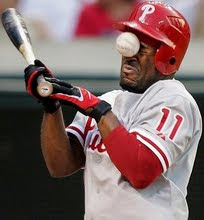
In Avila v Citrus Community College District (2006) [see post above if you'd like to read the entire case] , the Rio Hondo Community College Roadrunner were playing the Citrus Community College Owls pre-season baseball game. A Roadrunner hit a player with a pitch. When Avila, came to bat, as retaliation for the last batter hit, the Owls pitcher hit Avila in the head with the pitch. Avila felt dizzy and in pain but he went to first. He then went to second when the defender realized Avila was in pain. Avila ended up suing a lot of people over this incident (both schools, his manager, the helmet manufacturer, and the school districts). This particular case involves a suit between Avila and the rival school's school district.
Now I'd like to pause for a moment. This situation happens often in baseball, both professional and amateur. Ozzie has openly said if his players keep getting hit, he'll retaliate. Bobby Jenks got fined this year when he admitted he intentionally threw at Ian Kinsler earlier this year as retaliation. A few years ago (I'm sorry I don't remember the particulars but), Ozzie told a newly called up minor leaguer to hit the batter. After this pitcher threw it far behind the batter (but not hitting the batter), Ozzie threw a shit fit at this pitcher and we have never heard of this guy again.
So this decision could potentially have an impact on guys like Ozzie Guillen, or anyone in baseball who makes decisions like this. If we say a batter can collect money damages for things like this, then not only could we see this get eliminated from baseball, but if we do, dudes will have to go through extensive litigation and could lose a lot of money.
However, the court did not rule in favor of the batter. Avila sued the school district claiming they were negligent (I spent more than half a semester in law school going over what constitutes negligence so I'm not going to explain what it is, but feel free to briefly learn it.) The court said getting hit was an implicit part of the game of baseball and "an inherent risk of the sport." As a baseball player, you essentially agree to certain things that happen to you. In football, you agree to get tackled. And if you suffer two concussions or force a guy to become paralyzed, that's tough shit because you've already given your consent for people to do things to you that could potentially cause you serious or life-threatening harm. The same is true for baseball.
Even though getting intentionally hit is illegal and against MLB and probably all amateur baseball rules, it's still an inherent part of the game and you, as a player, have consented that if you get hit, you essentially can not sue for your damages.
The court goes on to say further
This is a pretty interesting statement. If you throw a ball at someone's head normally, you could potentially get sued for millions of dollars. But if you do it with uniforms, it's OK.
Another point DME and I have discussed is: "Is getting intentionally hit really a part of the game?" He says no. He says it's against the rules of baseball and thus no pitcher should ever do it. But this court talks about that. They say it still is a part of the game, even though it is against the rules. However, I bet if you polled every MLB player, they would say that getting hit and getting intentionally hit IS a part of the game. I think everyone in baseball is aware of it and they realize the risks. They know that they could get hit and I bet that they would WANT retaliation of they got hit. Even if baseball players are more pacifistic now, I still bet they realize it is a risk they are taking by playing. I'm sure it's small, but still a risk.
Plus, I think this could create a slippery slope. Take for instance, Carlos Quentin. The guys purposefully crouches inside the plate. Are pitchers not allowed to throw inside to him for fear that if they do hit, he'll sue them the next day? I think implementing tort law would cause pitchers to pitch less inside for fear of a law suit as well. Now you can argue if that really IS such a bad thing for there will be less injuries and harm to human life at only a small expense- a pitcher had to change the way he pitches.
I think you can also argue that if Avila won, that could translate to how other sports are played. The other week, Brady Quinn got picked off (shocking)and went to go try and tackle the player that picked him off. But because he's Brady Quinn and because he's a QB, he is a poor tackler. He ended up tackling a defender in an illegal way and I believe hurt the defender's legs for a bit. What he did was clearly against the rules of the NFL and the NFL punished him. But should we go so far to say that Brady Quinn should get sued (Well I personally hate Brady Quinn so...)? I think all athletes realize these inherent risks that being in the sport.
The biggest effect I think this decision would have had is in hockey. One of the most entertaining reasons people watch hockey is for the fights. Obviously, if you fight someone on the street, you've committed a tort (and probably a crime). But when you do it in hockey, it's not only commonly done, but fans expect it.
My Torts professor joked about this, but we as a society really do put a high societal value on recreation and professional sports. It's becomes ingrained as a fabric of out lives). DME does nothing BUT talk about sports (rather baseball). All four blog authors spend a lot of time (too much) watching and writing about sports. Sports are the reason we download podcasts, buy things, watch TV, go out. We really do value sports heavily and as a result, the law treats sports differently.
Going back to the original case the court talks about the necessity for not siding with Avila; for saying that pitcher's need to pitch inside. Think about if the law really did punish athletes for things that are normally torts everywhere else? This really would change the way pitcher's pitch and batter's hit. These qualitative aspects would screw up the quantitative analysis we love so much. We, society along with the four blog authors, really would be upset if the law intervened too much in sports (Hell. we get made when they hold hearing on steroids). We really do put a high societal value.
If you've learned anything from this post, I hope at least you've learned that judges also believe that a pitcher should be allowed to pitch inside
NOTE 2: I am not a lawyer. Do not take this post as the law. I am not giving you advice. This post is simple just an explanation of a case I have read in law school.
Now that I have gotten the legal disclaimers out of the way, I'd like to introduce you to a case that I have recently read. Let me tell you the facts and see if this sounds familiar.
In Avila v Citrus Community College District (2006) [see post above if you'd like to read the entire case] , the Rio Hondo Community College Roadrunner were playing the Citrus Community College Owls pre-season baseball game. A Roadrunner hit a player with a pitch. When Avila, came to bat, as retaliation for the last batter hit, the Owls pitcher hit Avila in the head with the pitch. Avila felt dizzy and in pain but he went to first. He then went to second when the defender realized Avila was in pain. Avila ended up suing a lot of people over this incident (both schools, his manager, the helmet manufacturer, and the school districts). This particular case involves a suit between Avila and the rival school's school district.
Now I'd like to pause for a moment. This situation happens often in baseball, both professional and amateur. Ozzie has openly said if his players keep getting hit, he'll retaliate. Bobby Jenks got fined this year when he admitted he intentionally threw at Ian Kinsler earlier this year as retaliation. A few years ago (I'm sorry I don't remember the particulars but), Ozzie told a newly called up minor leaguer to hit the batter. After this pitcher threw it far behind the batter (but not hitting the batter), Ozzie threw a shit fit at this pitcher and we have never heard of this guy again.
So this decision could potentially have an impact on guys like Ozzie Guillen, or anyone in baseball who makes decisions like this. If we say a batter can collect money damages for things like this, then not only could we see this get eliminated from baseball, but if we do, dudes will have to go through extensive litigation and could lose a lot of money.
However, the court did not rule in favor of the batter. Avila sued the school district claiming they were negligent (I spent more than half a semester in law school going over what constitutes negligence so I'm not going to explain what it is, but feel free to briefly learn it.) The court said getting hit was an implicit part of the game of baseball and "an inherent risk of the sport." As a baseball player, you essentially agree to certain things that happen to you. In football, you agree to get tackled. And if you suffer two concussions or force a guy to become paralyzed, that's tough shit because you've already given your consent for people to do things to you that could potentially cause you serious or life-threatening harm. The same is true for baseball.
Even though getting intentionally hit is illegal and against MLB and probably all amateur baseball rules, it's still an inherent part of the game and you, as a player, have consented that if you get hit, you essentially can not sue for your damages.
The court goes on to say further
Pitcher intentionally throw at batters to disrupt a batter's timing or back him away from home plate, to retaliate after a teammate has been hit, or to punish a batter for having hit a home run. Some of the most respected baseball managers and pitchers have openly discussed the fundamental place throwing at batters has in their sport...
It is one thing to punish a pitcher who hits a batter by ejecting him from the game, or for a league to suspend the pitcher, it is quite another for tort law to chill any pitcher from throwing inside, i.e. close to the batter's body- a permissible and essential part of the sport- for fear over an errant pitch. For better or for worse, being intentionally thrown at is a fundamental part and inherent risk of the sport of baseball. It is not the function of tort law to police such conduct.
This is a pretty interesting statement. If you throw a ball at someone's head normally, you could potentially get sued for millions of dollars. But if you do it with uniforms, it's OK.
Another point DME and I have discussed is: "Is getting intentionally hit really a part of the game?" He says no. He says it's against the rules of baseball and thus no pitcher should ever do it. But this court talks about that. They say it still is a part of the game, even though it is against the rules. However, I bet if you polled every MLB player, they would say that getting hit and getting intentionally hit IS a part of the game. I think everyone in baseball is aware of it and they realize the risks. They know that they could get hit and I bet that they would WANT retaliation of they got hit. Even if baseball players are more pacifistic now, I still bet they realize it is a risk they are taking by playing. I'm sure it's small, but still a risk.
Plus, I think this could create a slippery slope. Take for instance, Carlos Quentin. The guys purposefully crouches inside the plate. Are pitchers not allowed to throw inside to him for fear that if they do hit, he'll sue them the next day? I think implementing tort law would cause pitchers to pitch less inside for fear of a law suit as well. Now you can argue if that really IS such a bad thing for there will be less injuries and harm to human life at only a small expense- a pitcher had to change the way he pitches.
I think you can also argue that if Avila won, that could translate to how other sports are played. The other week, Brady Quinn got picked off (shocking)and went to go try and tackle the player that picked him off. But because he's Brady Quinn and because he's a QB, he is a poor tackler. He ended up tackling a defender in an illegal way and I believe hurt the defender's legs for a bit. What he did was clearly against the rules of the NFL and the NFL punished him. But should we go so far to say that Brady Quinn should get sued (Well I personally hate Brady Quinn so...)? I think all athletes realize these inherent risks that being in the sport.
The biggest effect I think this decision would have had is in hockey. One of the most entertaining reasons people watch hockey is for the fights. Obviously, if you fight someone on the street, you've committed a tort (and probably a crime). But when you do it in hockey, it's not only commonly done, but fans expect it.
My Torts professor joked about this, but we as a society really do put a high societal value on recreation and professional sports. It's becomes ingrained as a fabric of out lives). DME does nothing BUT talk about sports (rather baseball). All four blog authors spend a lot of time (too much) watching and writing about sports. Sports are the reason we download podcasts, buy things, watch TV, go out. We really do value sports heavily and as a result, the law treats sports differently.
Going back to the original case the court talks about the necessity for not siding with Avila; for saying that pitcher's need to pitch inside. Think about if the law really did punish athletes for things that are normally torts everywhere else? This really would change the way pitcher's pitch and batter's hit. These qualitative aspects would screw up the quantitative analysis we love so much. We, society along with the four blog authors, really would be upset if the law intervened too much in sports (Hell. we get made when they hold hearing on steroids). We really do put a high societal value.
If you've learned anything from this post, I hope at least you've learned that judges also believe that a pitcher should be allowed to pitch inside


The Managers players don’t want to play for……………….
Last week Sports Illustrated published a pole on baseball players during spring training which asked them what managers they would least want to play for. To my surprise Lou Piniella was number one with 26 percent. Ozzie Guillen came in second place with 21 percent. It is interesting to note that players could not vote for their own managers. Thus, Chicago’s two baseball managers, Lou Piniella and Ozzie Guillen are not managers players would not want to play for. They combined for an astounding 47 percent, almost half of the players polled. In a distant third place was Tony La Russa with 10 percent, fourth place was a tie between Joe Torre and Eric Wedge with 4 percent each.
I understand why Ozzie Guillen received 21 percent. He is known to say anything on his mind, including talking about his players to the media. He never protects his players and will throw them under the bus without a second thought. A manager should call out his player when he feels it is needed, but should try to handle it internally. For instance Lou handled the Bradley incident a few weeks ago with the water cooler in a private manner. He told him to go home and didn’t go into much detail with the media. Ozzie would have told them the entire conversation. Ozzie is also known for holding grudges like the Sean Tracey incident a few years ago. I don’t know why Lou is not well liked. He gives his players space and lets them do their own thing if they are performing. He will also protect his players to a certain degree with the media. He won’t completely hide everything from the media, but won’t go into full detail. Any thought why Lou Piniella was ranked first among players for manager they would least likely want to play for?
I heard about this story last week on three separate occasions in one day. The first time I heard about it was on The Score in the morning. The second time I heard about it was on Espn 1000am, and the third time was from Len Kasper during the Cubs game. I forgot the hosts for the radio show I heard report them on, but the first one said that the survey was out of 300 players. The second radio show said 380 players. Then Len Kasper said 400 players were surveyed. I would like to know how many players were actually surveyed. Obviously at least two of these three reports got their facts wrong and that is not acceptable. There is a big difference between 300, 380, and 400 players. That is a difference between 12 teams, 15 teams, or 16 teams. If 380 or 400 players were surveyed that is almost half of the league. Does anyone know the actual number? Why is there such a discrepancy between these three sources of information?
I understand why Ozzie Guillen received 21 percent. He is known to say anything on his mind, including talking about his players to the media. He never protects his players and will throw them under the bus without a second thought. A manager should call out his player when he feels it is needed, but should try to handle it internally. For instance Lou handled the Bradley incident a few weeks ago with the water cooler in a private manner. He told him to go home and didn’t go into much detail with the media. Ozzie would have told them the entire conversation. Ozzie is also known for holding grudges like the Sean Tracey incident a few years ago. I don’t know why Lou is not well liked. He gives his players space and lets them do their own thing if they are performing. He will also protect his players to a certain degree with the media. He won’t completely hide everything from the media, but won’t go into full detail. Any thought why Lou Piniella was ranked first among players for manager they would least likely want to play for?
I heard about this story last week on three separate occasions in one day. The first time I heard about it was on The Score in the morning. The second time I heard about it was on Espn 1000am, and the third time was from Len Kasper during the Cubs game. I forgot the hosts for the radio show I heard report them on, but the first one said that the survey was out of 300 players. The second radio show said 380 players. Then Len Kasper said 400 players were surveyed. I would like to know how many players were actually surveyed. Obviously at least two of these three reports got their facts wrong and that is not acceptable. There is a big difference between 300, 380, and 400 players. That is a difference between 12 teams, 15 teams, or 16 teams. If 380 or 400 players were surveyed that is almost half of the league. Does anyone know the actual number? Why is there such a discrepancy between these three sources of information?
Bobby Jenks Is Playing "Ozzieball"
I'm being extremely facetious when I say any player is playing Ozzieball because Ozzieball frankly does not exist. However, there is one aspect of this perceived notion of Ozzieball that has come into fruition lately- pitching taking retribution for their batters getting hit. This actually was a bit more prominent in how Ozzie used to play baseball but not so much now. I unfortunately don't remember the exact specifics but in 2006 Ozzie ordered a young bullpen player to hit the batter he was facing. At first the pitcher threw it behind the batter. The ump let that one go because he even knew Ozzie had good reason to, at minimum, "scare" the batter. But then the pitcher threw it behind the batter again. This forced the ump to warn both benches. After that, the Sox bullpen guy pitched 'normally'. However, Ozzie actually did want the kid to hit the batter and a little bit rightfully so, his pitcher refused. I believe that kid never spent an entire day in the major leagues again- at least not with the ChiSox.
But this even has come into fruition again when this past Sunday, closer Bobby Jenks threw behind Texas Ranger 2B Ian Kinsler. That series, Texas pitchers hit 6 White Sox batters in three games. One hit batter is an accident. Two hit batters is a freak coincidence, but when six batters were hit, you can't necessarily take that lying down. So in the final inning of the final game with two outs left and nobody on base, Jenks threw behind Kinsler. After the game Bobby said he was "trying to send a message" but he just lost control. Nobody throws behind a batter on purpose. Even Sidney Ponson has enough control to throw it where a batter can hit it (and the batter usually DOES hit it...).
But I think Bobby Jenks had every right to do what he did. I'm sure Ozzie ordered his closer to actually hit Kinsler, but no matter what, Bobby needed to take retribution. In every sport, if your team "gets attacked" in a similar fashion to this one, you attack back. This past NFL season, when the Pittsburgh Steelers played their division and hated rivals, the Baltimore Ravens, Steelers wide receiver laid out a huge hit that injured a Baltimore LB during their first meeting. Of course, Ravens players made all sorts of comments saying how they were going to put a target on Ward's back and make sure he would be "punished". What did all the pundits say about this? While they all agreed maybe the Ravens players should have kept that information out of the public, they agreed with Baltimore. If Baltimore felt like they were "attacked" by Ward, then on the playing field, make sure they get retribution. During these current NBA playoffs, Orlando Magic G Rafer Alston slapped Celtic Eddie House because he felt House used unfair physical contact. When Houston's and NBA's resident crazy person Ron Artest felt Lakers Kobe Bryant used unnecessary physical contact when both were trying to get a rebound (although everything Kobe really did do was perfectly fair and legal), Artest ran over to Kobe and got in his face. And do I really need a hockey example?
My point is, is that in the other three major sports, retaliation is just a part of the game. You obviously shouldn't make it public and Bobby probably should not have overtly said he was trying "to send Kinsler a message", but Bobby needed to do something. Ozzie has obviously been an outspoken supporter of retaliation and his pitchers hitting his batters. I think he's absolutely right. Ozzie has gotten better at this and does not purposefully hit people since really 2006. In this instance, when you're up by 1 and there's two outs, the odds of you winning that game are high. Although yes if Jenks had actually hit Kinsler, it would have potentially allowed Texas the possibility to come back into the game, but in reality the Sox still would have won. This makes it an ideal place to try and send your message.
And don't get me wrong, I think this should hold true for all MLB clubs and all professional sports. I don't agree with it just because it's the White Sox, I agree with it because it's a truism for professional sports.
Jenks did end up with a measly $750 fine and this is appropriate, I guess. I think what he did was fine and necessary and I think he should have hit Kinsler (although obviously not injured him- I need him on my fantasy team!). But at the end of the day, people need to stop putting their panties in a bundle every time retaliation occurs- in any sport.
But this even has come into fruition again when this past Sunday, closer Bobby Jenks threw behind Texas Ranger 2B Ian Kinsler. That series, Texas pitchers hit 6 White Sox batters in three games. One hit batter is an accident. Two hit batters is a freak coincidence, but when six batters were hit, you can't necessarily take that lying down. So in the final inning of the final game with two outs left and nobody on base, Jenks threw behind Kinsler. After the game Bobby said he was "trying to send a message" but he just lost control. Nobody throws behind a batter on purpose. Even Sidney Ponson has enough control to throw it where a batter can hit it (and the batter usually DOES hit it...).
But I think Bobby Jenks had every right to do what he did. I'm sure Ozzie ordered his closer to actually hit Kinsler, but no matter what, Bobby needed to take retribution. In every sport, if your team "gets attacked" in a similar fashion to this one, you attack back. This past NFL season, when the Pittsburgh Steelers played their division and hated rivals, the Baltimore Ravens, Steelers wide receiver laid out a huge hit that injured a Baltimore LB during their first meeting. Of course, Ravens players made all sorts of comments saying how they were going to put a target on Ward's back and make sure he would be "punished". What did all the pundits say about this? While they all agreed maybe the Ravens players should have kept that information out of the public, they agreed with Baltimore. If Baltimore felt like they were "attacked" by Ward, then on the playing field, make sure they get retribution. During these current NBA playoffs, Orlando Magic G Rafer Alston slapped Celtic Eddie House because he felt House used unfair physical contact. When Houston's and NBA's resident crazy person Ron Artest felt Lakers Kobe Bryant used unnecessary physical contact when both were trying to get a rebound (although everything Kobe really did do was perfectly fair and legal), Artest ran over to Kobe and got in his face. And do I really need a hockey example?
My point is, is that in the other three major sports, retaliation is just a part of the game. You obviously shouldn't make it public and Bobby probably should not have overtly said he was trying "to send Kinsler a message", but Bobby needed to do something. Ozzie has obviously been an outspoken supporter of retaliation and his pitchers hitting his batters. I think he's absolutely right. Ozzie has gotten better at this and does not purposefully hit people since really 2006. In this instance, when you're up by 1 and there's two outs, the odds of you winning that game are high. Although yes if Jenks had actually hit Kinsler, it would have potentially allowed Texas the possibility to come back into the game, but in reality the Sox still would have won. This makes it an ideal place to try and send your message.
And don't get me wrong, I think this should hold true for all MLB clubs and all professional sports. I don't agree with it just because it's the White Sox, I agree with it because it's a truism for professional sports.
Jenks did end up with a measly $750 fine and this is appropriate, I guess. I think what he did was fine and necessary and I think he should have hit Kinsler (although obviously not injured him- I need him on my fantasy team!). But at the end of the day, people need to stop putting their panties in a bundle every time retaliation occurs- in any sport.
In Defense of Ozzie Guillen
I was writing a response to the Pro Cub/ Anti White Sox sentiment that commented on my post "Lou and Derrek Lee Are The Worst Manager And Player Ever" but it ended up being so long that I decided to make it into a post instead.
1) Again, I'm not making the comparisons about Guillen and Pinella as players!!! How a person played has nothing to do with how they are as mangers. Yes, Ozzie Guillen is one of the worst offensive players in the history of baseball, BUT THIS HAS ABSOLUTELY NOTHING TO DO WITH HOW GUILLEN ACTS AS A MANAGER. And as a matter of fact, great players tend to make horrible managers. Mainly, because these players were so good that they expect greatness from their team. This ends up being an unrealistic expectation which ends up making the team worse off. John Kruk was a pretty good player and he's a terrible ESPN commentator. Joe Morgan was one of the best 2B and players of all time, and yet I can't ever watch a full game whenever he announces.
I am obviously defending Ozzie Guillen as a manager and not as a player- because there's obviously no defense for that. In case you for some reason (mainly MVP Eckstein) thought how Ozzie was as a player was implicit in my argument, I am overtly telling you right now it is not. And in fact, by you continually mentioning how Ozzie was as a player into his managerial skills, you are degrading your own argument because you are using fallacies for the sole purpose of winning an argument.
2) I do think Pinella is a better manager than Ozzie, but let's be honest, what really makes Ozzie so bad as you claim he is?
As mentioned in "Baseball Between the Numbers", the role of a manger is extremely small. All they have to do is set the lineup and switch out pitchers. What really makes Ozzie so bad at either of these? The line up this year is actually almost perfect considering the players the team has right now. Besides the lead off spot (which the organization does not have anywhere), the line up is essentially set by decreasing OBP (happy Bright One, jesus). And even so, Baseball Between The Numbers proves that who is placed where in the lineup makes a negligible difference.
-And as for the bullpen and pitching changes, what makes Ozzie so bad at this? In 2007 when the only consistent and good arm in the bullpen was Bobby Jenks, Ozzie made this comment (and I'm paraphrasing from memory but the gist is the same), "I don't know what to do? If I could I'd have Bobby throw for three innings every game I would, but I can't." Ozzie recognizes the fact that starters can realistically only throw X number of pitches per game and throughout his entire tenure he has utilized his bullpen the best that he can.
3) I would like address this notion that Ozzieball = Small Ball. It does not. In 2005, when the talent mainly consisted of speed and very few power guys, the team HAD to manufacture runs. Ozzie utilized the talent he had on his team in order to win. But throughout Ozzie's career as a manger, this is not the case. Ozzie lets his guys walk and hit home runs- all great factors that lead to a successful offense. From 2006- today, Ozzie does not sacrifice more than any other manager and allows his players to do what they do best.
4) Ozzie is a leader. Ozzie commands respect but not to the point where his players hate him. The New York Giants coach Tom Coughlin commanded respect but he was a dictator in the locker room saying that his players were "five minutes late if they were on time" But in 2008 he eased up and became more of a "players coach" yet still maintained his power. The Giants won the Superbowl- and people praised Coughlin on his new managerial style. Now Ozzie does that everyday, so if Coughlin gets praised for it, so should Ozzie. And as a sidenote, the fact that Ozzie is a latin born person helps him communicate better with his team (considering the ChiSox and most organizations have a lot of Spanish-speaking players) and helps him maximize his players talent and be a better leader.
5) Ozzie does have two rings and a winning record. And as my brother so astutely said and put into words much better than I probably could have, "from 2004 to 2008, the White Sox have gone 12-4 in the playoffs, mostly from their 2005 World Series run. From 2004 to 2008, the Cubs have gone 0-6 in the playoffs, getting swept in the NLCS over the past two years. Now I know the playoffs are an extremely small sample size. However, the point of any major professional sports franchise is to make money and win championships. There's a reason every sports player, when interviewed during the preseason, says their goal is to make the playoffs and/or win the championship. Just saying.... From 2004 to 2008, the White Sox won 433 games and lost 378 games, leading to a .534 winning percentage....Perhaps it's not the biggest sample size, but Ozzie had only been a major league manager since 2004."
I would just like to take the time to comment here on MVP Eckstein's comment of "Pinella is a HOF manager with about 100, give or take a few, better seasons than Guillen under his managerial belt" Ozzie has had 5 full season under his belt. Lou has had about 20. Obviously Pinella is going to look better because he has 15 more seasons than Ozzie! I don't want to make any broad generalizations right now but at least let Ozzie play out his managerial career before we start really comparing the two.
5) Ozzie is purely entertaining. If the manager really doesn't affect the field of play so much, why not have a guy who is fun to listen to? And everything Ozzie says is true. Jay Mariotti is a faggot, A Rod should always play for USA in the WBC because he was born and raised and plays in the USA, and the ChiSox rarely get any love by Chicago media outlets when they are doing well and does seem to get SHIT ON at every little bump in the road (hmmm, sounds familiar Ozzie). While Ozzie may offend people, it's always a riot to listen to his sound bites.
Of course Ozzie is not without some faults. The first one that comes to mind is telling Kenny to go after Darin Erstad. I can't think of any really other big ones now but there are most certainly many small in games ones that when I watch the games on TV, I'm forced to scratch my head. Ozzie is far from perfect but but certainly does not deserve the kind of criticism this site seems to give him.
I wrote that Lou Pinella is the worst manager ever as my title, but it was obviously not mean to be taken literally. My point is that Cubs fans seem to think of Lou as god but he most certainly has some faults. And I criticized Ozzie for going after Erstad so Pinella deserves some flack for going after Joey Gathright this off season just so the Cubs can have some "left handed bats in the line up." (In all fairness this site DID criticize the Cubs for that). I know for a fact Pinella makes a fair share of questionable in game decisions as well because my current roommate is also a huge Cubs fan and yells at the top of his lungs ever time the Cubs make a minor bad decision. My roommate yells a lot.
I'm also not trying to make comparisons between Lou and Ozzie. All I'm saying is that you, with a huge Cubs bias, treat Lou and the Cubs with the utmost respect and treat Ozzie and the Sox like dog turd. I can't believe I have to say it again even though I said it in my Lou/D-Lee post and as a comment in the Alexei, Guillen, LOL post: I'M FINE WITH SOX CRITICISM BUT AT LEAST WRITE ABOUT THE FAULTS OF THE CUBS AS WELL.
I personally don't hate the Cubs like many Sox fans do, but I asked a co-worker of mine (who lives on the South side of Chicago and is a Sox fan) Why do you hate the Cubs really? His response was that the Cubs garner the vast majority of sports coverage in Chicago and the Sox get left in the dust. This is a sentiment Ozzie said last year that garnered ESPN coverage and one that I have noticed as well being a Sox fan. And this blog is coming dangerously close to that. I'd like to think of us as a mainly Chicago sports blog but when ESPNChicago.com seems more ChiSox friendly than GOI, I grow concerned and feel I need to post pro White Sox posts to maintain balance and fairness
I know all my rambling and specific points are going to get lost by MVP Eckstein, but what I hope people to get out of this article is not how great of a manger Ozzie Guillen is, but I'm writing these type of posts because of the seemingly Pro Cubs/ Anti ChiSox culture that this blog seems to have and I'd like it to stop- and that clearly the Sox do not deserve the many criticisms they get
1) Again, I'm not making the comparisons about Guillen and Pinella as players!!! How a person played has nothing to do with how they are as mangers. Yes, Ozzie Guillen is one of the worst offensive players in the history of baseball, BUT THIS HAS ABSOLUTELY NOTHING TO DO WITH HOW GUILLEN ACTS AS A MANAGER. And as a matter of fact, great players tend to make horrible managers. Mainly, because these players were so good that they expect greatness from their team. This ends up being an unrealistic expectation which ends up making the team worse off. John Kruk was a pretty good player and he's a terrible ESPN commentator. Joe Morgan was one of the best 2B and players of all time, and yet I can't ever watch a full game whenever he announces.
I am obviously defending Ozzie Guillen as a manager and not as a player- because there's obviously no defense for that. In case you for some reason (mainly MVP Eckstein) thought how Ozzie was as a player was implicit in my argument, I am overtly telling you right now it is not. And in fact, by you continually mentioning how Ozzie was as a player into his managerial skills, you are degrading your own argument because you are using fallacies for the sole purpose of winning an argument.
2) I do think Pinella is a better manager than Ozzie, but let's be honest, what really makes Ozzie so bad as you claim he is?
As mentioned in "Baseball Between the Numbers", the role of a manger is extremely small. All they have to do is set the lineup and switch out pitchers. What really makes Ozzie so bad at either of these? The line up this year is actually almost perfect considering the players the team has right now. Besides the lead off spot (which the organization does not have anywhere), the line up is essentially set by decreasing OBP (happy Bright One, jesus). And even so, Baseball Between The Numbers proves that who is placed where in the lineup makes a negligible difference.
-And as for the bullpen and pitching changes, what makes Ozzie so bad at this? In 2007 when the only consistent and good arm in the bullpen was Bobby Jenks, Ozzie made this comment (and I'm paraphrasing from memory but the gist is the same), "I don't know what to do? If I could I'd have Bobby throw for three innings every game I would, but I can't." Ozzie recognizes the fact that starters can realistically only throw X number of pitches per game and throughout his entire tenure he has utilized his bullpen the best that he can.
3) I would like address this notion that Ozzieball = Small Ball. It does not. In 2005, when the talent mainly consisted of speed and very few power guys, the team HAD to manufacture runs. Ozzie utilized the talent he had on his team in order to win. But throughout Ozzie's career as a manger, this is not the case. Ozzie lets his guys walk and hit home runs- all great factors that lead to a successful offense. From 2006- today, Ozzie does not sacrifice more than any other manager and allows his players to do what they do best.
4) Ozzie is a leader. Ozzie commands respect but not to the point where his players hate him. The New York Giants coach Tom Coughlin commanded respect but he was a dictator in the locker room saying that his players were "five minutes late if they were on time" But in 2008 he eased up and became more of a "players coach" yet still maintained his power. The Giants won the Superbowl- and people praised Coughlin on his new managerial style. Now Ozzie does that everyday, so if Coughlin gets praised for it, so should Ozzie. And as a sidenote, the fact that Ozzie is a latin born person helps him communicate better with his team (considering the ChiSox and most organizations have a lot of Spanish-speaking players) and helps him maximize his players talent and be a better leader.
5) Ozzie does have two rings and a winning record. And as my brother so astutely said and put into words much better than I probably could have, "from 2004 to 2008, the White Sox have gone 12-4 in the playoffs, mostly from their 2005 World Series run. From 2004 to 2008, the Cubs have gone 0-6 in the playoffs, getting swept in the NLCS over the past two years. Now I know the playoffs are an extremely small sample size. However, the point of any major professional sports franchise is to make money and win championships. There's a reason every sports player, when interviewed during the preseason, says their goal is to make the playoffs and/or win the championship. Just saying.... From 2004 to 2008, the White Sox won 433 games and lost 378 games, leading to a .534 winning percentage....Perhaps it's not the biggest sample size, but Ozzie had only been a major league manager since 2004."
I would just like to take the time to comment here on MVP Eckstein's comment of "Pinella is a HOF manager with about 100, give or take a few, better seasons than Guillen under his managerial belt" Ozzie has had 5 full season under his belt. Lou has had about 20. Obviously Pinella is going to look better because he has 15 more seasons than Ozzie! I don't want to make any broad generalizations right now but at least let Ozzie play out his managerial career before we start really comparing the two.
5) Ozzie is purely entertaining. If the manager really doesn't affect the field of play so much, why not have a guy who is fun to listen to? And everything Ozzie says is true. Jay Mariotti is a faggot, A Rod should always play for USA in the WBC because he was born and raised and plays in the USA, and the ChiSox rarely get any love by Chicago media outlets when they are doing well and does seem to get SHIT ON at every little bump in the road (hmmm, sounds familiar Ozzie). While Ozzie may offend people, it's always a riot to listen to his sound bites.
Of course Ozzie is not without some faults. The first one that comes to mind is telling Kenny to go after Darin Erstad. I can't think of any really other big ones now but there are most certainly many small in games ones that when I watch the games on TV, I'm forced to scratch my head. Ozzie is far from perfect but but certainly does not deserve the kind of criticism this site seems to give him.
I wrote that Lou Pinella is the worst manager ever as my title, but it was obviously not mean to be taken literally. My point is that Cubs fans seem to think of Lou as god but he most certainly has some faults. And I criticized Ozzie for going after Erstad so Pinella deserves some flack for going after Joey Gathright this off season just so the Cubs can have some "left handed bats in the line up." (In all fairness this site DID criticize the Cubs for that). I know for a fact Pinella makes a fair share of questionable in game decisions as well because my current roommate is also a huge Cubs fan and yells at the top of his lungs ever time the Cubs make a minor bad decision. My roommate yells a lot.
I'm also not trying to make comparisons between Lou and Ozzie. All I'm saying is that you, with a huge Cubs bias, treat Lou and the Cubs with the utmost respect and treat Ozzie and the Sox like dog turd. I can't believe I have to say it again even though I said it in my Lou/D-Lee post and as a comment in the Alexei, Guillen, LOL post: I'M FINE WITH SOX CRITICISM BUT AT LEAST WRITE ABOUT THE FAULTS OF THE CUBS AS WELL.
I personally don't hate the Cubs like many Sox fans do, but I asked a co-worker of mine (who lives on the South side of Chicago and is a Sox fan) Why do you hate the Cubs really? His response was that the Cubs garner the vast majority of sports coverage in Chicago and the Sox get left in the dust. This is a sentiment Ozzie said last year that garnered ESPN coverage and one that I have noticed as well being a Sox fan. And this blog is coming dangerously close to that. I'd like to think of us as a mainly Chicago sports blog but when ESPNChicago.com seems more ChiSox friendly than GOI, I grow concerned and feel I need to post pro White Sox posts to maintain balance and fairness
I know all my rambling and specific points are going to get lost by MVP Eckstein, but what I hope people to get out of this article is not how great of a manger Ozzie Guillen is, but I'm writing these type of posts because of the seemingly Pro Cubs/ Anti ChiSox culture that this blog seems to have and I'd like it to stop- and that clearly the Sox do not deserve the many criticisms they get

Alexei=Next Ozzie?
Doesn't anyone remember how bad Ozzie Guillen was at baseball? Have the colorful years of him playing "small ball" with scappy grinders, calling reporters fags and raping sex dolls with baseball bats tainted the black and white stats he (failed to) put up during fifteen year career? The Daily Herald is heralding Alexi Ramirez (.336 wOBA in 2008) as the next Ozzie Guillen (career wOBA of .275, .292 career high wOBA). Sigh.
The beginning of this article is uselessly boring, so let me skip to the "interesting" parts.
On an groundbreaking side note, I'm watching the WBC and Joe Morgan just criticized Adam Dunn because he is "happy to take walks" when runners are in scoring position instead of "being more aggressive at the plate." Steve Phillips agrees.
The beginning of this article is uselessly boring, so let me skip to the "interesting" parts.
"[Alexei Ramirez is] just a good athlete, and above all, he wants to be good. He's hungry to be a great player in this league and you can see that when he works and you can see that when he's on the field that he's hungry. It comes through and you can see it."
Synonyms for hunger: grindiness, small ball, fire in the belly, David Eckstein.
Watching Ramirez play shortstop this spring has been quite a sight.
Cabrera was a Gold Glove shortstop who had an off year in his brief stay with the White Sox.
Before that, Juan Uribe was about as good of a shortstop as there was in baseball.
With the exception of 2004 -- when Uribe posted a league average .346 wOBA and contributed +1 wins with his defense -- Uribe has neither been defensively outstanding (+.25 fielding wins above average) nor offensively relevant (.306 career wOBA) in Chicago.
And before that, current manager Ozzie Guillen played the position at a pretty high level.
A mythical and lofty .264/.287/.338 level.
With his own flair, Guillen has already conceded Ramirez is better.
Ozzie Guillen was one of the worst players in the history of baseball, producing a negative win value for his team in every season he played. Just not playing shortstop makes you a better shortstop than Ozzie Guillen. Players like Mark Prior who spend the entire season on the DL have a higher win contribution (zero) than Ozzie Guillen. He was literally that bad. He was literally that bad.
"He's always making jokes on me," Ramirez said. "He's always, 'I was better than you. I was better than you.' I just say, 'OK.' I will try to be as good as him, maybe not better. I don't like to be compared to anyone, but I'm trying to be close to the way Ozzie played."
Did I mention Ozzie hit .264/.287/.338 in his career?
Guillen was the last Sox shortstop to win a Gold Glove, in 1990. Is Ramirez destined to be the next?
Last year, Orlando Cabrera's defense was worth +1.6 wins (the most among all starting shortstops by a .3 win (19%) margin). AL Golden Glove winner Michael Young's defense was worth -.25 wins, making him the seventh worst starting shortstop in baseball. Gold Glove awards are almost as useless a criteria by which to evaluate a player's defensive ability as comparing a shortstop's potential to the worst shortstop in the history of baseball (Ozzie Guillen).
If your wife tells you to do something, it'd be wise to oblige."There are so many good shortstops in the American League, so that's not something I can come out and say," Ramirez said. "But my wife (Mildred) told me one time I should win the Gold Glove. I don't want to put pressure on myself, but I do have it in my mind."
If Ramirez wants to go for the gold, Konerko has a suggestion.
"He's got a big arm; it's plenty strong enough," Konerko said. "He's going to make a lot of highlight plays this year, there's no question about that. I know nothing about playing shortstop,
Great advice, Konerko. "I know nothing about playing shortstop, but if you do what I say, you will be great at playing shortstop." Konerko goes on to say:
"You're going to see some plays made this year; you're going to see him on (ESPN's) 'Web Gems' a lot."
A third useless criteria by which to evaluate a shortstop is by the number of web gems he racks up in a season.
On an groundbreaking side note, I'm watching the WBC and Joe Morgan just criticized Adam Dunn because he is "happy to take walks" when runners are in scoring position instead of "being more aggressive at the plate." Steve Phillips agrees.
Bad Baseball
I know this topic was slightly referenced in Baseball Prospectus' book BEHIND THE NUMBERS, but I'm going to accenuate it anyway. Sabermetrically speaking, do you know how bad of a shortstop Ozzie Guillen was? His career WPA (very similar to WARP) was -21.51. That's among the worst in the history of baseball. Very few players have been so bad and given over 7000 PA's.
There is a worse player, however, and his name is Neifi Perez's. Over the course of 11 seasons, Perez accumulated a -26.26 WPA in 5500 PA's. In fact, from 2002-2007 alone, Neifi Perez's production was so poor that it resulted in negative wins, costing four major league teams a total of $400,000 against replacement player production values. This, of course, is BEFORE you consider that he was paid $14.4 million over that same time period of time. So when it's all said and done, Neifi Perez cost almost $15 million in lost money. That's thievery, my friend.
There is a worse player, however, and his name is Neifi Perez's. Over the course of 11 seasons, Perez accumulated a -26.26 WPA in 5500 PA's. In fact, from 2002-2007 alone, Neifi Perez's production was so poor that it resulted in negative wins, costing four major league teams a total of $400,000 against replacement player production values. This, of course, is BEFORE you consider that he was paid $14.4 million over that same time period of time. So when it's all said and done, Neifi Perez cost almost $15 million in lost money. That's thievery, my friend.