First of all, this list is based upon stats from Week One through Week Fifteen. Secondly, I am a firm believer in using statistics- especially advanced statistics such as DVOA, DYAR, and WPA. You can see the statistics to back up my selections here
DEFENSIVE ENDS
Starters: Andre Carter (NE), Elvis Dumervil (DEN)
Back Up: Jabaal Sheard (CLE)
Apologies to: No One
DEFENSIVE TACKLES
Starters: Geno Atkins (CIN), Haloti Ngata (BAL)
Back Up: Vince Wilfork (NE)
Apologies to: Tommy Kelly (OAK), Richard Seymour (OAK), Philip Taylor (CLE)
LINEBACKERS
Starters: Terrell Suggs (BAL), Von Miller (DEN), D'Qwell Jackson (CLE)
Back Ups: Tamba Hali (KC), Daryl Smith (JAX)
Apologies to: No One
SAFETIES
Starters: Eric Weddle (SD), Keenan Lewis (PIT)
Back Up: Troy Polamalu (PIT)
Apologies to: Ed Reed (BAL), Reggie Nelson (CIN)
CORNERBACKS
Starters: Darrelle Revis (NYJ), Joe Haden (CLE)
Back Up: Jonathan Joseph (HOU)
Apologies to: Brandon Flowers (KC)
Showing posts with label defense. Show all posts
Showing posts with label defense. Show all posts
Part Ten: NFC Defensive Players / Who Deserves To Be A Pro Bowler In 2011?
First of all, this list is based upon stats from Week One through Week Fifteen. Secondly, I am a firm believer in using statistics- especially advanced statistics such as DVOA, DYAR, and WPA. You can see the statistics to back up my selections here
DEFENSIVE ENDS
Starters: Jared Allen (MIN), Jason Pierre-Paul (NYG)
Back Up: Jason Babin (PHI)
Apologies to: Chris Clemons (SEA)
DEFENSIVE TACKLES
Starters: Darnell Dockett (ARI), Justin Smith (SF)
Back Up: Cullen Jenkins (PHI)
Apologies to: Ray McDonald (SF), Ndamukong Suh (DET)
Linebackers
Starters: DeMarcus Ware (DAL), Patrick Willis (SF), Aldon Smith (SF)
Back Ups: Ryan Kerrigan (WAS), NaVorro Bowman (SF), London Fletcher (WAS)
Apologies to: Lance Briggs (CHI), Brian Urlacher (CHI)
SAFETIES
Starters: Kam Chancellor (SEA), Earl Thomas (SEA)
Back Up: Dashon Goldson (SF)
Apologies to: Roman Harper (NO), Quintin Mikell (PHI)
CORNERBACKS
Starters: Carlos Rodgers (SF), Charles Woodson (GB)
Back Up: Brandon Browner (SEA)
Apologies to: Charles Tillman (CHI)
DEFENSIVE ENDS
Starters: Jared Allen (MIN), Jason Pierre-Paul (NYG)
Back Up: Jason Babin (PHI)
Apologies to: Chris Clemons (SEA)
DEFENSIVE TACKLES
Starters: Darnell Dockett (ARI), Justin Smith (SF)
Back Up: Cullen Jenkins (PHI)
Apologies to: Ray McDonald (SF), Ndamukong Suh (DET)
Linebackers
Starters: DeMarcus Ware (DAL), Patrick Willis (SF), Aldon Smith (SF)
Back Ups: Ryan Kerrigan (WAS), NaVorro Bowman (SF), London Fletcher (WAS)
Apologies to: Lance Briggs (CHI), Brian Urlacher (CHI)
SAFETIES
Starters: Kam Chancellor (SEA), Earl Thomas (SEA)
Back Up: Dashon Goldson (SF)
Apologies to: Roman Harper (NO), Quintin Mikell (PHI)
CORNERBACKS
Starters: Carlos Rodgers (SF), Charles Woodson (GB)
Back Up: Brandon Browner (SEA)
Apologies to: Charles Tillman (CHI)


Part Six: Stats Of AFC Defensive Players / Who Deserves To Be A Pro Bowler In 2011?
DEFENSIVE ENDS
Sacks
1) Andre Carter (NE)
2) Mark Anderson (NE)
2) Elvis Dumervil (DEN)
4) Jabaal Sheard (CLE)
4) Dwight Freeney (IND)
WPA
1) Andre Carter (NE)
2) Jabaal Sheard (CLE)
3) Elvis Dumervil (DEN)
4) Robert Mathis (IND)
5) Michael Johnson (CIN)
EPA
1) Andre Carter (NE)
2) Jabaal Sheard (CLE)
3) Jeremy Mincey (JAX)
4) J.J. Watt (HOU)
5) Robert Mathis (IND)
DEFENSIVE TACKLES
Sacks
1) Geno Atkins (CIN)
2) Tommy Kelley (OAK)
3) Richard Seymour (OAK)
3) Marcell Dareus (BUF)
3) Karl Klug (TEN)
WPA
1) Geno Atkins (CIN)
2) Haloti Ngata (BAL)
3) Vince Wilfork (NE)
4) Philip Taylor (CLE)
5) Antonio Garay (SD)
EPA
1) Geno Atkins (CIN)
2) Haloti Ngata (BAL)
3) Vince Wilfork (NE)
4) Sione Pouha (NYJ)
5) Philip Taylor (CLE)
LINEBACKERS
Sacks
1) Terrell Suggs (BAL)
1) Von Miller (DEN)
3) Tamba Hali (KC)
4) Connor Barwin (HOU)
4) Antwan Barnes (SD)
Tackles
1) D'Qwell Jackson (CLE)
2) Derrick Johnson (KC)
3) Karlos Dansby (MIA)
4) Nick Barnett (BUF)
5) Brian Cushing (HOU)
Tackles For Loss
1) Von Miller (DEN)
2) Terrell Suggs (BAL)
3) Kamerion Wimbley (OAK)
4) Cam Wake (MIA)
5) James Harrison (PIT)
5) D'Qwell Jackson (CLE)
5) Tamba Hali (KC)
5) Connor Barwin (HOU)
WPA
1) Terrell Suggs (BAL)
2) D'Qwell Jackson (CLE)
3) Von Miller (DEN)
4) Daryl Smith (JAX)
5) Nick Barnett (BUF)
EPA
1) Terrell Suggs (BAL)
2) D'Qwell Jackson (CLE)
3) Paul Posluszny (JAX)
4) Daryl Smith (JAX)
5) Pat Angerer (IND)
SAFETIES
Interceptions
1) Eric Weddle (7) (SD)
2) George Wilson (4) (BUF)
3) 6 tied with (3)
WPA
1) Keenan Lewis (PIT)
2) Eric Weddle (SD)
3) Troy Polamalu (PIT)
4) Reggie Nelson (CIN)
5) Michael Huff (OAK)
EPA
1) Keenan Lewis (PIT)
2) Troy Polamalu (PIT)
3) Eric Weddle (SD)
4) Reggie Nelson (CIN)
5) George Wilson (BUF)
CORNERBACKS
Interceptions
1) Kyle Arrington (NE)
2) Darrelle Revis (NYJ)
2) Jonathan Joseph (HOU)
2) Vontae Davis (MIA)
2) Brandon Flowers (KC)
2) Lardarius Webb (BAL)
DVOA Against Opponents #1 Wide Receiver
1) New York Jets
2) Kansas City Chiefs
3) Jacksonville Jaguars
4) Baltimore Ravens
5) Pittsburgh Steelers
DVOA Against Opponents #2 Wide Receiver
1) New York Jets
2) Houston Texans
3) Tennessee Titans
4) Pittsburgh Steelers
4) Baltimore Ravens
WPA
1) Darrelle Revis (NYJ)
2) Nate Clemens (CIN)
3) Andre Goodman (DEN)
4) Williams Gay (PIT)
5) Joe Haden (CLE)
EPA
1) Christain Finnegan (TEN)
2) Lardarius Webb (BAL)
3) Jason McCourty (TEN)
4) Darrelle Revis (NYJ)
5) Kyle Arrington (NE)
Sacks
1) Andre Carter (NE)
2) Mark Anderson (NE)
2) Elvis Dumervil (DEN)
4) Jabaal Sheard (CLE)
4) Dwight Freeney (IND)
WPA
1) Andre Carter (NE)
2) Jabaal Sheard (CLE)
3) Elvis Dumervil (DEN)
4) Robert Mathis (IND)
5) Michael Johnson (CIN)
EPA
1) Andre Carter (NE)
2) Jabaal Sheard (CLE)
3) Jeremy Mincey (JAX)
4) J.J. Watt (HOU)
5) Robert Mathis (IND)
DEFENSIVE TACKLES
Sacks
1) Geno Atkins (CIN)
2) Tommy Kelley (OAK)
3) Richard Seymour (OAK)
3) Marcell Dareus (BUF)
3) Karl Klug (TEN)
WPA
1) Geno Atkins (CIN)
2) Haloti Ngata (BAL)
3) Vince Wilfork (NE)
4) Philip Taylor (CLE)
5) Antonio Garay (SD)
EPA
1) Geno Atkins (CIN)
2) Haloti Ngata (BAL)
3) Vince Wilfork (NE)
4) Sione Pouha (NYJ)
5) Philip Taylor (CLE)
LINEBACKERS
Sacks
1) Terrell Suggs (BAL)
1) Von Miller (DEN)
3) Tamba Hali (KC)
4) Connor Barwin (HOU)
4) Antwan Barnes (SD)
Tackles
1) D'Qwell Jackson (CLE)
2) Derrick Johnson (KC)
3) Karlos Dansby (MIA)
4) Nick Barnett (BUF)
5) Brian Cushing (HOU)
Tackles For Loss
1) Von Miller (DEN)
2) Terrell Suggs (BAL)
3) Kamerion Wimbley (OAK)
4) Cam Wake (MIA)
5) James Harrison (PIT)
5) D'Qwell Jackson (CLE)
5) Tamba Hali (KC)
5) Connor Barwin (HOU)
WPA
1) Terrell Suggs (BAL)
2) D'Qwell Jackson (CLE)
3) Von Miller (DEN)
4) Daryl Smith (JAX)
5) Nick Barnett (BUF)
EPA
1) Terrell Suggs (BAL)
2) D'Qwell Jackson (CLE)
3) Paul Posluszny (JAX)
4) Daryl Smith (JAX)
5) Pat Angerer (IND)
SAFETIES
Interceptions
1) Eric Weddle (7) (SD)
2) George Wilson (4) (BUF)
3) 6 tied with (3)
WPA
1) Keenan Lewis (PIT)
2) Eric Weddle (SD)
3) Troy Polamalu (PIT)
4) Reggie Nelson (CIN)
5) Michael Huff (OAK)
EPA
1) Keenan Lewis (PIT)
2) Troy Polamalu (PIT)
3) Eric Weddle (SD)
4) Reggie Nelson (CIN)
5) George Wilson (BUF)
CORNERBACKS
Interceptions
1) Kyle Arrington (NE)
2) Darrelle Revis (NYJ)
2) Jonathan Joseph (HOU)
2) Vontae Davis (MIA)
2) Brandon Flowers (KC)
2) Lardarius Webb (BAL)
DVOA Against Opponents #1 Wide Receiver
1) New York Jets
2) Kansas City Chiefs
3) Jacksonville Jaguars
4) Baltimore Ravens
5) Pittsburgh Steelers
DVOA Against Opponents #2 Wide Receiver
1) New York Jets
2) Houston Texans
3) Tennessee Titans
4) Pittsburgh Steelers
4) Baltimore Ravens
WPA
1) Darrelle Revis (NYJ)
2) Nate Clemens (CIN)
3) Andre Goodman (DEN)
4) Williams Gay (PIT)
5) Joe Haden (CLE)
EPA
1) Christain Finnegan (TEN)
2) Lardarius Webb (BAL)
3) Jason McCourty (TEN)
4) Darrelle Revis (NYJ)
5) Kyle Arrington (NE)
Part Five: Stats Of NFC Defensive Players / Who Deserves To Be A Pro Bowler In 2011?
DEFENSIVE ENDS
Sacks
1) Jared Allen (MIN)
1) Jason Babin (PHI)
3) Jason Pierre-Paul (NYG)
4) Chris Long (STL)
5) Chris Clemons (SEA)
WPA
1) Jared Allen (MIN)
2) Jason Pierre-Paul (NYG)
3) Calais Campbell (ARI)
4) Chris Clemons (SEA)
5) Cliff Avril (DET)
EPA
1) Jared Allen (MIN)
2) Jason Pierre-Paul (NYG)
3) Jason Babin (PHI)
4) Julius Peppers (CHI)
5) Chris Clemons (SEA)
DEFENSIVE TACKLES
Sacks
1) Justin Smith (SF)
1) Henry Melton (CHI)
1) Cullen Jenkins (GB)
1) Ray McDonald (SF)
5) Amobi Okoye (CHI)
WPA
1) Darnell Dockett (ARI)
2) Justin Smith (SF)
3) Cullen Jenkins (PHI)
4) Ndamukong Suh (DET)
5) Ray McDonald (SF)
5) Jay Ratliff (DAL)
EPA
1) Darnell Dockett (ARI)
2) Justin Smith (SF)
3) Barry Cofield (WAS)
4) Cullen Jenkins (PHI)
5) Ray McDonald (SF)
LINEBACKERS
Sacks
1) DeMarcus Ware (DAL)
2) Aldon Smith (SF)
3) Brian Orakpo (WAS)
3) Ryan Kerrigan (WAS)
5) Ahmad Brooks (SF)
Total Tackles
1) NaVorro Bowman (SF)
2) James Laurinaitis (STL)
3) London Fletcher (WAS)
4) James Anderson (CAR)
5) Lance Briggs (CHI)
Tackles For Loss
1) DeMarcus Ware (DAL)
2) Sean Weatherspoon (ATL)
3) Daryl Washington (ARI)
4) Aldon Smith (SF)
4) Ahmad Brooks (SF)
4) NaVorro Bowman (SF)
WPA
1) Sean Lee (DAL)
2) DeAndre Levy (DET)
3) Michael Boley (NYG)
4) James Laurinairtis (STL)
4) Ryan Kerrigan (WAS)
EPA
1) Stephen Tulloch (DET)
2) Lance Briggs (CHI)
3) London Fletcher (WAS)
4) Ryan Kerrigan (WAS)
5) Brian Urlacher (CHI)
SAFETIES
Interceptions
1) Dashon Goldson (6) (SF)
2) Kam Chancellor (4) (SEA)
2) Thomas DeCoud (4) (ATL)
2) Charlie Peprah (4) (GB)
2) Kurt Coleman (4) (PHI)
WPA
1) Kam Chancellor (SEA)
2) Earl Thomas (SEA)
3) Dashon Goldson (SF)
4) Roman Harper (NO)
5) Quintin Mikell (STL)
EPA
1) Kam Chancellor (SEA)
2) Earl Thomas (SEA)
3) Roman Harper (NO)
4) Quintin Mikell (PHI)
5) Donte Whitner (SF)
CORNERBACKS
Interceptions
1) Charles Woodson (7) (GB)
2) Carlos Rogers (6) (SF)
2) Brandon Browner (6) (SEA)
4) Corey Webster (5) (NYG)
5) 5 tied with (4)
DVOA Against Opposing #1 Wide Outs
1) Detroit Lions
2) Seattle Seahawks
3) Chicago Bears
4) Philadelphia Eagles
5) San Francisco 49ers
DVOA Against Opposing #2 Wide Outs
1) Seattle Seahawks
2) San Francisco 49ers
3) Detroit Lions
4) Washington Redskins
5) Chicago Bears
WPA
1) Carlos Rogers (SF)
2) Brandon Browner (SEA)
3) Charles Woodson (GB)
4) Trumon Williams (GB)
5) Aquib Talib (TB)
EPA
1) Charles Woodson (GB)
2) Brandon Browner (SEA)
3) Carlos Rogers (SF)
4) Charles Tillman (CHI)
5) Eric Wright (DET)
Sacks
1) Jared Allen (MIN)
1) Jason Babin (PHI)
3) Jason Pierre-Paul (NYG)
4) Chris Long (STL)
5) Chris Clemons (SEA)
WPA
1) Jared Allen (MIN)
2) Jason Pierre-Paul (NYG)
3) Calais Campbell (ARI)
4) Chris Clemons (SEA)
5) Cliff Avril (DET)
EPA
1) Jared Allen (MIN)
2) Jason Pierre-Paul (NYG)
3) Jason Babin (PHI)
4) Julius Peppers (CHI)
5) Chris Clemons (SEA)
DEFENSIVE TACKLES
Sacks
1) Justin Smith (SF)
1) Henry Melton (CHI)
1) Cullen Jenkins (GB)
1) Ray McDonald (SF)
5) Amobi Okoye (CHI)
WPA
1) Darnell Dockett (ARI)
2) Justin Smith (SF)
3) Cullen Jenkins (PHI)
4) Ndamukong Suh (DET)
5) Ray McDonald (SF)
5) Jay Ratliff (DAL)
EPA
1) Darnell Dockett (ARI)
2) Justin Smith (SF)
3) Barry Cofield (WAS)
4) Cullen Jenkins (PHI)
5) Ray McDonald (SF)
LINEBACKERS
Sacks
1) DeMarcus Ware (DAL)
2) Aldon Smith (SF)
3) Brian Orakpo (WAS)
3) Ryan Kerrigan (WAS)
5) Ahmad Brooks (SF)
Total Tackles
1) NaVorro Bowman (SF)
2) James Laurinaitis (STL)
3) London Fletcher (WAS)
4) James Anderson (CAR)
5) Lance Briggs (CHI)
Tackles For Loss
1) DeMarcus Ware (DAL)
2) Sean Weatherspoon (ATL)
3) Daryl Washington (ARI)
4) Aldon Smith (SF)
4) Ahmad Brooks (SF)
4) NaVorro Bowman (SF)
WPA
1) Sean Lee (DAL)
2) DeAndre Levy (DET)
3) Michael Boley (NYG)
4) James Laurinairtis (STL)
4) Ryan Kerrigan (WAS)
EPA
1) Stephen Tulloch (DET)
2) Lance Briggs (CHI)
3) London Fletcher (WAS)
4) Ryan Kerrigan (WAS)
5) Brian Urlacher (CHI)
SAFETIES
Interceptions
1) Dashon Goldson (6) (SF)
2) Kam Chancellor (4) (SEA)
2) Thomas DeCoud (4) (ATL)
2) Charlie Peprah (4) (GB)
2) Kurt Coleman (4) (PHI)
WPA
1) Kam Chancellor (SEA)
2) Earl Thomas (SEA)
3) Dashon Goldson (SF)
4) Roman Harper (NO)
5) Quintin Mikell (STL)
EPA
1) Kam Chancellor (SEA)
2) Earl Thomas (SEA)
3) Roman Harper (NO)
4) Quintin Mikell (PHI)
5) Donte Whitner (SF)
CORNERBACKS
Interceptions
1) Charles Woodson (7) (GB)
2) Carlos Rogers (6) (SF)
2) Brandon Browner (6) (SEA)
4) Corey Webster (5) (NYG)
5) 5 tied with (4)
DVOA Against Opposing #1 Wide Outs
1) Detroit Lions
2) Seattle Seahawks
3) Chicago Bears
4) Philadelphia Eagles
5) San Francisco 49ers
DVOA Against Opposing #2 Wide Outs
1) Seattle Seahawks
2) San Francisco 49ers
3) Detroit Lions
4) Washington Redskins
5) Chicago Bears
WPA
1) Carlos Rogers (SF)
2) Brandon Browner (SEA)
3) Charles Woodson (GB)
4) Trumon Williams (GB)
5) Aquib Talib (TB)
EPA
1) Charles Woodson (GB)
2) Brandon Browner (SEA)
3) Carlos Rogers (SF)
4) Charles Tillman (CHI)
5) Eric Wright (DET)
The Amazing Chicago Rushing D
I was originally going to title this post "Bench Ahmad Bradshaw In Week Four" but I thought I'd give props to the Bears defense instead.
Through three games, the Chicago Bears leads all NFL teams with the least amount of rushing yards given up (119) which is 44 yards less than 2nd place (While 44 may not seem like a like put this into perspective: the difference between 2nd and 3rd place in 16 yards and the difference between 3rd place and 4th place is 6 yards)
Here's what backs have done against Chicago this year:
- Jahvid Best: 20 yards on 14 carries (1.4 YPC)
- Felix Jones: 7 yards on 7 carries (1.0 YPC)
- Marion Barber: 31 yards on 11 carries (2.8 YPC)
- Brandon Jackson: 12 yards on 7 carries (1.7 YPC)
- John Kuhn: 31 yards on 6 carries (5.2 YPC)
The more successful backs against Chicago are the pound-it-up-the-middle backs like Barber and Kuhn, but I still don't trust really YPC numbers when a back only gets 6 carries. Call it confirmation bias, but I still don't like any running back to do well (real or fantasy) against the Bears.
Not only do the numbers back it up, but if you watch the Bears, those linebackers (especially) just look amazing against the run. They seem to know what play is going to happen before the offense knows it- and they actually execute.
So if you asked me to predict which Giants running back would do well against the Bears, history would tell you the more physical back (Jacobs) would do better against the more "finesse" guy (Bradshaw) but Jacobs has looked AWFUL since the beginning of 2009 and (if) he plays against the Bears, I don't care what his "skill set" is, he sucks.
In Week Four, in one league I own Ahmad Bradshaw, the only reason I'm starting him is because I only have four backs (five including my stud's handcuff- Anthony Dixon) and my fourth back is Felix Jones- on a bye. This week I ranked Bradshaw as the 31st best RB. I would only start Bradshaw if you're like me and you're back ups are on bye. But otherwise, i would bench Bradshaw and any other RB facing the Chicago Bears. That it until Brian Urlacher and/or Piso Tinoisamoa get hurt.
Through three games, the Chicago Bears leads all NFL teams with the least amount of rushing yards given up (119) which is 44 yards less than 2nd place (While 44 may not seem like a like put this into perspective: the difference between 2nd and 3rd place in 16 yards and the difference between 3rd place and 4th place is 6 yards)
Here's what backs have done against Chicago this year:
- Jahvid Best: 20 yards on 14 carries (1.4 YPC)
- Felix Jones: 7 yards on 7 carries (1.0 YPC)
- Marion Barber: 31 yards on 11 carries (2.8 YPC)
- Brandon Jackson: 12 yards on 7 carries (1.7 YPC)
- John Kuhn: 31 yards on 6 carries (5.2 YPC)
The more successful backs against Chicago are the pound-it-up-the-middle backs like Barber and Kuhn, but I still don't trust really YPC numbers when a back only gets 6 carries. Call it confirmation bias, but I still don't like any running back to do well (real or fantasy) against the Bears.
Not only do the numbers back it up, but if you watch the Bears, those linebackers (especially) just look amazing against the run. They seem to know what play is going to happen before the offense knows it- and they actually execute.
So if you asked me to predict which Giants running back would do well against the Bears, history would tell you the more physical back (Jacobs) would do better against the more "finesse" guy (Bradshaw) but Jacobs has looked AWFUL since the beginning of 2009 and (if) he plays against the Bears, I don't care what his "skill set" is, he sucks.
In Week Four, in one league I own Ahmad Bradshaw, the only reason I'm starting him is because I only have four backs (five including my stud's handcuff- Anthony Dixon) and my fourth back is Felix Jones- on a bye. This week I ranked Bradshaw as the 31st best RB. I would only start Bradshaw if you're like me and you're back ups are on bye. But otherwise, i would bench Bradshaw and any other RB facing the Chicago Bears. That it until Brian Urlacher and/or Piso Tinoisamoa get hurt.
Why The White Sox Won't Win The AL Central In 2009
Let me preface this article by saying I'm a huge White Sox fan. I'm not some guy trying to be a hate-ah and I'm definitely not a Cubs fan trying to be a douchebag (aka being a Cubs fan).
The highlight of the team is their pitching. Individually, I think their top four starters (Peavy, Floyd, Buerhle, and Danks) are top five in the league and I'm a big fan of the back end of their bullpen with Putz, Jenks, and Thorton. We sabermetricians (yes, I'm considering myself a sabermetrician) love to analyze how a pitchers stats would look using data like FIP (for Matthew Berry, Nate Ravitz, and everyone out there, FIP stands for Fielding Independent Statistics). And it's this very concept that sabermetrics fails to realize- teams play games with defenses. Just like economists assume people are rational, sabermetrics seem to assume we play games with no defense.
Sure, once the ball is hit off the bat, where that ball lands is completely and utterly random. However, a better defense with a greater range will be able to cover more ground so that random spot where the ball lands will end up being in a pitchers glove. Not only that, pitchers can control, over a full season, whether they are a ground ball or play ball pitcher. A guy, like Mark Buerhle for example, is a ground ball pitcher. He hopes for contact and most of the time, when the ball is hit, it goes on the ground. The best infield defense will be able to pick up that ball on the ground and get that player out. However, when you pitch for contact, you rely on your defense to get outs and the crappier your defense is, the more guys you allow on base before you get three outs.
You hear the old cliche, no not "offense wins games, but defense wins championships"- the other one- "pitching and defense". The reason it's not pitching alone, because a pitcher can't strike EVERYBODY out (even Nolan Ryan and Tim Lincecum need their defense SOMETIMES). And the crappier pitcher you are, the more you need to rely on your defense (Although even the the Brewers defense won't make Jeff Suppan good).
Which brings me to my central thesis: the White Sox defense is so bad that it will negate their pitching talent so as to not win the division.
Last year, Jayson Nix was an amazing defender. In 52 games at 2B he had a 14.5 UZR/150 and a 4.8 RF/9. (He also helped out a bit at third posting a 4.9 UZR/150 and a 2.2 RF/9 in 12 games). So despite walking 9.7% of the time, a .249 BABIP, and great defense- the Sox reward him by taking him out of the lineup. While it's a good thing they didn't replace him with Chris Getz (-6.7 UZR/150 and 5.0 RF/9 in 106 games), they still did replace him with a crappy defender- Gordon Beckham.
At third base, Beckham had negative defensive value with his -2.0 Fielding Value (maybe fangraphs need to be a BIT more creative with their stats). He had a -2.8 UZR/150 and a 2.8 RF/9 in 102 games. While this is a very small sample size and the dude is INCREDIBLY young and played SS in college, I am not optimistic that Beckham will produce positive defense playing at a harder defensive position.
But even as bad of a season as Beckham had last year, the brilliant Kenny Williams decided to upgrade with the fabulous Mark Teahen.(I guess the sarcasm on the page doesn't come off as well as it does in my head). Here's Teahen's UZR/150 for the past four years: -10.9, -23.9, 0.4, and -17.6 at 3B. Teahen's total UZR/150 at third is -10.1.
Now we move on to the infield that actually produced. First, we have Alexei Ramirez. Probably the best proof that Gordan Beckham can be good defensively. In 2008 Ramirez posted an awful -12.5 UZR/150 and a 3.9 RF/9 to a +2.4 UZR/150 and a 4.4 in 2009.`This shows positive signs that Ramirez will still have positive defense, he's still only a league average SS defender. Last year, Ramirez was the 18th best SS defender. I know I should be happy that the hardest defensive position produces positive results, but it's still disappointing to see Alexei be just one step above being negative.
Lastly, we move to the Paul Konerko. Last year was Konerko's best defensive season posting a +3.2 UZR/150. However, this was inconsistent with Konerko's previous seasons. He has never had a positive UZR/150 above .08 and four out of the past eight years, Konerko had a negative UZR/150 so the chances that Konerko's defense will even be positive is pretty low.
However, I am optimistic about the White Sox outfield next year. Sure, they're stuck with Carlos Quentin's -14.1 UZR/150 and 0 RF/9 in 223 games in the OF, but adding Juan Pierre is a HUGE upgrade from Jermaine Dye and Alex Rios had an uncharacteristically awful year last year. Last year, JD had a -24.5 UZR/150 and a 2.0 RF/9 so Juan Pierre's career 5.6 UZR/150 should be a big step up. Also, Alex Rios has a career 12.3 UZR/150. Plus here's his OF UZR/150 for the past four years minus 2009: +9.7, +13.7, +9.2, +27.5. His his -5.8 UZR/150 is extremely out of the norm for him and even is he return to his floor (about a +9.0), he should be MUCH better than what he was last year and what DeWayne Wise and Brian Anderson were.
So maybe it's just the cynic in me, but I just don't see the defense as a whole being all that good. 1B, 2B, 3B, and LF will all probably have negative UZR/150. So even though the OF will be much improved and the SS will be positive, I feel the defense as a whole will be below average- thus negatively affecting the pitching staff and thus losing enough games to not win the division.
Although I hope I'm wrong.
NOTE: I wrote this post thinking that Rios and Pierre would be really bad defenders and to my dismay and already halfway done, I realized they will be huge upgrades to the 2009 OF. So maybe that OF will help the pitchers a lot more than I thought but I still contend the Sox stay close all year and either the Twins and Tigers win it. That's just the cynic in me.
The highlight of the team is their pitching. Individually, I think their top four starters (Peavy, Floyd, Buerhle, and Danks) are top five in the league and I'm a big fan of the back end of their bullpen with Putz, Jenks, and Thorton. We sabermetricians (yes, I'm considering myself a sabermetrician) love to analyze how a pitchers stats would look using data like FIP (for Matthew Berry, Nate Ravitz, and everyone out there, FIP stands for Fielding Independent Statistics). And it's this very concept that sabermetrics fails to realize- teams play games with defenses. Just like economists assume people are rational, sabermetrics seem to assume we play games with no defense.
Sure, once the ball is hit off the bat, where that ball lands is completely and utterly random. However, a better defense with a greater range will be able to cover more ground so that random spot where the ball lands will end up being in a pitchers glove. Not only that, pitchers can control, over a full season, whether they are a ground ball or play ball pitcher. A guy, like Mark Buerhle for example, is a ground ball pitcher. He hopes for contact and most of the time, when the ball is hit, it goes on the ground. The best infield defense will be able to pick up that ball on the ground and get that player out. However, when you pitch for contact, you rely on your defense to get outs and the crappier your defense is, the more guys you allow on base before you get three outs.
You hear the old cliche, no not "offense wins games, but defense wins championships"- the other one- "pitching and defense". The reason it's not pitching alone, because a pitcher can't strike EVERYBODY out (even Nolan Ryan and Tim Lincecum need their defense SOMETIMES). And the crappier pitcher you are, the more you need to rely on your defense (Although even the the Brewers defense won't make Jeff Suppan good).
Which brings me to my central thesis: the White Sox defense is so bad that it will negate their pitching talent so as to not win the division.
Last year, Jayson Nix was an amazing defender. In 52 games at 2B he had a 14.5 UZR/150 and a 4.8 RF/9. (He also helped out a bit at third posting a 4.9 UZR/150 and a 2.2 RF/9 in 12 games). So despite walking 9.7% of the time, a .249 BABIP, and great defense- the Sox reward him by taking him out of the lineup. While it's a good thing they didn't replace him with Chris Getz (-6.7 UZR/150 and 5.0 RF/9 in 106 games), they still did replace him with a crappy defender- Gordon Beckham.
At third base, Beckham had negative defensive value with his -2.0 Fielding Value (maybe fangraphs need to be a BIT more creative with their stats). He had a -2.8 UZR/150 and a 2.8 RF/9 in 102 games. While this is a very small sample size and the dude is INCREDIBLY young and played SS in college, I am not optimistic that Beckham will produce positive defense playing at a harder defensive position.
But even as bad of a season as Beckham had last year, the brilliant Kenny Williams decided to upgrade with the fabulous Mark Teahen.(I guess the sarcasm on the page doesn't come off as well as it does in my head). Here's Teahen's UZR/150 for the past four years: -10.9, -23.9, 0.4, and -17.6 at 3B. Teahen's total UZR/150 at third is -10.1.
Now we move on to the infield that actually produced. First, we have Alexei Ramirez. Probably the best proof that Gordan Beckham can be good defensively. In 2008 Ramirez posted an awful -12.5 UZR/150 and a 3.9 RF/9 to a +2.4 UZR/150 and a 4.4 in 2009.`This shows positive signs that Ramirez will still have positive defense, he's still only a league average SS defender. Last year, Ramirez was the 18th best SS defender. I know I should be happy that the hardest defensive position produces positive results, but it's still disappointing to see Alexei be just one step above being negative.
Lastly, we move to the Paul Konerko. Last year was Konerko's best defensive season posting a +3.2 UZR/150. However, this was inconsistent with Konerko's previous seasons. He has never had a positive UZR/150 above .08 and four out of the past eight years, Konerko had a negative UZR/150 so the chances that Konerko's defense will even be positive is pretty low.
However, I am optimistic about the White Sox outfield next year. Sure, they're stuck with Carlos Quentin's -14.1 UZR/150 and 0 RF/9 in 223 games in the OF, but adding Juan Pierre is a HUGE upgrade from Jermaine Dye and Alex Rios had an uncharacteristically awful year last year. Last year, JD had a -24.5 UZR/150 and a 2.0 RF/9 so Juan Pierre's career 5.6 UZR/150 should be a big step up. Also, Alex Rios has a career 12.3 UZR/150. Plus here's his OF UZR/150 for the past four years minus 2009: +9.7, +13.7, +9.2, +27.5. His his -5.8 UZR/150 is extremely out of the norm for him and even is he return to his floor (about a +9.0), he should be MUCH better than what he was last year and what DeWayne Wise and Brian Anderson were.
So maybe it's just the cynic in me, but I just don't see the defense as a whole being all that good. 1B, 2B, 3B, and LF will all probably have negative UZR/150. So even though the OF will be much improved and the SS will be positive, I feel the defense as a whole will be below average- thus negatively affecting the pitching staff and thus losing enough games to not win the division.
Although I hope I'm wrong.
NOTE: I wrote this post thinking that Rios and Pierre would be really bad defenders and to my dismay and already halfway done, I realized they will be huge upgrades to the 2009 OF. So maybe that OF will help the pitchers a lot more than I thought but I still contend the Sox stay close all year and either the Twins and Tigers win it. That's just the cynic in me.
Baseball's Top Defenders, 2008
According to Fangraphs.com data the top 35 absolute fielders*, minimum 100 PA, of 2008 were:
Name---------------------Raw Fielding------Positional Adj.------NFR
Alex Rios------------------23.1--------------(3.5)------------------19.6
Franklin Gutierrez--------21.7--------------(5.8)------------------15.9
Jayson Werth-------------20.6--------------(4.5)------------------16.1
Chase Utley--------------19.5---------------2.3-------------------21.8
Carl Crawford------------16.1--------------(5.0)------------------11.1
Willie Harris--------------17.9--------------(3.3)------------------14.6
Randy Winn--------------17.3--------------(6.7)------------------10.6
Mark Ellis----------------17.0---------------1.7-------------------18.7
Orlando Cabrera----------16.4---------------7.5-------------------23.9
Carlos Gomez-------------15.4---------------2.4-------------------17.8
Evan Longoria------------15.0---------------1.8-------------------16.8
Gabe Gross---------------15.0--------------(5.5)------------------9.5
Jacoby Ellsbury-----------14.9--------------(3.2)------------------11.7
Endy Chavez--------------14.5--------------(5.5)------------------9.0
Mike Aviles---------------14.4---------------3.8-------------------18.2
Cody Ross-----------------14.0--------------(0.7)------------------13.3
Jay Payton----------------13.6--------------(3.2)------------------10.4
Jimmy Rollins-------------13.0---------------6.3-------------------19.3
Adrian Beltre--------------13.4--------------(1.6)------------------11.8
Mike Cameron-------------12.2--------------(1.9)------------------10.3
Marco Scutaro-------------12.1---------------3.2-------------------15.3
Brett Gardner-------------12.1--------------(0.5)------------------11.6
Brandon Phillips-----------11.4---------------2.2-------------------13.6
Adam Kennedy------------11.0---------------0.6-------------------11.6
Mark Teixeira-------------10.7--------------(12.2)----------------(1.5)
Austin Kearns-------------10.6--------------(4.0)------------------6.6
Adam Jones---------------10.3---------------2.0-------------------12.3
Dustin Pedroia-------------10.3---------------2.4-------------------12.7
Nick Markakis-------------10.1--------------(7.3)------------------2.8
Jack Hannahan-------------10.1---------------0.6-------------------10.7
Mike Lowell----------------9.9 ---------------1.5-------------------11.4
Marlon Byrd---------------9.6---------------(2.4)------------------7.2
Carlos Gonzalez------------9.5---------------(0.5)------------------9.0
Joey Votto-----------------9.3---------------(11.7)----------------(2.4)
Garret Anderson-----------9.3---------------(10.5)----------------(1.2)
*These fielding runs are calculated without positional adjustments, meaning that SS and 1B who have equal run prevention at their position, despite the disparity in difficulty between fielding at each position, will be ranked equally. I was too lazy to rank players by net defensive worth, so I just ranked them by total fielding run prevention. Positional adjustments weight player's time spent at each position and assigns a relative incremental/decremental runs adjustment to said player to account for the relative difficult/ease of fielding and playing time at any position. This means that SS are given a positive adjustment, while 1B are given a negative adjustment. Furthermore, a SS who plays 150 games will get a larger positional adjustment that a SS who plays only 100 games. A player who splits time between 1B and SS will have his two weighted adjustments combined and thus for him, the positional adjustment is a net positional adjustment. Basically, positional adjustments are utilized to account for the difficulty of play and scarcity of talent at each defensive position. If you divide Net Fielding Runs (NFR) by 10, you will get a rough estimate of how many defensive wins a player contributed to their team.
Technically, I should be looking at a player's composite value runs (offensive runs+fielding runs+positional adjustment+replacement level runs), but this is a simplified defensive model. What should be obvious is that 1B is such a relatively easy position to play that even Mark Teixeira's defensive prowess fails to cancel out the positional adjustment. I'm sure several shortstops also have higher net fielding runs than guys on this list like Joey Votto, but the ranking by fielding runs does give a nice look into which players have the best pure defensive ability at each of their positions. Clearly, Alex Rios was the best OF, Utley the best 2B, etc. What is really interesting to me is that this chart highlights the true value of Orlando Cabrera (23.9 NFR), whose offensive contributions (-5 runs per season (-1/2 win) average since 2002) are minimal.
I kind of wish there was an easy way to calculate each team's combined defensive fielding runs. Alas, it would be a pain in the ass to do (accurately). Perhaps I'll spend some time later this week adding the numbers of each team's starting positional players and report my findings/rank teams.
I also apologize for the lack of visual organization of my chart. I did it without the aid of Excel (never again!) and the blog won't maintain the organization I created using dashes.
Name---------------------Raw Fielding------Positional Adj.------NFR
Alex Rios------------------23.1--------------(3.5)------------------19.6
Franklin Gutierrez--------21.7--------------(5.8)------------------15.9
Jayson Werth-------------20.6--------------(4.5)------------------16.1
Chase Utley--------------19.5---------------2.3-------------------21.8
Carl Crawford------------16.1--------------(5.0)------------------11.1
Willie Harris--------------17.9--------------(3.3)------------------14.6
Randy Winn--------------17.3--------------(6.7)------------------10.6
Mark Ellis----------------17.0---------------1.7-------------------18.7
Orlando Cabrera----------16.4---------------7.5-------------------23.9
Carlos Gomez-------------15.4---------------2.4-------------------17.8
Evan Longoria------------15.0---------------1.8-------------------16.8
Gabe Gross---------------15.0--------------(5.5)------------------9.5
Jacoby Ellsbury-----------14.9--------------(3.2)------------------11.7
Endy Chavez--------------14.5--------------(5.5)------------------9.0
Mike Aviles---------------14.4---------------3.8-------------------18.2
Cody Ross-----------------14.0--------------(0.7)------------------13.3
Jay Payton----------------13.6--------------(3.2)------------------10.4
Jimmy Rollins-------------13.0---------------6.3-------------------19.3
Adrian Beltre--------------13.4--------------(1.6)------------------11.8
Mike Cameron-------------12.2--------------(1.9)------------------10.3
Marco Scutaro-------------12.1---------------3.2-------------------15.3
Brett Gardner-------------12.1--------------(0.5)------------------11.6
Brandon Phillips-----------11.4---------------2.2-------------------13.6
Adam Kennedy------------11.0---------------0.6-------------------11.6
Mark Teixeira-------------10.7--------------(12.2)----------------(1.5)
Austin Kearns-------------10.6--------------(4.0)------------------6.6
Adam Jones---------------10.3---------------2.0-------------------12.3
Dustin Pedroia-------------10.3---------------2.4-------------------12.7
Nick Markakis-------------10.1--------------(7.3)------------------2.8
Jack Hannahan-------------10.1---------------0.6-------------------10.7
Mike Lowell----------------9.9 ---------------1.5-------------------11.4
Marlon Byrd---------------9.6---------------(2.4)------------------7.2
Carlos Gonzalez------------9.5---------------(0.5)------------------9.0
Joey Votto-----------------9.3---------------(11.7)----------------(2.4)
Garret Anderson-----------9.3---------------(10.5)----------------(1.2)
*These fielding runs are calculated without positional adjustments, meaning that SS and 1B who have equal run prevention at their position, despite the disparity in difficulty between fielding at each position, will be ranked equally. I was too lazy to rank players by net defensive worth, so I just ranked them by total fielding run prevention. Positional adjustments weight player's time spent at each position and assigns a relative incremental/decremental runs adjustment to said player to account for the relative difficult/ease of fielding and playing time at any position. This means that SS are given a positive adjustment, while 1B are given a negative adjustment. Furthermore, a SS who plays 150 games will get a larger positional adjustment that a SS who plays only 100 games. A player who splits time between 1B and SS will have his two weighted adjustments combined and thus for him, the positional adjustment is a net positional adjustment. Basically, positional adjustments are utilized to account for the difficulty of play and scarcity of talent at each defensive position. If you divide Net Fielding Runs (NFR) by 10, you will get a rough estimate of how many defensive wins a player contributed to their team.
Technically, I should be looking at a player's composite value runs (offensive runs+fielding runs+positional adjustment+replacement level runs), but this is a simplified defensive model. What should be obvious is that 1B is such a relatively easy position to play that even Mark Teixeira's defensive prowess fails to cancel out the positional adjustment. I'm sure several shortstops also have higher net fielding runs than guys on this list like Joey Votto, but the ranking by fielding runs does give a nice look into which players have the best pure defensive ability at each of their positions. Clearly, Alex Rios was the best OF, Utley the best 2B, etc. What is really interesting to me is that this chart highlights the true value of Orlando Cabrera (23.9 NFR), whose offensive contributions (-5 runs per season (-1/2 win) average since 2002) are minimal.
I kind of wish there was an easy way to calculate each team's combined defensive fielding runs. Alas, it would be a pain in the ass to do (accurately). Perhaps I'll spend some time later this week adding the numbers of each team's starting positional players and report my findings/rank teams.
I also apologize for the lack of visual organization of my chart. I did it without the aid of Excel (never again!) and the blog won't maintain the organization I created using dashes.
You Make Plays When You Need It Most
One of my newest favorite ESPN football analysts, Trent Dilfer, is apparently being pressured to sound more like ESPN's baseball analysts. When talking about the Indianapolis/ Cleveland game a few weeks ago, Dilfer pointed out just how good Indy's D was. The final score was 10-6 so both teams put up a damn good defensive fronts but late in the game when the Browns were looking to score Indy stopped their drive and won the game. As Dilfer said so astutely about the Colts' D, "They make plays when they need to the most"
You're right Trent. Indy does not make plays when they don't need to. When it's 1st and ten and the Browns have 90 yards to go for a TD, their defense just doesn't try. Why should they they? They don't ever make plays. They only make effective plays when the Browns get in field goal range. Why try to get an interception or force a fumble when they game doesn't matter? For three plus quarters, the Indy D doesn't give a shit. In fact, we shouldn't count any defensive stats Indy players make unless it's the opposing teams last drive.
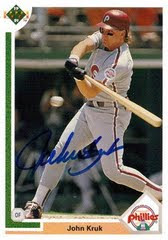
Trent. Come on. Don't stoop down to John Kruk analysis here. How about just say something like, the Colts just have a good defense? How something that their defensive ends are pro bowl caliber guys able to stop a QB on any drive and thus able to stop a QB on the last drive? Teams try to AND succeed at making plays no matter the game situation is. Not just when "they need to the most"
You're right Trent. Indy does not make plays when they don't need to. When it's 1st and ten and the Browns have 90 yards to go for a TD, their defense just doesn't try. Why should they they? They don't ever make plays. They only make effective plays when the Browns get in field goal range. Why try to get an interception or force a fumble when they game doesn't matter? For three plus quarters, the Indy D doesn't give a shit. In fact, we shouldn't count any defensive stats Indy players make unless it's the opposing teams last drive.
Trent. Come on. Don't stoop down to John Kruk analysis here. How about just say something like, the Colts just have a good defense? How something that their defensive ends are pro bowl caliber guys able to stop a QB on any drive and thus able to stop a QB on the last drive? Teams try to AND succeed at making plays no matter the game situation is. Not just when "they need to the most"